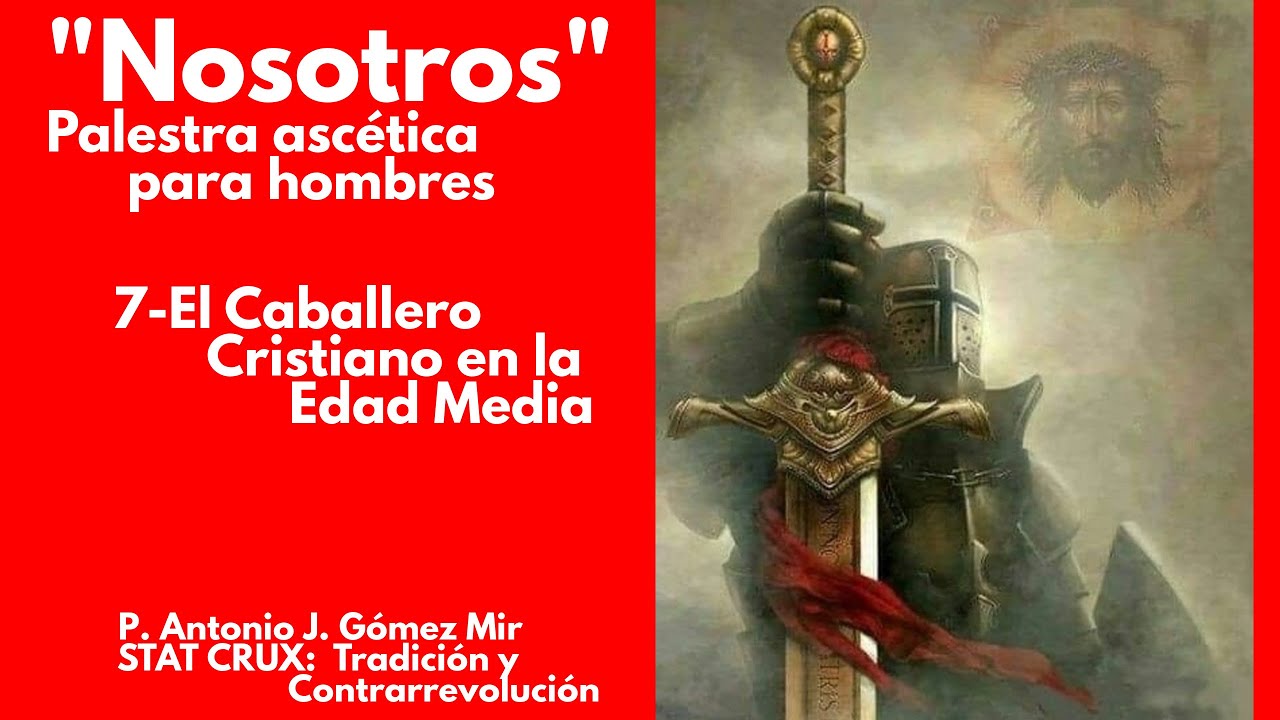
7- EL CABALLERO CRISTIANO EN LA EDAD MEDIA "NOSOTROS" Palestra ascética para hombres Padre Gómez Mir
New Section
In this section, the speaker delves into the historical significance of Christian knighthood in the Middle Ages, tracing its origins and evolution from ancient civilizations to medieval times.
The Origins of Christian Knighthood
- The concept of Christian knighthood emerged from ancient Greece and Rome but gained ethical significance in the Middle Ages.
- Unlike ancient knights who lacked a code of ethics, medieval Christian knights adhered to a strict honor code.
- The genesis of medieval Christian chivalry can be traced back to the barbarian invasions, where the Church redirected barbaric fervor towards noble causes.
Transformation through Faith
- The Church played a pivotal role in transforming barbaric warriors into Christian knights by instilling higher ideals and values through evangelization.
- Christian chivalry was characterized by a fusion of martial prowess with ethical principles, emphasizing service to justice, religion, and defense of the weak.
Exploring Codes of Conduct
This segment delves into the ethical dimensions of Christian knighthood, contrasting medieval attitudes towards warfare with contemporary pacifist ideals.
Ethical Standards in Warfare
- Medieval Christianity viewed warfare as a means to uphold faith and combat evil rather than promoting pacifism.
- Good knights were expected to engage only in just wars that served purposes such as defending the weak or upholding truth against oppressors.
Evolution of Chivalric Ideals
- The concept of armed forces serving truth without violence marked a significant shift brought about by Christianity's influence on warrior culture.
The Role of Chivalry in Medieval Society
The discussion delves into the concept of chivalry in medieval society, exploring its origins, significance, and impact on various aspects of life during that period.
The Evolution of Chivalry
- During the time of Charlemagne, mounted warriors gained prominence on the battlefield, leading to the emergence of knights.
- Feudalism developed as a system where kings granted land to warriors in exchange for loyalty and military service.
- The need for dedicated warriors to defend holy sites like Jerusalem led to the establishment of knightly orders in the 9th century.
Characteristics of Knights
- Heavy cavalry became prevalent, reshaping military strategies with advancements like stirrups and spurs.
- Literature such as "The Song of Roland" and "The Tale of the Nibelungs" depicted heroic values embodied by knights.
The Influence of Christianity on Medieval Life
This segment explores how Christianity permeated all aspects of medieval society, shaping both private and public life through religious practices and beliefs.
Christian Influence in Daily Life
- The similarity between religious and secular lifestyles characterized medieval Christendom for a millennium.
- Nobles often sent their children to monasteries for education, while individuals from various social classes embraced celibacy or religious life.
Sacralization of Public Realms
- Christianity extended beyond private spheres to public events like festivals, guild activities, and royal ceremonies.
- Public life was imbued with religious rituals, celebrations, processions, and communal expressions of faith.
Legacy of Christian Values in Governance
This part reflects on how Christian principles once influenced governance structures and societal norms according to Pope Leo XIII's reflections.
Historical Perspective on Christian Governance
- Pope Leo XIII nostalgically recalls an era when Gospel philosophy guided states' laws, institutions, morals across all societal strata.
New Section
The text discusses the harmonious relationship between magistrates, priesthood, and the Empire during a specific historical period.
Understanding Historical Unity
- During this era, magistrates, priesthood, and the Empire coexisted in mutual harmony and unity.
- Despite attempts to tarnish this medieval period as "dark ages," it was characterized by deep social vitality and Christian values.
- Christian values illuminated societal life during the Middle Ages, giving rise to Christian knighthood rooted in spiritual virtues.
New Section
The text delves into the revered figures of knights and religious individuals during this historical epoch.
Veneration of Knightly Ideals
- Knights and monks were highly esteemed for their dedication to God and chivalrous conduct.
- The ideal knight embodied piety, devotion to the Virgin Mary, loyalty to their lord, respect for women, courage, austerity, and detachment from wealth.
New Section
Education and rituals played a crucial role in shaping future knights during this period.
Knightly Education Process
- Training future knights commenced at seven years old with rigorous military disciplines and intense sacramental life.
- Rituals such as personal consecration through prayers and blessings emphasized knightly commitment to God's service.
New Section
The investiture ceremony symbolized the transformation of an individual into a knight.
Investiture Ritual Symbolism
- Pre-investiture rituals involved candle-lit vigils, symbolic baths signifying renewal, white tunics representing purity, and purple capes denoting honor.
- The investiture culminated in arming the candidate with sword, armor, helmet, spurs—a ritualized act reinforcing chivalric virtues against sin.
New Section
Notable examples like Saint Ignatius of Loyola exemplify the transformative journey from worldly pursuits to spiritual knighthood.
Transformational Journeys
- Saint Ignatius' transition from royal knighthood to spiritual dedication underscored a profound shift towards serving God's kingdom through renunciation of worldly possessions.
Defection Due to Fragility of Man
The speaker discusses the fragility of man when faced with challenging ideals, contrasting modern postmodern ideals with heroic archetypes that promote virtuous living.
Fragility of Man and Ideals
- Man's fragility is evident when confronted with demanding ideals.
- Modern postmodern ideals focus on superficial attributes like fame, money, and pleasure, leading to societal corruption.
- Heroic models such as Christ and saints embody sacrifice and virtue, offering a path towards truth, goodness, and beauty in society.
The Role of Chivalry in Restoring Order
The discussion delves into the significance of chivalry in upholding honor, justice, loyalty, and truth to restore societal order based on Christian values.
Chivalry for Order Restoration
- Father Rodrigo Menéndez Piñar emphasizes honor as a key value linked to restoring order.
- The institution of chivalry aimed at upholding virtues like charity, loyalty, justice, and truth for maintaining societal harmony.
- Decline in virtues led to discord and confusion among people ordained to love, know, honor, serve God.
Evolution of Knighthood: From Asceticism to Decadence
This segment explores the evolution of knighthood from its Christian ascetic roots to a more secular and decadent form during the Renaissance period.
Evolution of Knighthood
- Medieval chivalry reflected Christian asceticism but later transitioned into a secular concept losing its spiritual essence.
- Post-Medieval knightly literature promoted worldly values over spiritual ones leading to moral decline.
- Advancements in warfare tactics rendered traditional knighthood obsolete shifting its focus from military prowess to social status.
Call for Reviving Christian Civilization
The speaker advocates for a revival of Christian civilization centered around Christ as the ultimate authority for restoring moral values and societal order.
Reviving Christian Civilization
- Embracing Christ as King can lead to a new era marked by vitality and adherence to Christian principles.
nuevos de la utopía malsana de la Revolución y de la impiedad
The speaker mentions "new ones from the unhealthy utopia of the Revolution and impiety."
Analysis of Utopian Concepts
- The speaker critiques the concept of utopia associated with revolution, highlighting its negative connotations.
This section includes music and applause.
Musical Interlude