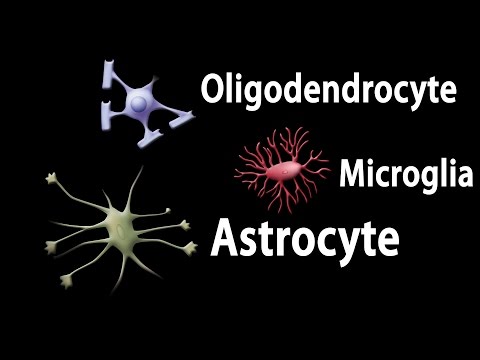
Neuroscience Basics: Neuroglia Functions, Animation.
Understanding the Role of Neurons and Glial Cells in the Brain
Overview of Brain Cells
- The human brain consists of billions of neurons, which are crucial for communication within the brain.
- In addition to neurons, there are trillions of support cells known as glia or glial cells that play essential roles in neuronal function.
Types of Glial Cells
- Major types of glial cells include oligodendrocytes, microglia, and astrocytes, each serving distinct functions in supporting neurons.
Oligodendrocytes: Myelin Sheath Formation
Functionality
- Oligodendrocytes wrap around neuron axons to form the myelin sheath, acting as an electrical insulator.
- This insulation significantly speeds up electrical signal transmission along axons; without it, action potentials would propagate 30 times slower.
Microglia: Immune Defense in the CNS
Role and Importance
- Microglia serve as macrophages within the central nervous system (CNS), cleaning up dead or injured cells and combating foreign invaders.
- Elevated levels of microglia indicate conditions such as infection, trauma, or stroke.
Astrocytes: Multifunctional Support Cells
Structural and Nutritional Support
- Astrocytes are the most abundant type of glial cell and provide structural frameworks for neurons while supplying nutrients like lactate.
- They produce growth factors that facilitate neuron growth and synapse formation.
Blood-Brain Barrier Contribution
- Through perivascular feet processes, astrocytes influence endothelial cells to create tight junctions forming the blood-brain barrier.
Chemical Regulation by Astrocytes
Neurotransmitter Management
- Astrocytes help maintain extracellular fluid composition by expressing transporters for neurotransmitters like glutamate and GABA.
- They also absorb potassium ions released during neuronal activity to regulate potassium concentrations in extracellular spaces.
Electrical Communication Between Astrocytes and Neurons
Gliotransmission Insights
- Recent findings suggest astrocytes can communicate electrically with neurons and release gliotransmitters upon stimulation.
- This indicates a potential direct involvement of astrocytes in brain communication functions alongside traditional neuronal signaling.
Tumor Formation from Glial Cells
Renewal Capacity Comparison
- Unlike neurons that have limited renewal capacity leading to rare tumor formation, glial cells can divide throughout life making them primary sources for brain tumors.
Turn any video into a summary like this
YouTube links, meetings, lectures. With transcripts, search, and chat.