Invasión USA Cap6
The Fall of the Berlin Wall and Its Implications
Introduction to Neoliberalism in Latin America
- The fall of the Berlin Wall symbolizes the end of the Cold War between the U.S. and Soviet Union, marking a shift towards a singular economic ideology.
- This new "unique thought" led to widespread privatization of state-owned enterprises across Latin America, particularly influenced by Washington's policies.
Bolivia's Political Landscape in 2000
- By early 2000, Bolivia faced significant discontent as neoliberal policies revealed their exclusionary nature, prompting public protests.
- A popular uprising in Cochabamba halted water privatization imposed by the World Bank, highlighting resistance against foreign corporate interests.
Coca Plantations and Political Movements
- U.S. efforts to eradicate coca plantations resulted in systematic repression of peasant unions, leading to political mobilization under Evo Morales.
- Morales emerged as a leader advocating for anti-imperialist ideologies amidst increasing tensions with U.S. influence.
Elections and Foreign Interference
The 2002 Elections
- In June 2002 elections, Evo Morales secured second place while facing opposition from U.S. ambassador Manuel Rocha who sought to maintain control over Bolivian politics.
- Post-election pressures from Washington forced alliances among traditional parties that were not favored by either party leader but aligned with U.S. interests.
Growing Opposition to Neoliberal Policies
- As dissatisfaction grew with neoliberal governance, Morales' movement gained traction among those seeking radical changes in power structures.
U.S. Influence on Bolivian Politics
Funding Political Projects
- The U.S. began funding programs aimed at manipulating Bolivia’s political landscape through financial support for traditional parties perceived as pro-American.
- Initiatives like leadership training for young politicians were designed to create a new class aligned with U.S. interests while undermining grassroots movements.
Humanitarian Discourse as a Tool
- American interventions often framed under humanitarian aid served dual purposes: resource appropriation and geopolitical control rather than genuine assistance.
Structural Reforms and Resistance
Challenges Faced by Traditional Parties
- Despite attempts at reforming political parties through superficial changes, substantial structural reforms demanded by society remained unaddressed.
Coca Farmers' Mobilization
- Efforts by coca farmers for legal recognition faced consistent rejection from Washington which preferred repressive measures over negotiation.
Crisis Escalation in Bolivia
Economic Turmoil and Protests
- By October 2003, violent protests erupted due to economic mismanagement linked directly to external pressures from the United States regarding gas exports.
Diplomatic Pressures on Leadership
- Washington explicitly communicated its lack of support for Carlos Mesa's presidency amid growing unrest, illustrating direct interference in Bolivian sovereignty.
Consequences of External Interference
Shift Towards Constitutional Assembly
- Calls for a constitutional assembly reflected widespread demands for national sovereignty against foreign influence; however, these efforts faced significant pushback from both local elites and international actors.
Counter-Revolutionary Strategies
Investment Against Revolutionary Movements
- In response to revolutionary sentiments during 2004–2005, the U.S. invested heavily in initiatives aimed at countering leftist movements within Bolivia through training local leaders away from radical ideologies.
Military Equipment Controversies
- Tensions escalated when discussions arose about returning military equipment (missiles), showcasing deep mistrust between Bolivian authorities and American diplomats regarding security matters.
Final Stages of Mesa's Presidency
Pressure Leading Up To Resignation
- As social crises intensified under Mesa’s administration , diplomatic pressure mounted urging him toward resignation , exemplifying blatant foreign intervention into domestic politics .
Autonomy Movements
Regional Divisions Fueled By External Support
- Efforts funded by external entities aimed at promoting regional autonomy highlighted divisions within Bolivia , further complicating national unity amidst rising tensions surrounding Morales’ government .
Conclusion: Legacy Of Intervention
Long-Term Effects On Sovereignty And Governance
- The narrative illustrates how sustained foreign intervention has shaped Bolivia’s political landscape , raising questions about national sovereignty versus external influences shaping governance .
The Importance of Youth Movements in Bolivia
Context and Motivation
- The speaker emphasizes the significance of events in Bolivia, drawing parallels with Venezuela's situation, highlighting a shared struggle for youth empowerment.
- The Unión Juvenil Cruceñista is portrayed as a vital voice for the people of Santa Cruz, actively addressing local issues and fostering youth engagement.
Goals and Challenges
- A strong youth movement is deemed essential not only for social work but also to prevent idleness among young people, steering them away from negative influences.
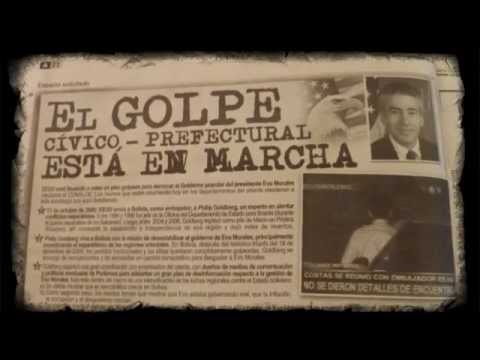
- Philip Golbert's arrival in Bolivia is discussed as part of a strategy to incite ethnic conflict aimed at destabilizing the government aligned with Washington's interests.
Ethnic Tensions and Political Manipulation
Racism and Governance
- The speaker criticizes perceptions about indigenous governance capabilities, reflecting on historical racism that fuels current political tensions.
- The government's relocation of constitutional deliberations to a military venue indicates rising tensions amid manipulation by regional leaders against Evo Morales.
Autonomy Movements
- Leaders from the "media luna" region exploit autonomy sentiments as a political tool against Morales, conducting unconstitutional referendums amidst unrest.
Diplomatic Intrigues and Political Maneuvering
Golbert’s Activities
- Golbert engages in clandestine meetings with civic leaders to support a national referendum aimed at revoking Morales' presidency, indicating his active role in Bolivian politics.
Opposition Dynamics
- Following strategic meetings, civic leaders shift their stance to support the recall referendum against Morales after previously opposing it.
Media Influence and Public Sentiment
Campaign Against Morales
- Despite aggressive media campaigns against him, Morales achieves significant electoral victories that challenge separatist efforts backed by external forces like Washington.
Escalating Tensions Post-Reform
Reactions to Constitutional Changes
- In response to constitutional reforms, opposition figures call for civil resistance while Morales expels Golbert due to perceived conspiratorial actions.
Regional Implications of U.S. Diplomacy
Consequences of Expulsion
- The expulsion heightens continental tensions; regional allies express solidarity with Bolivia’s democratic processes against foreign interference.
Violence and Resistance
Confrontations Escalate
- Following Golbert's expulsion, violent confrontations occur between union members and indigenous groups amid attempts to disrupt state institutions.
Defeating Separatist Strategies
Popular Mobilization
- A massive mobilization led by Morales successfully counters separatist strategies; public sentiment shifts towards supporting constitutional reforms despite opposition challenges.
Investigating Terrorism Links
Connections Uncovered
- Investigations reveal links between terrorist activities in Bolivia and U.S. intelligence operatives, suggesting deeper conspiracies involving foreign agents influencing domestic politics.
Shifts in Power Dynamics
Impact of DEA Expulsion
- Expelling the DEA reveals its extensive operations within Bolivia; this marks a turning point where U.S. influence begins to wane significantly post-reforms under Morales’ leadership.
Turn any video into a summary like this
YouTube links, meetings, lectures. With transcripts, search, and chat.