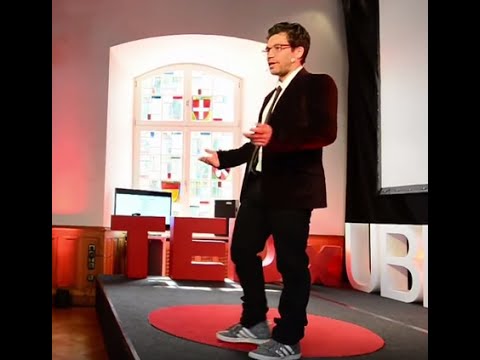
Why I read a book a day (and why you should too): the law of 33% | Tai Lopez | TEDxUBIWiltz
The Power of Mentors
In this section, the speaker talks about how mentors have the power to transform one's life. He gives examples of successful people and how they had mentors who helped them achieve their goals.
Mentors can transform your life
- Imagine starting a company with Bill Gates or learning from Warren Buffet on investing in the stock market.
- Imagine having the Dali Lama as your personal guide or Arnold Schwarzenegger as your personal trainer.
- Mother Theresa could teach you how to run a charity and help those in need.
Importance of Role Models
In this section, the speaker talks about his grandmother's mentor and how she influenced her life. He also discusses his own experience with mentors and role models.
The story of Edith Knox
- The speaker's grandmother was inspired by Edith Knox, a famous piano player from California who rented a room in their house when she was young.
- Edith Knox wore pants, which was unusual for women in Germany at that time. She also did headstands every hour for exercise.
- The speaker reflects on his own search for answers and finding one person who had all the answers.
Pursuing the Good Life
In this section, the speaker talks about pursuing the good life and not waiting until it's too late to achieve it.
Pursuing happiness
- Life is short and it's important to pursue the good life.
- The speaker reflects on Steve Jobs' quote about not wanting to be the richest man in the graveyard.
- Aristotle's definition of the good life includes health, wealth, happiness, and love.
Importance of Mentors
In this section, the speaker talks about how mentors are more powerful than role models and can transform one's life.
The power of mentors
- Mentors have the power to transform your life more than role models.
- The speaker reflects on his grandfather's advice to never rely on just one person for all the answers.
The Importance of Mentors
Tai Lopez talks about the importance of mentors and how they can help you achieve success in life.
Finding Mentors
- Tai started by reading books and traveling to 51 countries to learn from people who had gone before him.
- When he ran out of money, he asked for help and found a mentor who taught him about business.
- Many successful people have had mentors, including Albert Einstein, Jay-Z, Oprah Winfrey, Gandhi, Alexander the Great, Bill Gates, and Warren Buffet.
The Mentor Rules
- Tai introduces the Law of 33%, which involves dividing your time between three groups of people:
- Spend 33% of your time around people lower than you that you can mentor and help.
- Spend 33% of your time around people on your level who become your friends and peers.
- Spend 33% of your time around people 10-20 years ahead of you who will make you feel uncomfortable but will push you to grow.
Conclusion
Tai concludes by emphasizing the importance of finding mentors and following the Mentor Rules to achieve success in life.
The Good Life
Tai Lopez shares four rules to follow in order to achieve the good life.
Surprising Connections
- A friend of Tai's, who is a director in Hollywood, heard his talk and emailed some people. Elon Musk, the founder of Paypal and owner of three companies worth $1 billion wrote back and they had lunch.
- People remember their struggle and will reach out to help you too.
Humility
- Sam Walton, the richest man in America who started Walmart, was humble. He was caught crawling around the floors of stores measuring how wide the aisles were with a tape measurer.
- Everybody wants the good life but not everybody is willing to be humble like Sam Walton.
Perseverance
- Bill Gates became a billionaire at 31 years old after working tirelessly from age 20 to 30 without taking a day off.
- In your search for mentors, you must persevere as well. Tai shares an example of how one of his friends persevered to become one of the wealthiest real estate investors in the world.
Books
- Mentors are great in person but some of the greatest mentors are no longer alive such as Shakespeare, Darwin, Freud and Mahatma Gandhi. Books should be seen as hidden treasure.
- You should read at least one book a week because most books only have one or two things worth reading. Tai recommends finding 150 books that can be read over and over for the rest of your life.
The transcript is relatively short so there aren't many sections needed. The four rules shared by Tai Lopez are Surprising Connections, Humility, Perseverance and Books. Each rule has two bullet points that describe the key points shared by Tai.
The Importance of Toughening Up
In this section, the speaker talks about the importance of toughening up and not being a consumer. He emphasizes that luxury comes at a cost and encourages listeners to be stoic.
Toughen Up
- Luxury comes at the cost of killing your hopes, dreams, and ambitions.
- Not everyone toughens up to get the good life.
- You must follow certain rules: be humble, persevere, read more, and toughen up.
- As Tom Hanks says in one movie, "It's supposed to be hard. The hard is what makes it great."
Mentors
- Mentors are important shortcuts for success.
- Find a mentor no matter where you are in your career journey.
Closing Thoughts
- Chief Tecumseh's poem advises people to love their lives, perfect their lives, beautify all things in their lives, seek to make their lives long and purposeful in service of others.
- Toughen yourself up by taking cold showers or doing 100 push-ups.
Overall, the speaker stresses that people should focus on improving themselves rather than being consumers. He encourages listeners to find mentors who can help them achieve success and reminds them that it takes hard work and perseverance to reach their goals.