Implementación: Una visión General
Introduction to Pharmacogenetics
Overview of the Course
- Andrés Corno introduces himself as a pharmacist and clinical genetics expert with over 21 years of experience, particularly in pharmacogenetics.
- The course is designed for beginners entering the field, aiming to share insights from experienced professionals who have navigated challenges.
Importance of Genetic Information
- There has been significant technological advancement in genetic information, including sequencing and genotyping; however, training for health professionals remains limited.
- The need for clear communication of genetic information is emphasized due to the overwhelming amount of data available through various media.
Clinical Guidelines in Pharmacogenetics
Development and Purpose
- Clinical guidelines are essential tools that link genetic analysis with pharmacotherapeutic interventions, developed by organizations like the Clinical Pharmacogenetics Implementation Consortium (CPIC).
- These guidelines help identify associations between specific genes and drug responses, facilitating personalized medicine approaches.
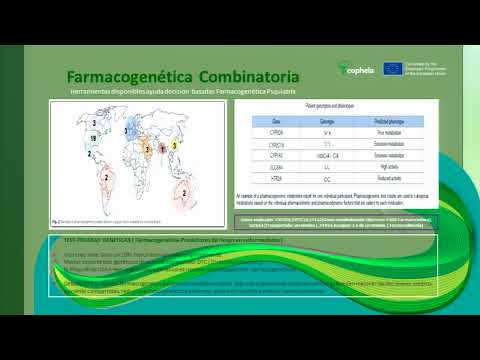
Combinatorial Genetic Drug Analysis
- Combinatorial genetic drugs analyze multiple gene variations affecting drug metabolism rather than focusing on single genes alone.
- An example includes Warfarin, where variations in several cytochrome genes (CYP2C9, CYP4F2, VKORC1) are considered alongside therapeutic targets.
Practical Applications and Case Studies
Tools and Algorithms
- Various clinical pathways exist for combinatorial pharmacokinetics related to antipsychotics, antidepressants, and opioid pain relievers.
- A specific case study from Hospital La Paz in Madrid demonstrates a dose-adjustment algorithm for acenocoumarol based on genotype analysis.
Evolving Nature of Guidelines
- Current guidelines allow intervention on 53 drugs based on ten key genes; these are continuously updated as new scientific evidence emerges.
- Additional American CPIC guidelines cover 36 drugs influenced by 13 different genes relevant to rare diseases like cystic fibrosis.
Pharmacogenetics: Current Landscape and Future Challenges
Overview of Pharmacogenetic Tools
- The discussion begins with the mention of key genes involved in pharmacogenetics, specifically CYP2C9, CYP4F2, and VKORC1. The incorporation of genotype data is currently not standard practice due to its perceived lack of clinical importance.
- A global overview reveals that most pharmacogenetic analysis tools are concentrated in the United States (19 types), with fewer available in Canada, Mexico, Europe, and China.
Genetic Variations in Drug Therapy
- The focus shifts to combinatorial genetic drugs aimed at enhancing pharmacological prescriptions for antipsychotics and antidepressants. This includes analyzing variations not only in P450 genes but also other relevant genes like SLC6A4 (serotonin transporter) and HTR2A (serotonin receptors).
Inequities in Pharmacogenetic Applications
- A significant point raised is the inequity in the application of pharmacogenetic information across therapeutic areas. While it is crucial in oncology and cardiovascular treatments, its use drops significantly in other fields.
- The speaker emphasizes a future challenge for pharmacists: ensuring that advancements in pharmacogenetics are applied more broadly across various therapeutic areas.
Recommendations for Practitioners
- To address knowledge gaps, practitioners should pursue solid scientific training covering genetics, drug mechanisms, phenotyping methods, and clinical quality controls.
- For those new to this field or lacking prior experience, starting with a limited number of gene-drug pairs based on CPIC or DPWG guidelines is advisable.
Collaborative Approaches to Implementation
- It’s suggested that health professionals collaborate within stable teams to master necessary skills for interpreting genetic data ethically.
- Emphasis is placed on serving societal needs rather than personal interests when implementing genetic drug therapies.
Addressing Knowledge Gaps
- There’s an acknowledgment that while there exists substantial knowledge about genetic drugs and their variants, it often remains underutilized or misapplied across different therapeutic groups.
Technological Efforts vs. Training Needs
- Despite significant technological advancements aimed at supporting clinical decision-making regarding complex genetic information, there remains a scarcity of trained health professionals capable of applying this knowledge effectively.
Paradoxes Within Therapeutic Areas
- A paradox highlighted involves the known importance of genetic variations related to specific drugs like tacrolimus—used both for transplant rejection prevention and dermatological conditions—yet lacking broader application across therapeutic domains.