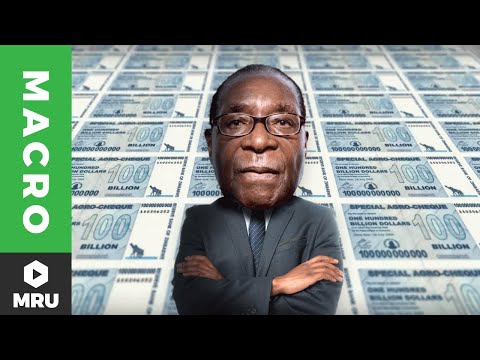
Zimbabwe and Hyperinflation: Who Wants to Be a Trillionaire?

Zimbabwe and Hyperinflation: Who Wants to Be a Trillionaire?

How Did Zimbabwe Experience Hyperinflation?

The Challenges of Dictatorship

  • Being a dictator involves constant vigilance against rivals and the need to maintain power amidst political tensions.
  • Robert Mugabe, president of Zimbabwe around 2000, faced economic challenges requiring funds for bribery and rewards amid a struggling economy.

Economic Downturn and Money Printing

  • With limited taxation options and investor flight, Mugabe resorted to printing money as a quick solution to financial woes.
  • This influx of newly printed money did not correlate with increased productivity or investment, leading to inflation as more currency chased the same goods.

Escalating Inflation Rates

  • Prices began rising at an alarming rate of 50% per year, creating a vicious cycle where the government printed more money in response to rising costs.
  • By 2001, inflation reached 100% annually; by 2006, it soared over 1,000%, exemplified by exorbitant prices for basic goods like toilet paper.

Currency Devaluation and Consequences

  • Rapid devaluation meant that currency lost value within hours; people sought to spend their money immediately due to its diminishing worth.
  • As hyperinflation escalated in 2008, Zimbabweans received increasingly high denomination notes (up to Z$100 trillion), yet these were nearly worthless.

The End of the Zimbabwean Dollar

  • By late 2008, hyperinflation rendered the Zimbabwean dollar virtually obsolete; transactions shifted towards foreign currencies as a necessity.
Video description

How would you like to pay $417.00 per sheet of toilet paper? Sound crazy? It’s not as crazy as you may think. Here’s a story of how this happened in Zimbabwe. Around 2000, Robert Mugabe, the President of Zimbabwe, was in need of cash to bribe his enemies and reward his allies. He had to be clever in his approach, given that Zimbabwe’s economy was doing lousy and his people were starving. Sow what did he do? He tapped the country’s printing presses and printed more money. Clever, right? Not so fast. The increase in money supply didn’t equate to an increase in productivity in the Zimbabwean economy, and there was little new investment to create new goods. So, in effect, you had more money chasing the same goods. In other words, you needed more dollars to buy the same stuff as before. Prices began to rise -- drastically. As prices rose, the government printed more money to buy the same goods as before. And the cycle continued. In fact, it got so out of hand that by 2006, prices were rising by over 1,000% per year! Zimbabweans became millionaires, but a million dollars may have only been enough to buy you one chicken during the hyperinflation crisis. It all came crashing down in 2008 when -- given that the Zimbabwean dollar basically ceased to exist -- Mugabe was forced to legalize transactions in foreign currencies. Hyperinflation isn’t unique to Zimbabwe. It has occurred in other countries such as Yugoslavia, China, and Germany throughout history. In future videos, we’ll take a closer look at inflation and what causes it. Subscribe for new videos: http://bit.ly/1Rib5V8 Macroeconomics Course: http://bit.ly/1R1PL5x Next video: http://bit.ly/2j4niXI 00:00 Being a Dictator is Hard 00:58 Printing Money 01:17 Purchasing Power 01:35 Hyperinflation 03:24 More Examples Throughout History