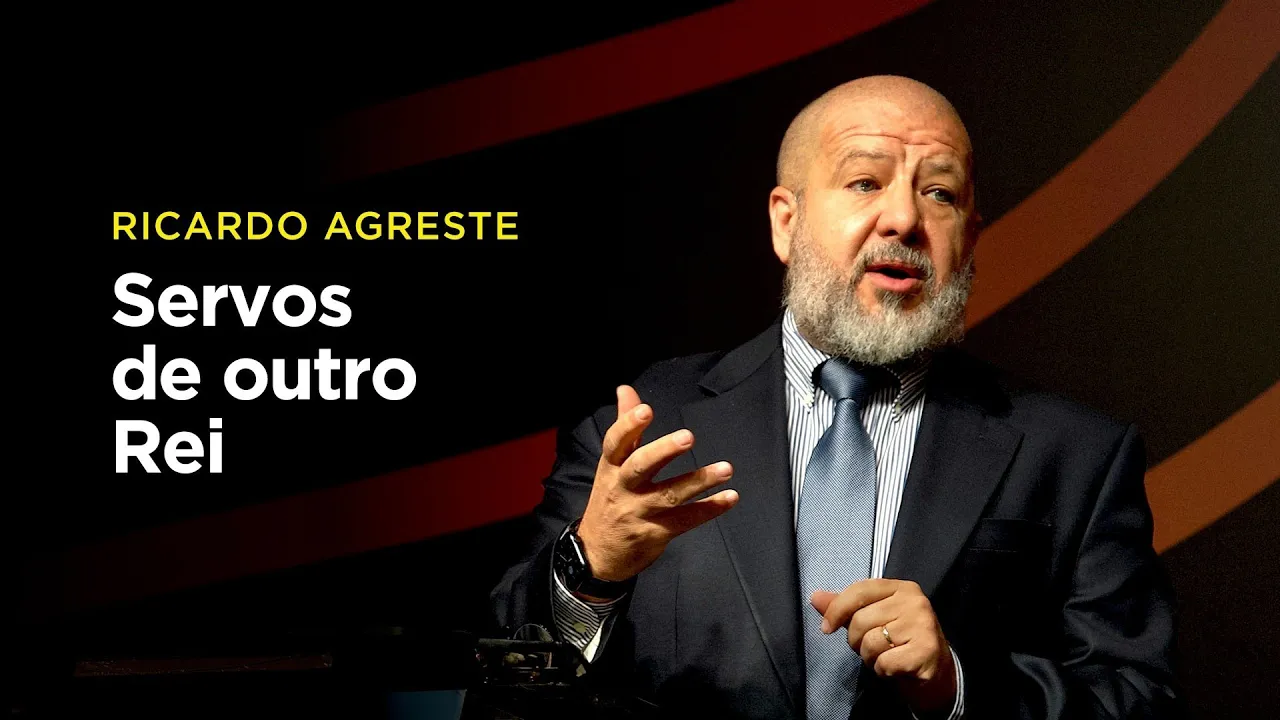
Ricardo Agreste: Servos de outro Rei
New Section
The speaker greets the audience and expresses gratitude for being present, reflecting on past experiences and challenges faced.
Reflection on Past Experiences
- The speaker mentions taking a sabbatical in 2019.
- Reflects on the challenges faced in 2020 due to the pandemic.
- Describes dealing with personal health issues in 2021.
- Highlights 2022 as a year of rebuilding and reconstruction.
Introduction to Book Discussion
Introduction to a book discussion focusing on the importance of having a Christian worldview.
Importance of Christian Worldview
- Emphasizes the significance of embracing a Christian worldview.
- Discusses how one's beliefs should align with a Christian perspective.
- Mentions the book's theme of encountering different worldviews.
Analysis of Biblical Text
Analysis of biblical text from Daniel chapter 1, exploring themes related to faith and obedience.
Examination of Daniel Chapter 1
- Begins reading from Daniel chapter 1, verse 1.
- Introduces Nebuchadnezzar as a powerful figure in Babylon.
- Discusses economic injustices within political systems.
Interpretation of Historical Context
Interpretation of historical contexts within biblical narratives, drawing parallels to contemporary societal structures.
Historical Contextualization
- Compares biblical Babylon to modern political, social, and economic systems.
- References the destruction of Babylon in Revelation as symbolic.
Application to Personal Life
Application of biblical principles to personal experiences and decision-making processes.
Personal Application
- Discusses making decisions based on faith rather than fear or external pressures.
Introduction to the Book of Daniel
In this section, the speaker introduces the Book of Daniel and its relevance to contemporary contexts.
Understanding the Context of Judah and Babylon
- The narrative begins with King Nebuchadnezzar of Babylon besieging Jerusalem.
- Nebuchadnezzar is not only a powerful figure but also the king of Babylon.
Influence of Cultural Values
- Judah's culture was significantly shaped by values revealed by the creator God.
- The society was influenced by these values, leading to conflicts when individuals deviated from them.
- The introduction of Nebuchadnezzar highlights a powerful figure in his time.
Challenges Faced in a Foreign Land
This part delves into the challenges faced by Daniel and his friends as they navigate life in Babylon.
Cultural Shift and Minority Status
- In a country with few evangelicals, being a minority can pose challenges.
- The societal system may lead to injustices, highlighting difficulties for believers.
Religious Identity and Social Dynamics
- Despite being a small percentage, evangelical beliefs can contrast with predominant Catholicism.
- Maintaining faith in a secular environment can be challenging due to conflicting values.
Adaptation and Resistance
This segment explores how Daniel and his companions adapt while resisting cultural pressures in Babylon.
Alienation from Godly Values
- Babylon represents a culture detached from values revealed by the creator God.
- Individuals face ignorance regarding God's principles, leading to spiritual disconnection.
Family Dynamics and Cultural Shift
- Babylon distorts true worship, creating modern family structures that deviate from divine norms.
Eu me lembro que quando eu era criança pequena lá em São Paulo...
The speaker recalls his childhood in São Paulo, highlighting the difference in religious demographics compared to the present audience.
Childhood Memories and Religious Diversity
- Speaker reminisces about growing up in São Paulo, where evangelical Christians were a minority.
- Recalls facing reactions from classmates when revealing his religion.
- Reflects on the cultural values of the Brazil he grew up in.
Ainda? Eu vivi num país, onde os evangélicos eram cerca de 3, 4%...
The speaker discusses past experiences related to being an evangelical Christian in a society with a small evangelical population.
Challenges as an Evangelical Christian
- Describes the anxiety of being singled out for religious beliefs at school.
- Shares an anecdote about disclosing his profession as a pastor during a flight conversation.
Aí Jesus, Jesus é o filho de Deus. Aí o universo que nós vivemos...
The speaker delves into discussions around faith and belief systems.
Faith and Belief Systems
- Discusses beliefs about Jesus and the origins of the universe.
- Mentions biblical figures like Daniel being displaced to Babylon.
Nós cremos que existe verdade e mentira, porque o Deus criador disse o que é a verdade...
Exploring contrasting views on truth and values between different belief systems.
Truth and Values
- Contrasts beliefs in revealed truths with Enlightenment-era rationalism.
- Emphasizes the significance of Jesus as God's ultimate revelation.
Houve um tempo da história em que família se sentava ao redor da mesa sem celulares sem a Ipad...
Reflecting on changes in family dynamics due to technological advancements.
Evolution of Family Dynamics
- Recalls a time when families gathered without distractions like smartphones or iPads.
- Acknowledges imperfections within traditional family structures.
Porque evangelizar é você impô a sua verdade sobre o outro e você não deve fazer isso...
Addressing perspectives on evangelism and respecting individual beliefs.
Evangelism Ethics
Ego and Self-Promotion
The speaker discusses the narcissistic nature of self-promotion and ego-centric projects.
Ego-Centric Projects
- Initiating a highly narcissistic project centered around self-propagation.
- Engaging in self-promotion by detailing daily activities and future plans.
Values and Prejudice
Delving into the importance of values and addressing prejudice in society.
Values and Prejudice
- Emphasizing the significance of holding onto our values.
- Highlighting the impact of prejudice on societal constructs.
Faith and Cultural Influence
Exploring faith, cultural influences, and the concept of truth in a society shaped by social media.
Faith in Cultural Context
- Discussing how culture is influenced by the values attributed to the Creator God.
- Contrasting individual determination of good with historical truths rooted in Christian faith.
Revelation and History
Reflecting on divine revelation, historical context, and foundational beliefs.
Divine Revelation
- Belief in divine revelation shaping history, truth, and moral principles.
- Acknowledging Jesus as the ultimate manifestation of God's revelation amidst historical skepticism.
Rationalism vs. Revelation
Contrasting rationalism with divine revelation's control over human affairs.
Rationalism vs. Revelation
- Stating that only those under God's control have true authority.
- Critiquing modern abandonment of divine guidance for rationalistic ideals like "order and progress."
God's Sovereignty
Discussing God's sovereignty over history despite human understanding or preferences.
Divine Sovereignty
- Emphasizing that God directs history according to His will, not human desires.
Understanding the Language of Babylon
In this section, the speaker delves into defining the language and culture of Babylon, emphasizing the pursuit of success, visibility, and wealth as central themes.
Defining the Language of Babylon
- The language of Babylon focuses on making one's name great and emphasizes control over history through prayer.
- Success, visibility, and wealth are pursued due to a belief that one's project is God's will.
- The language of Babel promotes autonomy, success, and money-seeking behaviors.
Challenges Faced by Early Christians
This part explores the challenges encountered by early Christians in different cultural contexts such as Jerusalem, Corinth, Ephesus, Rome, and modern society.
Challenges in Different Cultural Contexts
- Early Christians faced difficulties in various cities like Corinth similar to those in Babylon.
- The University of Babylon emphasized repetition leading to loss of identity for individuals like Daniel.
Cultural Liturgies Impacting Beliefs
Here we examine how cultural liturgies influence beliefs and behaviors throughout daily life.
Influence of Cultural Liturgies
- James Smith highlights the power of habits and cultural rituals in shaping beliefs.
- Daily activities involve cultural liturgies that may conflict with religious values.
Resisting Cultural Norms
This segment discusses resisting societal pressures that contradict personal values.
Resisting Societal Pressures
- Daniel resists conforming to cultural practices that compromise his values.
Dialogue and Empathy in Leadership
This section discusses the importance of dialogue and empathy in leadership, using a scenario involving Daniel to illustrate effective leadership qualities.
Dialogue and Empathy
- The chief of the King approaches Daniel expressing fear. Daniel responds by welcoming the dialogue, suggesting they work together to address the fear. This interaction highlights the significance of empathy in leadership.
- Leaders like Daniel and his friends demonstrate healthy lifestyles, consistent family values, and ethical business practices. Setting boundaries is crucial for maintaining integrity in various aspects of life.
- Daniel's decision to set limits on his actions serves as a model for establishing boundaries in social media usage and business dealings. Being aware of one's environment, like being in Babylon, necessitates respecting others' spaces.
- In Babylonian society, leaders face scrutiny regarding their intentions—whether they prioritize people's well-being or personal gain. Professional excellence coupled with ethical conduct can influence perceptions positively.
- A leader's behavior influences how they are perceived by others. Demonstrating kindness and sympathy towards others can foster positive relationships and enhance leadership effectiveness.
Leadership Through Martyrdom
This segment delves into the concept of martyrdom within leadership contexts, emphasizing the importance of faith-driven actions over power-centric approaches.
Martyrdom in Leadership
- Success in Babylon often involves martyrdom rather than power-seeking behaviors. Upholding faith-based principles amidst challenges can lead to divine judgment on those who have suffered for their beliefs.
- Reflecting on martyrs' sacrifices prompts a reevaluation of leadership paradigms. Embracing a theology that honors martyrdom can reshape perspectives on success within Babylonian settings.