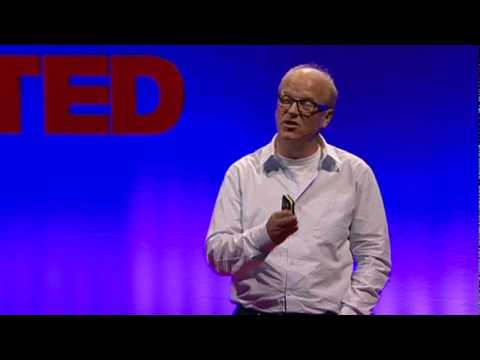
Charles Leadbeater: Education innovation in the slums
The Importance of Vantage Points in Education
Introduction to the Speaker and Context
- The speaker expresses pleasure in speaking after Brian Cox from CERN, highlighting the significance of the Large Hadron Collider.
- A humorous remark is made about the Small Hadron Collider being overlooked, setting a light-hearted tone for discussing scientific perspectives.
Vantage Points and Their Impact on Understanding
- The speaker emphasizes that one's vantage point influences what they see and understand, drawing parallels to how science provides different perspectives.
- Traditionally, Finland has been viewed as a model for education systems; however, this perspective may limit broader insights into educational innovation.
Exploring Radical Innovation in Education
Shifting Focus from Traditional Models
- The speaker discusses exploring alternative locations for educational innovation beyond Finland, suggesting that unmet needs often drive radical solutions.
- Highlighting urban growth trends, particularly in developing cities like Rio de Janeiro's favelas, where traditional educational resources are scarce.
Case Study: Juanderson's Journey
- Introduces Juanderson, who dropped out of school at 14 due to boredom and turned to the drug trade for opportunity.
- Juanderson’s life changed when he encountered technology through Rodrigo Baggio’s CDI initiative, which provided computers for learning in favelas.
Challenges of Education in Slums
Insights from Kibera and Nakuru
- Describes Kibera as East Africa's largest slum with inadequate educational facilities; highlights two students' struggles within this context.
- Discusses the dire state of education in slums where many children lack parental support due to AIDS-related deaths.
Technology as a Unifying Factor
- Emphasizes mobile phones as crucial tools bridging gaps between rich and poor communities in Africa, essential for designing services tailored to local needs.
Social Change Through Education
Observations from Madangiri Settlement Colony
- Highlights social changes among young girls who are now pursuing education instead of early marriage—a significant shift compared to previous generations.
- Notes that these girls are motivated by their mothers’ newfound involvement in their education despite their own illiteracy.
Sugata Mitra's Radical Educational Experiments
The Power of Self-Directed Learning
- Sugata Mitra, a revolutionary social entrepreneur, demonstrates that children can learn independently with computers under the right conditions.
- Many children in extreme conditions have never accessed resources like Google or Wikipedia, highlighting the potential impact of technology on their education.
Rethinking Education Models
- Education is described as a "global religion," and combining it with technology offers hope for marginalized communities. For instance, schools near Sao Paulo serve illiterate parents and lack electricity but effectively utilize computers.
- Traditional education systems often push knowledge onto students; however, successful models in challenging environments attract learners through relevant and engaging content instead.
Motivation as a Key Driver
- Effective education must be motivated by immediate relevance to students' lives rather than long-term payoffs that may not align with their daily needs. Waiting years for educational benefits is impractical for those living in poverty.
- Engaging students through intrinsic interest is crucial; innovative educators create games and activities that spark curiosity and participation from the outset rather than relying solely on traditional lessons.
Innovative Learning Approaches
- Educators like Sebastiao Rocha develop creative methods to teach various subjects using games, emphasizing starting learning from questions or engaging activities rather than rote knowledge transfer.
- Programs such as El Sistema in Venezuela use music as a tool for learning, demonstrating how arts can draw students into educational experiences effectively.
Community-Centric Education Solutions
- In areas lacking teachers or relevant curricula, peer-to-peer learning models emerge where community members become educators themselves, fostering localized solutions to educational challenges. This includes initiatives like mobile schools on construction sites in Pune to reach children directly where they are located.
- Practical skills training becomes essential; stories of individuals like Steven illustrate how vocational training (e.g., carpentry) can reintegrate youth into education meaningfully and productively.
Scaling Educational Innovations
The Need for Educational Innovation
Franchise vs. Chinese Restaurant Model
- The speaker discusses the concept of rolling out a franchise model in education, emphasizing reliability and familiarity akin to fast-food chains like McDonald's.
- Madhav proposes an alternative approach inspired by Chinese restaurants, which are not chain-based but still provide a recognizable experience with variations in execution.
Types of Innovation in Education
- The speaker identifies two main types of innovation: sustaining innovation (which maintains existing systems) and disruptive innovation (which fundamentally changes them).
- Most educational efforts focus on sustaining innovations within formal settings, such as schools and colleges, rather than exploring disruptive or informal innovations.
Challenges in Developing World Education
- There is a significant shortage of teachers in developing countries like China, India, and Nigeria, making it difficult to implement traditional educational models effectively.
- Simply increasing the number of teachers will not address deep-rooted educational inequalities prevalent in urban areas.
Reinvention and Community-Based Learning
- The need for reinvention is highlighted; many schools worldwide are adapting their structures while maintaining core educational principles.
- Examples include Reggio Emilia's family-based learning system and the Harlem Children's Zone initiative that integrates community support with education.
Radical Thinking for Future Learning
- The speaker calls for transformational innovation that reimagines how learning can be delivered outside traditional school environments.
Turn any video into a summary like this
YouTube links, meetings, lectures. With transcripts, search, and chat.