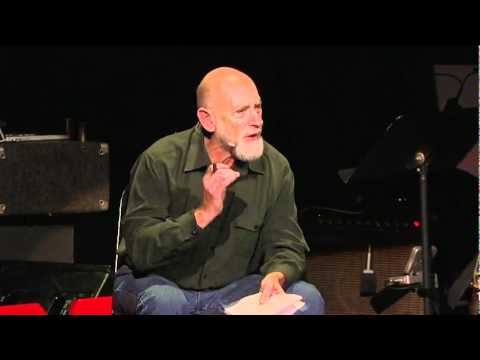
Leonard Susskind: My friend Richard Feynman
Richard Feynman: A Personal Reflection
Introduction to Richard Feynman
- The speaker shares a personal connection with Richard Feynman, expressing the desire to discuss the unique aspects of his character and intellect.
- Describes Feynman as a multifaceted individual: a great scientist, actor, philosopher, drum player, and exceptional teacher.
Complex Personality Traits
- Highlights Feynman's showmanship and brashness; he enjoyed intellectual challenges and had a large ego but was also accommodating to others' egos.
- Emphasizes how Feynman made those around him feel intelligent and capable, fostering an environment of collaboration in problem-solving.
Anecdotes Illustrating Character
- Shares a story about playful competition between friends; Feynman's enjoyment in winning games while maintaining good humor even in defeat.
- Recounts a humorous incident where students played a prank on him by ordering "Feynman sandwiches," showcasing his ability to laugh at himself.
Intellectual Integrity
- Discusses Feynman's disdain for pretentiousness in intellectual discourse; he preferred straightforward communication over jargon-laden discussions.
- Recalls an encounter with philosophers discussing consciousness; highlights the contrast between scientific inquiry and philosophical speculation that frustrated Feynman.
Lasting Impact of Conversations
- Reflects on how even after being criticized by Feynman, the philosophers felt uplifted by their interaction with him, indicating his charismatic influence.
Richard Feynman's Influential Relationships and Scientific Approach
Early Influences on Feynman
- Richard Feynman describes his father as a working man with a fifth-grade education who taught him practical skills, including the use of tools and the Pythagorean theorem, which he referred to as "shortcut distance."
- Feynman noted that he shared a similar relationship with his father, believing it was crucial for becoming a good physicist. He acknowledges the sexist nature of this belief but emphasizes its significance in his upbringing.
- To validate his theory about paternal influence on physicists, Feynman conducted an informal survey among peers, discovering that all of them credited their mothers instead.
Feynman's Scientific Philosophy
- Despite the failure of his initial theory regarding paternal influence, Feynman found excitement in connecting with someone who had a similar experience with their father.
- He emphasized that his scientific approach focused on finding the simplest solutions to problems. If simplicity wasn't achievable, he would resort to more complex methods.
- Feynman's belief was rooted in the idea that if one could not explain something simply, they did not truly understand it. This principle guided much of his work throughout his career.
Contributions to Quantum Physics
- In addressing superfluid helium's behavior in the 1950s, Feynman critiqued existing complicated theories and sought to develop a clearer understanding based on fundamental principles.
- He proposed that when helium atoms touch each other, they repel each other; thus, the wave function must vanish at those points while remaining smooth elsewhere.
- By using simple mathematical functions reflecting these principles, he successfully explained known properties of liquid helium—demonstrating how straightforward approaches can yield significant insights.
The Role of Partons in Proton Structure
- In 1968, during research at a university exploring proton structure using complex techniques like Feynman diagrams, he recognized their limitations due to complexity in calculations.
- Instead of relying solely on intricate diagrams for analysis, he introduced the concept of "partons," envisioning protons as swarms of fast-moving particles frozen during interactions with electrons.
Understanding the Impact of Feynman
Reflections on Feynman's Influence
- The speaker reflects on the profound evolution in understanding protons and particles, suggesting that while "revolution" may be a contentious term, it aptly describes the shift in perspective brought about by Feynman's work.
- The speaker humorously speculates that Richard Feynman would not have appreciated the event held in his honor, implying he might have preferred a more understated recognition of his contributions.
- A key question posed is how to truly honor Feynman’s legacy, indicating a desire for meaningful recognition rather than superficial accolades.
- The mention of laughter suggests a light-hearted atmosphere during this reflection, contrasting with the serious nature of honoring such an influential figure.
Turn any video into a summary like this
YouTube links, meetings, lectures. With transcripts, search, and chat.