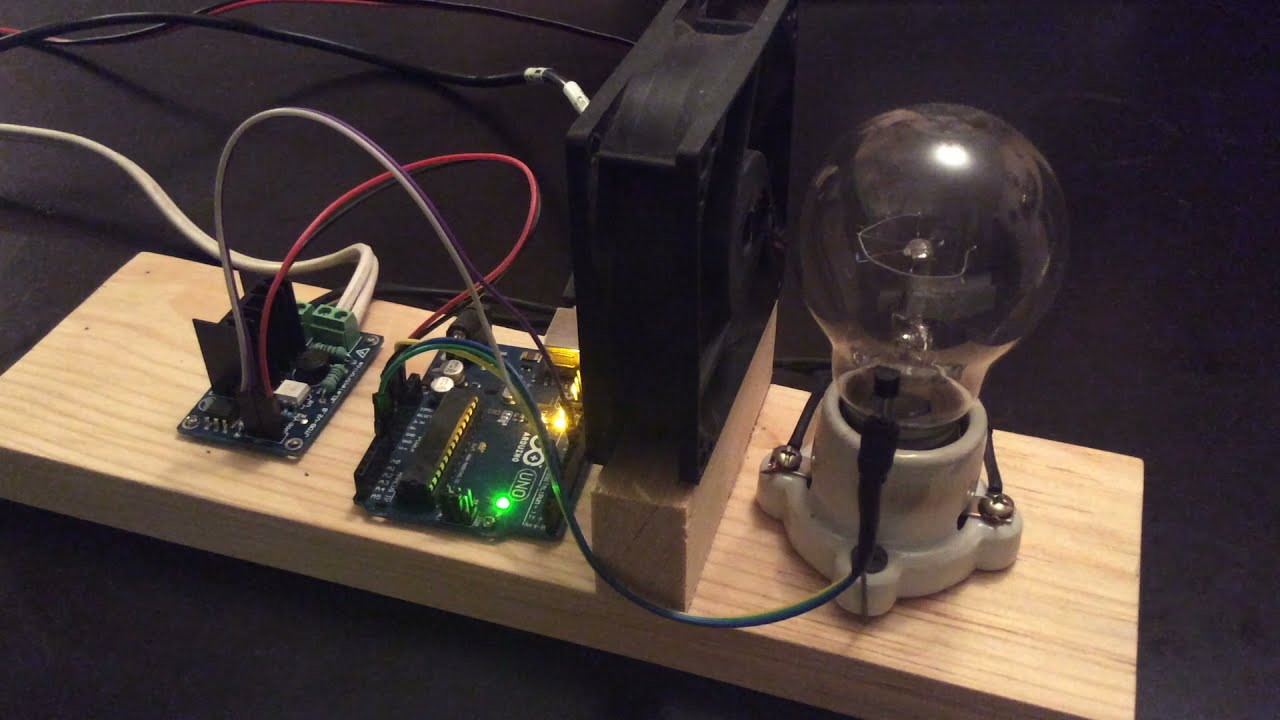
Control PID: Implementación en un sistema real.
New Section
The transcript discusses a prototype designed to control and maintain the temperature of a focus using a proportional integral derivative (PID) controller. It explains the setup involving a temperature sensor, an Arduino board, and a timer acting as an actuator.
Prototype Objective and Components
- The prototype aims to maintain the focus temperature at a set-point by manipulating power.
- Components include a temperature sensor sending signals to an Arduino board, which then communicates with a timer functioning as an actuator.
New Section
This part delves into applying a step change in focus power to observe plant behavior. It highlights the first-order nature of the system and introduces transfer functions for analysis.
Plant Behavior Analysis
- A step change in focus power was applied to analyze plant behavior.
- Observing first-order system characteristics and transfer functions aids in performance evaluation.
New Section
The discussion focuses on tuning controller parameters by analyzing closed-loop behavior under disturbances. It mentions overshoot in temperature response but eventual convergence to set-point.
Controller Tuning and Performance
- Tuning controller parameters involves analyzing closed-loop responses under disturbances for optimal settings.
- Despite initial overshoot, the prototype converges to the set-point around 100 seconds post-power change.
New Section
This segment reflects on previous simulations where dynamic behaviors were studied through perturbations like fan activation. It emphasizes the controller's ability to restore temperature equilibrium post-disturbance.
Dynamic Behavior Assessment
- Previous simulations involved inducing disturbances like fan activation to study dynamic behaviors.
- The controller effectively restores temperature equilibrium after external disturbances, showcasing its dynamic response capabilities.