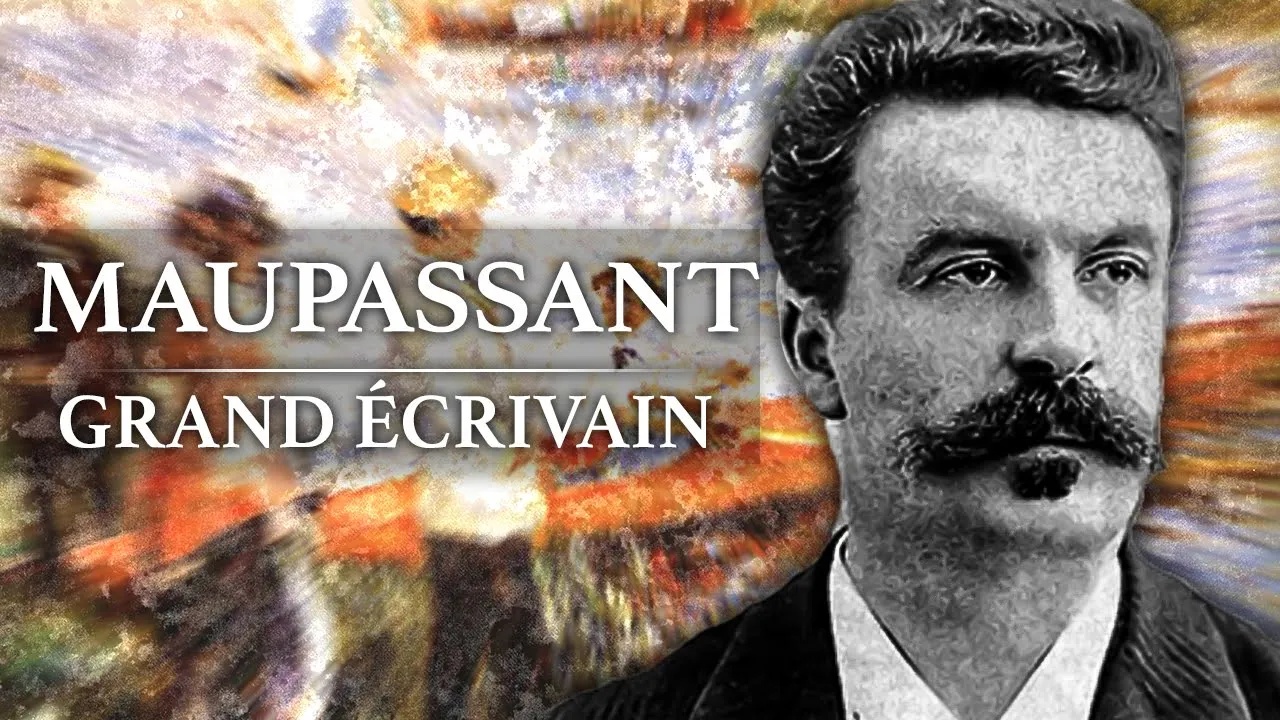
Guy de Maupassant - Grand Ecrivain (1850-1893)
Guy de Maupassant's Background
This section provides an introduction to Guy de Maupassant and his rise to fame as a French writer in the 19th century.
Early Life and Success
- Guy de Maupassant was born in Normandy, France, at the Château de Miromesnil.
- He gained recognition and prosperity through his novels, approximately 200 journalistic chronicles, and nearly 300 satirical and unrealistic short stories.
- His rapid ascent allowed him to live a luxurious lifestyle, including extensive travel, multiple female companions, and owning a yacht named "Le Bel Ami."
- He had a lavish apartment in Paris and built a villa on the Normandy coast called "La Guillette," which served as his peaceful retreat.
Literary Achievements
- Maupassant's works depicted his native region of Normandy extensively, from Fécamp to Rouen and various small Norman towns.
- He meticulously described landscapes, customs, and people from different social classes such as bourgeois, sailors, peasants (Cauchois), among others.
- Some of his notable works include "La Main," "La Ficelle," "Les Tribulations d'une Caissière," "La Maison Tellier," and "Le Noyer."
- His literary style covered various genres ranging from realism to naturalism to even elements of the fantastic.
- His most famous works include "Boule de Suif," "Bel-Ami," "Une Vie," "Pierre et Jean," and the collection of short stories titled "Les Contes de la Bécasse."
- Maupassant is often regarded as a pessimistic novelist who skillfully portrayed anxiety, fear, and human obsessions. However, this would eventually lead him into madness.
Guy de Maupassant's Birth and Family
This section explores the details of Guy de Maupassant's birth, his family background, and the significance of his birthplace.
Birth and Ancestry
- Guy de Maupassant was born on August 5, 1850, at the Château de Miromesnil near Dieppe in Normandy.
- The Maupassant family had been ennobled in 1752 but lost their noble status, possibly due to the French Revolution.
- Gustave de Maupassant, Guy's father, regained the particle "de" in July 1846 after marrying Laure Le Poittevin.
Connection to Rouen and Miromesnil
- Gustave and Laure settled in Miromesnil in 1849, which would later become Guy de Maupassant's birthplace.
- In a letter written by Laure shortly after Guy's birth, she described the specific location as having a grand staircase, a small adjoining toilet cabinet next to a large bedroom, and a round tower.
- The official baptismal record confirms that Guy de Maupassant was baptized at the Chapel of Miromesnil with special permission from the Archbishop of Rouen.
Influence of Flaubert and Family Ties
- Gustave Flaubert played a significant role as a mentor and friend to Guy de Maupassant. He guided him carefully in developing his multidisciplinary talent.
- The families of Flaubert and Maupassant were closely connected. Alfred Le Poittevin (Laure's brother) was an intimate friend of Flaubert.
- During his early years, Guy resided with his parents at Château de Miromesnil where he interacted with children from peasant families living on the estate.
Maupassant's Connection to Miromesnil
This section delves into Guy de Maupassant's deep connection to his birthplace, Château de Miromesnil, and its influence on his life and writing.
Childhood Memories at Miromesnil
- Guy de Maupassant spent the first three years of his life in the majestic Château de Miromesnil, playing in the park and beech forest with children from peasant families.
- Later in life, he revisited his birthplace and wrote about it. In a letter, he described returning to Miromesnil through the grand avenue overlooking Saint-Aubin-sur-Scie.
- The front facade of the castle faced the sea from this side.
Literary References to Miromesnil
- In one of his short stories titled "Le Rendez-vous," Maupassant made a subtle reference to his birthplace. The story depicts two lovers meeting on Rue de Miromesnil, alluding to their shared memories of youth.
- The landscapes and customs of the picturesque and authentic Caux region deeply influenced Maupassant's literary inspiration.
- The Grainville Manor near Harfleur also played a significant role in Maupassant's life as he visited his cousin Gerber there.
Significance of Grainville Manor
- The Grainville Manor near Harfleur held sentimental value for Guy de Maupassant as it was close to his parents' residence at Graville-l'Orcher.
- He cherished this region where he had roots and spent time with family members such as his grandmother Madame Paule.
- The manor inspired him profoundly and is magnified in his masterpiece "Une Vie." It was referred to as "Le Manoir des Peuples" and depicted as a grand Norman dwelling with a spacious farmhouse.
Maupassant's Love for Normandy
This section highlights Guy de Maupassant's deep affection for Normandy, particularly the Pays de Caux region, and how it influenced his writing.
Inspiration from Pays de Caux
- The picturesque landscapes of the Pays de Caux region in Normandy served as a constant source of inspiration for Maupassant.
- He found unique beauty in the timber-framed houses, thatched roofs, and specific features distinct to this area.
- The landscapes varied across different cantons, each with its own charm and characteristics shaped by winds, cliffs, and fields.
- From 1854 onwards, the Maupassant family resided at Château de Grainville near Imbleville, close to a stud
Early Influence of Water and Fécamp
The speaker discusses how their love for water originated from their childhood experiences in Fécamp, where they played with the children of fishermen and dreamed of voyages and adventures.
Childhood Memories in Fécamp
- The speaker recalls growing up on the shores of the sea, specifically the gray and cold waters of the North.
- Fécamp, a fishing town always battered by wind, rain, and sea spray, left a lasting impression on the speaker.
- The town's fishy smells and proximity to the coast fascinated them.
- Fécamp inspired a story called "Le Retour," which tells the tale of a fisherman's wife who believes her husband is lost at sea.
Love for Normandy's Coastline
The speaker expresses their fondness for living between two countries - Le Pays de Caux (the land) and Le Pays de Caux (the coast). They particularly mention their interest in Western Normandy when they moved from Étretat to live there.
Living Between Land and Sea
- The speaker mentions Guy de Maupassant's words about his love for Normandy's coastline.
- They describe how Maupassant abandoned his life in Étretat to settle in Western Normandy.
- Maupassant found inspiration in exploring the majestic cliffs that he later described to his friend Flaubert for his novel "Bouvard et Pécuchet."
Settling in Étretat
Maupassant eventually settles with his two children in Étretat, a popular seaside resort. He resides in a rustic villa called "Les Verreries" during the holidays, where he experiences freedom and indulges in the natural beauty of the countryside and the sea.
Life in Étretat
- Maupassant moves to Étretat with his two children, choosing this fashionable coastal town.
- He resides in a rustic villa called "Les Verreries," which means "the orchard."
- During his holidays, Maupassant enjoys the freedom between land and sea, exploring the Caux countryside and fishing with local fishermen.
- He witnesses painters like Courbet capturing the beauty of Étretat and Normandy through their art.
Deep Connection with Cliffs
Maupassant develops a deep fascination for the majestic cliffs of Étretat. He explores them extensively, gaining intimate knowledge of their intricacies. Later on, he shares his descriptions of these cliffs with Flaubert for their collaborative work on "Bouvard et Pécuchet."
Fascination with Cliffs
- Maupassant is captivated by the profound beauty of the majestic cliffs.
- He becomes intimately familiar with every detail and depth of these cliffs.
- His extensive knowledge about them becomes valuable when collaborating with Flaubert on "Bouvard et Pécuchet."
Guide to Étretat's Marvels
Maupassant becomes a valuable guide to Étretat for his friend Du Staffauber. The grandeur of the cliffs continues to fascinate him, inspiring numerous stories and novels set in this picturesque location.
Guiding Du Staffauber
- In November 1877, Maupassant writes a letter to Flaubert explaining how he can develop characters for "Bouvard et Pécuchet" by exploring Étretat's low tide and its surroundings.
- Maupassant becomes a precious guide for Du Staffauber, providing insights into the town of Étretat.
- The grandeur of the cliffs and their eternal fascination with artists continue to inspire Maupassant's stories and novels.
Swimming Adventures and Unusual Encounters
Maupassant's time spent near the sea leads to various adventures, including saving an English poet named Charles Swinburne from drowning. These encounters and experiences later influence his writing.
Swimming Adventures
- Maupassant learns to swim in the sea while spending time with local fishermen.
- He saves an English poet named Charles Swinburne from drowning, which leads to a dinner invitation at Swinburne's cottage in Dole Manset.
- Maupassant becomes fascinated by an eccentric woman he meets during this encounter, inspiring him to write macabre tales like "La Main Ecorchée."
Influences of Bouilhet and Flaubert
Bouilhet and Flaubert play significant roles in guiding and mentoring Maupassant in his literary pursuits. Their friendship shapes his writing style, leading him towards prose rather than poetry.
Mentorship from Bouilhet and Flaubert
- Bouilhet and Flaubert provide valuable advice and constructive criticism to the young Maupassant.
- They encourage him to focus on prose rather than poetry.
- The mentorship takes place at the Manoir de Borne near Goderville, where they engage in hunting parties that inspire several of Maupassant's stories.
Friendship between Flaubert and Maupassant
Flaubert and Maupassant, both born in Normandy, share a deep friendship. Flaubert becomes a mentor to Maupassant in the literary world, and Maupassant's growth as a writer reminds Flaubert of his late friend Louis Bouilhet.
Friendship and Mentorship
- Flaubert and Maupassant are both natives of Normandy's Pays de Caux.
- Flaubert becomes a mentor to Maupassant in the literary field.
- The passing of Bouilhet deeply affects Flaubert, but seeing Maupassant grow as a writer brings him joy and reminds him of his late friend.
The Life and Works of Guy de Maupassant
This section provides an introduction to Guy de Maupassant, a French writer known for his realistic portrayal of everyday life in Normandy. It discusses his early years, education, and career as a civil servant.
Early Years and Education
- Maupassant was born in Normandy and had a deep connection to the region.
- At the age of 20, he moved to Paris to study law based on the advice of his mother and Flaubert.
- In 1872, he joined the Ministry of Marine and Colonies as a clerk.
Career as a Civil Servant
- While working in the administration, Maupassant found inspiration for his writing from observing the functioning of bureaucracy and social codes.
- He wrote several short stories during this time, including "The Employees," "The Inheritance," "The Jewelry," "Sundays of a Bourgeois in Paris," "The Horseman on Horseback," and "The Relative."
- Despite finding his work in the administration boring, Maupassant also pursued activities that he was passionate about, such as learning writing under Flaubert's guidance and enjoying boating on the Seine.
Love for Boating and Seine River
- Maupassant developed a deep love for boating on the Seine River.
- He frequently explored various towns along the river with his friends.
- He enjoyed visiting guinguettes (open-air taverns) like La Grenouillère and Maison Fournaise.
- These experiences on the river served as inspiration for many of his works.
Parisian Addresses
- Maupassant lived in small apartments in Paris' 9th arrondissement near popular cafes frequented by artists and writers.
- His addresses included Rue Moncey, Rue Clauzel, and later Rue Léon Fontaine.
- During this time, he worked diligently on his literary career and received guidance from Flaubert.
Literary Circle and Success
- Maupassant regularly visited Flaubert's home, where he met other notable writers like Daudet, Tourgueniev, Goncourt, and Zola.
- He participated in literary gatherings at Café Trappes and attended meetings of the naturalist movement led by Zola at Médan.
- In 1881, Maupassant's short story "Boule de Suif" gained him widespread recognition and praise from Flaubert.
Maupassant's Life on the Seine
This section focuses on Maupassant's experiences along the Seine River and how they influenced his writing. It discusses his love for boating, social activities on the riverbanks, and the impact of these experiences on his works.
Love for Boating
- Maupassant had a deep passion for boating on the Seine River.
- He frequently went boating with his friends in a yole named Éta.
- They explored various towns along the river such as Bezons, Argenteuil, Sartrouville, Bougival, and Château Bougival.
Social Activities on the Riverbanks
- The riverbanks of the Seine were filled with lively activities that fascinated Maupassant.
- He enjoyed the constant hustle-bustle of people engaged in swimming, artistic competitions, liberated women enjoying themselves, music performances, and leisurely boat rides.
Influence on His Works
- Maupassant found inspiration for his writing from observing life along the Seine.
- His experiences on the river served as a reflection of life itself.
- The simplicity and joy he found in these moments influenced his works, including his novel "Pierre et Jean" and several short stories like "Mouche," "Souvenir d'un Canotier," and "Yvette."
Maupassant's Relationship with Flaubert and Literary Success
This section explores Maupassant's relationship with Flaubert, their literary collaboration, and Maupassant's rise to success as a writer. It also discusses the impact of Flaubert's death on Maupassant.
Mentorship by Flaubert
- Flaubert mentored Maupassant in his writing career.
- They had regular meetings at Flaubert's home, where they discussed literature and writing.
- Other notable writers like Daudet, Tourgueniev, Goncourt, and Zola were also present during these gatherings.
Literary Collaboration
- Flaubert advised Maupassant to write continuously without publishing until he mastered his craft.
- For nearly a decade, Maupassant followed this advice and regularly visited Flaubert for guidance.
- During this time, he honed his skills as a writer and produced remarkable poems.
Rise to Success
- In 1876, Maupassant published a poem titled "Au Bord de l'Eau" (By the Water's Edge), which showcased his talent as a writer.
- This publication propelled him into the ranks of esteemed authors.
- He gained recognition from prominent newspapers such as Le Figaro and Gil Blas.
Impact of Flaubert's Death
- Unfortunately, shortly after achieving literary success, Flaubert passed away suddenly in 1880.
- This was a significant loss for Maupassant as he lost his mentor and guide.
- However, he continued to build upon the foundation laid by Flaubert and established himself as a prominent writer in his own right.
Guy de Maupassant's Life and Career
This section provides an overview of Guy de Maupassant's life and career, including the construction of his house, his writing style, and his move to the Batignolles neighborhood.
Construction of "La Guillette" House
- Maupassant builds his house on the route de Criquetot, which he names "La Guillette" after his first name.
- The success of "Maison Tellier" and its associated royalties allows him to build the house on a plot of land given by his mother.
- The decoration of the house is eclectic, with objects from various cultures such as golden Buddhas, travel souvenirs, bear skins, oriental carpets, Italian designs, and Rouen faience.
- Visitors are amused by a fishing boat placed in the garden as if it had been carried there by a monumental storm.
Writing Career and Move to Batignolles
- Maupassant's dedication to writing and disciplined lifestyle enable him to complete notable works like "Bellamy" (1885) and "Pierre et Jean" (1887).
- From 1880 onwards, he experiences ten years of literary success and recognition in Paris.
- He moves from the 9th arrondissement to the more fashionable Batignolles neighborhood symbolizing his social achievement.
- Initially residing on Rue Dulong (at number 83), he later moves to Rue Jacques Bingen (now Rue Montchanin).
- During this time, he collects romantic relationships but never marries or acknowledges paternity for at least three children.
Maupassant's Prolific Writing Period
This section highlights Maupassant's prolific writing period from 1880 to 1890 when he produces numerous novels, short stories, and newspaper articles.
- Maupassant writes nearly 300 short stories compiled into 18 collections and six novels during the period from 1880 to 1890.
- Notable works include "Une Vie" (1883), "Mont-Oriol" (1885), "Pierre et Jean" (1887), "Fort comme la mort" (1889), and "Notre Coeur" (1891).
- He also publishes around 200 chronicles in newspapers, including "Au Soleil" (1884) and "La Vie Errante" (1891).
- Maupassant's works often critique Parisian realism, high society, journalism, corruption, and the grand boulevards of the Belle Époque era.
Maupassant's Depiction of Bellamy and Life in Batignolles
This section explores Maupassant's depiction of Bellamy and his portrayal of life in Batignolles in his writings.
- The grand boulevards of Paris become a meeting place for socialites, businessmen, and artists during the 1880s and 1890s.
- Maupassant describes this environment in various chronicles as well as his famous novel "Bellamy."
- In his later years, Maupassant's life is marked by decline, suffering, solitude, and madness.
- His illness progressively affects his writing and mental state. He depicts this degeneration through terrifying hallucinations in many of his stories.
Maupassant's Decline and Legacy
This section focuses on the decline of Guy de Maupassant's health and his legacy as a writer.
- Towards the end of his life, Maupassant experiences physical deterioration, suffering, loneliness, and mental instability.
- He documents his deteriorating health and terrifying hallucinations in stories such as "L'Orne," "La Chevelure," and "Mademoiselle Hermet."
- On December 31, 1891, he writes about his impending death in "Je suis mon passe en or."
- Maupassant passes away on July 6, 1893, in a state of total decline at Dr. Blanche's clinic.
- Some of his unfinished works include novels like "L'Angélus" and "L'Âme Étrangère."
- Guy de Maupassant leaves behind timeless masterpieces that continue to captivate literature enthusiasts to this day.
The transcript provided does not cover the entire video.
Turn any video into a summary like this
YouTube links, meetings, lectures. With transcripts, search, and chat.