Who is the Product Owner Anyway? - Scrum Pulse Webcast #24
Introduction
The introduction provides an overview of the webinar and introduces the two speakers, Dave West and Rob Vaughn Lennon.
Speakers Introduction
- Dave West is CEO and product owner at Scrum.org.
- Rob Vaughn Lennon is a product owner trainer, scrum master trainer, and coach for ProAwareness.
Scrum.org Overview
This section provides an overview of Scrum.org and its role in maintaining the Scrum Guide. It also highlights the importance of product ownership in software development.
Scrum.org Overview
- Scrum.org is the home of Scrum and helps maintain the Scrum Guide with Ken Schwaber and Jeff Sutherland.
- Between 12 to 15 million people do scrum every day.
- Product ownership is important in software development, but it's often neglected when talking about the profession of software development.
ProAwareness Overview
This section provides an overview of ProAwareness' mission to transform software-driven companies into responsible enterprises. It also explains how they try to bring more agility into workforce today.
ProAwareness Overview
- ProAwareness tries to transform software-driven companies into responsible enterprises by improving both business and IT sides.
- They try to bring more agility into workforce today.
Product Ownership and Requirements
This section covers the role of product ownership, common misconceptions, and practical advice for making it work.
The Role of Product Ownership
- As a product owner, you are responsible for expressing the product backlog items, ordering them, optimizing value, and ensuring that the product backlog is visible and transparent.
- The product owner is accountable for everything above but not necessarily responsible for delivering it every day. They work with a development team to deliver value.
- The speaker shares his experience as a product owner of the Rational Unified Process (RUP), where he made the mistake of never saying no to customers. This resulted in adding more content until it became an incredibly complex process.
Common Misconceptions
- There are many myths surrounding requirements in the role of product ownership. One common misconception is that requirements are static and can be fully defined upfront.
- Another myth is that only one person can play the role of product owner. In reality, there can be multiple people involved in this role depending on the size and complexity of the project.
Making It Work
- The speaker's job as a product owner is to deliver on their mission while being accountable for delivering value. They cannot do it alone and need teams and communities to help them achieve success.
- Being a scrum master at the same time as being a product owner creates tension between roles. Separating these roles is crucial for success.
- Two key events for product owners are Sprint Planning and Sprint Review. Surrounding their work around these events can help them be successful.
The Lifecycle and Product Ownership
This section covers the lifecycle and how product ownership fits into it.
The Lifecycle
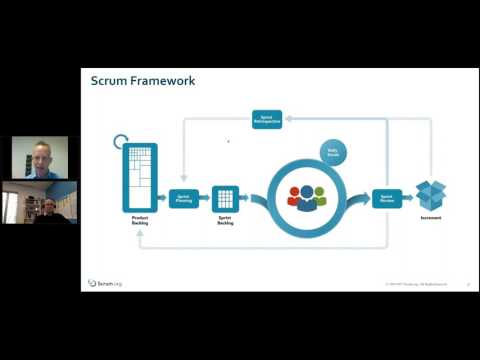
- The speaker shares a drawing of the Scrum lifecycle, which includes key events such as Sprint Planning, Daily Scrum, Sprint Review, and Sprint Retrospective.
- Product ownership is involved in several aspects of the lifecycle, including creating and maintaining the product backlog, participating in Sprint Planning and Review meetings, and collaborating with the development team to deliver value.
- The speaker emphasizes that product ownership is not just about writing requirements but also about understanding customer needs and delivering value.
Managing the Product Backlog and Sprint Planning
In this section, the speaker discusses the importance of managing the product backlog and sprint planning in Scrum.
Importance of Refinement and Sprint Planning
- Refinement and sprint planning are crucial events in Scrum.
- Preparing for sprint planning is important to focus on value and determine the most valuable items to deliver.
- After a successful refinement, sprint planning can be used for on-the-fly refinement to make smarter decisions.
Role of Product Owner
- The product owner is responsible for managing the product backlog and maximizing value.
- The product owner must be empowered by their organization to make decisions about the product.
- The product owner is the only person who can tell the development team what to do.
Proxy Product Owners
In this section, the speaker discusses proxy product owners in Scrum.
Problems with Proxy Product Owners
- A proxy product owner may be used when the real product owner is not accessible.
- A proxy may not have decision-making power, leading to confusion and lack of direction.
- It can be challenging to find a balance between accessibility and decision-making power.
Product Ownership and Decision Making
In this section, the speakers discuss product ownership and decision making. They talk about how having a strong product owner can be beneficial for a team, but also how it's important to find a balance between giving them too much control and not enough.
The Role of Product Owners
- Having a strong product owner can be beneficial for a team.
- A good example of a successful product owner is someone who can make decisions quickly when needed.
- However, it's important to find a balance between giving the product owner too much control and not enough.
- Sometimes, coaching is necessary to help the product owner learn when not to make decisions and instead ask powerful questions to the team.
Empowering Teams with Purpose
- Teams that are filled with purpose and understand their boundaries can be self-organized and work efficiently.
- Product owners provide guardrails for decision-making within these boundaries while empowering teams to make certain decisions.
- Ultimately, the product owner makes the final call in case of conflicts or challenges.
Challenges Faced by Growing Companies
In this section, the speakers discuss some common problems faced by growing companies as they scale up their teams and products.
Challenges Faced by Small Teams
- As small teams grow into larger ones, there may be challenges in making the right decisions and getting accurate data.
- However, generally speaking, small teams tend to have more success with product ownership than larger ones.
Challenges Faced by IT Companies
- IT companies that are not product-oriented may struggle with agile methodologies and have a waterfall mentality around product ownership.
- As companies grow, the complexity of their products increases, and it becomes more challenging for product owners to maintain knowledge of every aspect of the product.
- With more customers and revenue at stake, there is also increased pressure on product owners to make the right decisions.
Conclusion
- Many companies struggle with finding the right balance between giving product owners enough control while still empowering teams to make decisions within boundaries.
- It's important for growing companies to recognize the challenges they may face as they scale up their teams and products.
Agile Product Ownership
In this section, the speaker discusses the challenges of being a product owner in an agile environment and the importance of answering key questions.
Key Questions in Agile
- The speaker highlights some common questions that arise in agile development, such as when will the project be finished, how much will it cost, and when will it be ready.
- Agile does not replace these questions but rather requires stakeholders to work together to answer them completely.
- The product owner must be empowered to work with the team to get answers for these forecasts. Sprint reviews can also be used to examine progress.
Ownership Dilemma
- The product owner is a proxy for the customer, business, and decision-making. They must balance inbound/outbound worlds while being responsive to change.
- This balancing act can be challenging since saying no is required for success. However, nobody likes hearing no all the time.
- A successful product owner must embody "the art of saying no" without annoying everyone. It's one of their most important traits.
Requesting Requirements
- Being able to say no is crucial when dealing with requests and requirements from stakeholders. Without clear vision or skill in this area, delivering value becomes problematic.
Requirements on Agile Projects
In this section, the speakers discuss the importance of requirements on agile projects and how they differ from traditional waterfall projects.
Leadership Consensus and Delivering Value
- Leadership consensus is important, but ultimately delivering value is crucial.
- Requirements take a significant amount of time and effort in traditional waterfall projects.
- Testing is related to requirements and is also crucial.
- The scrum team is responsible for defining requirements with guidance from the product owner.
Vision and Communicating It
- A solid vision set by the product owner helps guide the team as a whole.
- The vision needs to be communicated continuously in many different forms.
- Techniques like lean canvas can help articulate and present the vision.
- When there are lots of feature requests coming in or bugs and defects, it's easy to lose sight of the vision.
Outcome-Based Backlog Items
- Requirements should be broken down into small chunks of value that can be articulated, tested, and measured when delivered.
- Outcome-based backlog items are necessary to deliver against the vision.
- Elevator pitches, t-shirts with written slogans, putting it on walls can all help communicate the vision effectively.
Sprint Vision and Backlog Management
In this section, the speaker discusses the importance of having a clear product vision and continuously communicating it to the team. They also talk about the challenges of backlog management and share some tips for keeping it organized.
Importance of Product Vision
- Having a clear product vision is important for guiding the sprint.
- Communicate the vision frequently on walls and whiteboards from a customer point of view.
- Everything should be measurable around that vision.
Challenges with Backlog Management
- Backlog management can be overwhelming, especially when busy.
- Refining the backlog is crucial for reviewing progress.
- Bankrupting the backlog by starting fresh can help keep it organized.
- Refinement should involve people from different teams.
Managing Overwhelming Email
In this section, the speaker shares advice on how to manage an overwhelming email inbox.
Managing Overwhelming Email
- One CEO sends out an email saying he lost all his emails after coming back from holiday to reduce his inbox size.
Visualizing Projects and Validating Business Cases
In this section, the speaker discusses how clients use visualizations to manage their projects and validate business cases. They also talk about the importance of stakeholder management and decision-making.
Visualization for Project Management
- Clients use visualizations to manage projects with specific plans.
- The visualization helps them see what kind of work is involved in the project.
- Some clients limit themselves to 50 items over three columns.
Validating Business Cases
- The speaker challenges clients to validate their business cases before adding them to the product backlog.
- They add a validated value column beside the dunk column.
- Stakeholder management is important when validating business cases.
Stakeholder Management
- One-on-one stakeholder management is crucial for building relationships with stakeholders.
- Product owners should avoid promising things through multiple stakeholders at once.
- Transparency in decision-making is essential, especially as more teams get involved.
Leadership vs. Task Management
In this section, the speaker talks about the difference between leadership and task management in product ownership.
Leadership Role
- Product ownership involves more leadership than task management.
- Managing stakeholders requires keeping them happy on a long-term basis rather than committing to short-term promises.
- Setting guardrails can help manage complexity and reduce time spent on writing criteria for user stories.
Communicating the Vision and Product Owner Role
In this section, the speakers discuss the importance of communicating the vision and determining who should play the role of product owner.
Who Should Play the Role of Product Owner?
- As organizations adopt Scrum, they need to determine who should become the product owner.
- The person who becomes the product owner depends on the organization. It could be a project manager, business analyst, or relationship manager.
- Great product owners have primary skills such as being visionary and decisive. They also have business knowledge and are technology-savvy.
- Understanding customers is crucial for great product owners. They need to know how their products address customer problems.
Communicating the Vision
- It's important to communicate the vision frequently using different forms of communication.
- Being a visionary is a crucial trait for great product owners. They need to talk about why they do what they do and how it addresses customer problems.
- Decisiveness is another important trait for great product owners. Formal leadership is necessary for some decisions that require management positions.
- Two commandments are crucial: be available while being empowered with traits such as being visionary, decisive, having business knowledge, and being technology-savvy.
Overall, it's important to communicate the vision frequently using different forms of communication. The person who becomes a product owner depends on an organization but needs to have primary skills such as being visionary and decisive. Understanding customers is crucial for great product owners.
Making Agile Work: The Maturity of the Product Owner
In this section, the speakers discuss the different levels of maturity for a product owner and how it can affect the success of an agile project.
Levels of Maturity
- There are five levels of maturity for a product owner, ranging from a simple scribe to an entrepreneur.
- The pink scribe is at the bottom level and only writes down what people want. The proxy is mandated for two to three sprints most of the time.
- The business representative is more like a product management position, coming from the domain with lines with clients.
- The sponsor has mended and broken teams working on projects or products.
- An entrepreneur is at the top level, acting as a mini CEO with management authority as a company decision-maker who influences others.
Importance of Maturity
- It's important to note that there's no excuse not to start at any level. However, it may be less effective if you're starting at lower levels.
- To mature over time requires paying close attention in senior retrospectives to challenges faced by teams and making decisions that empower them.
Building the Right Thing vs Building It Right
In this section, the speakers discuss building software right versus building the right software.
Building Software Right
- Charles Bradley has a great website called scrumcrazy.com in which he discusses building software right versus building the right software.
Building The Right Software
No content available.
The Role of Product Owner
In this section, the speaker discusses the role of a product owner and their responsibilities.
Responsibilities of a Product Owner
- A product owner is responsible for delivering value and ensuring that it's measured.
- Every task that a product owner does should be focused on delivering value.
- A product owner has to manage trade-offs between different requirements from different teams.
- A product owner is responsible for leading the delivery of a valuable product, driving vision, focus, and being decisive.
The Ideal Picture
In this section, the speaker talks about the ideal picture in terms of roles and responsibilities in Scrum.
The Ideal Picture
- The ideal picture involves building the right thing and managing that community as opposed to spending loads of time making sure we build the thing right.
- If we cannot reach that ideal picture, there are still values in Scrum that can guide us such as five values and an agile manifesto.
- Courage, focus, commitment, respect are some values that can help us deliver value even if we are not in the right zone.
Comparing Roles: Product Owners vs. Product Managers vs. Project Managers
In this section, the speaker compares three different roles: product owners, product managers, and project managers.
Comparing Roles
- A project manager manages activities and processes while a product owner manages value.
- When a project manager becomes a product owner they may still focus on activities and processes instead of outcomes.
- The role of a product owner is about setting vision and focusing on outcomes while the role of a project manager is about activities and work.
Product Owner vs. Product Manager
In this section, the speaker discusses the difference between a product owner and a product manager.
Agile Project Product Manager
- A good product manager has many of the same characteristics as a good product owner.
- The actual role is called the agile project product manager.
- The real focus wasn't about managing the product as enacting all these processes; it was actually about outcomes, hence the title change.
Keeper of Process vs. Keeper of Content
- In most organizations, product managers have become more keepers of process and content.
- This gets in the way of them making the right decisions around requirements.
Q&A Session
In this section, the speaker answers questions from attendees.
Availability of Slides and Recording
- All slides will be available after the webinar.
- The recording will also be available for those who missed it.
Responsibility for Value Delivered by Webinar
- The product owners are responsible for delivering value through webinars like this one.
Engaging with Scrum Door Community
- Attendees can continue to communicate with Scrum Door on Twitter, LinkedIn, or Facebook.
- Scrum Door is there to help with any challenges related to product ownership or other areas.
Turn any video into a summary like this
YouTube links, meetings, lectures. With transcripts, search, and chat.