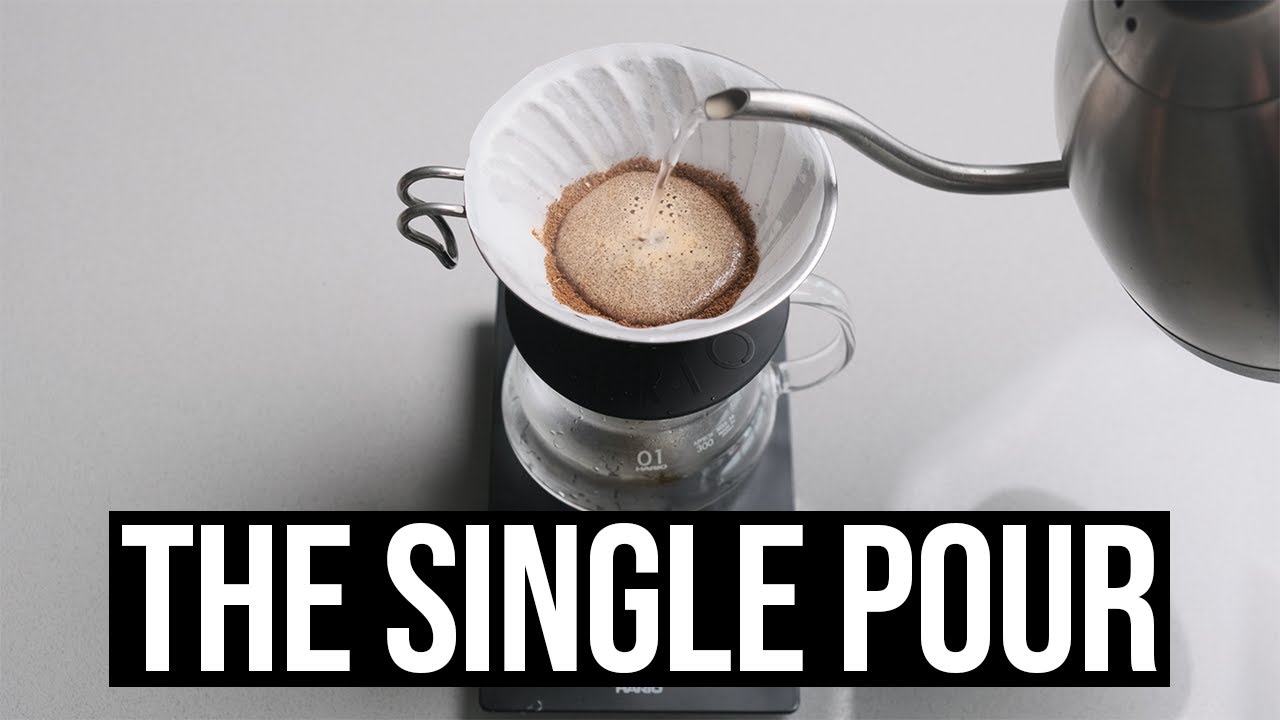
MASTERCLASS ON POUR OVER COFFEE (THE SINGLE POUR METHOD)
Introduction and Background
In this section, the speaker introduces the topic of the video and provides some background information on the Singapore pour-over technique.
- The speaker mentions that it has been over a year since they made their first Singapore video on their YouTube channel.
- The Singapore pour-over is a significant part of their identity in the coffee community on YouTube.
- The video will serve as a refresher and a remastered version of the original tutorial.
- The speaker, Vincent, is the head roaster for Tails Coffee and will be sharing his thoughts and techniques related to using the single pour method.
Vincent's Masterclass
In this section, Vincent introduces himself as the head roaster for Tails Coffee and invites viewers to join his educational and experimental videos.
- Vincent is the head roaster for Tails Coffee.
- He welcomes new viewers to his masterclass.
- Educational and experimental videos are a focus of his channel.
Video Structure
This section explains how the video will be structured, with timestamps provided for easy navigation.
- The video will cover various concepts related to the Singapore pour-over technique.
- Viewers can use timestamps to navigate between different topics or revisit specific techniques.
History and Purpose of Bloom
In this section, Vincent discusses where the idea for the Singapore pour-over came from and questions traditional approaches to blooming coffee grounds.
- When learning about coffee, Vincent watched many YouTube videos and read books but found them lacking in theories behind recipes.
- Traditional explanations of blooming focused on degassing coffee grounds before extraction.
- Vincent wanted to develop a pouring technique that would allow him to control gases and fully extract flavors from beginning to end.
Technique Overview
This section provides an overview of the Singapore pour-over technique and the equipment needed.
- The technique requires a dripper, filter paper, coffee beans, grinder (or pre-ground coffee), scale, and gooseneck kettle.
- The filter paper is folded and placed in the dripper.
- Preheating the filter paper with water is recommended.
- Ground coffee is poured into the dripper using a specific ratio of 20 grams of beans to 300 grams of water.
- The pouring technique involves a single continuous pour from beginning to end.
Dripper Options
In this section, Vincent discusses different types of drippers that can be used for pour-over brewing.
- Three main drippers are commonly used for pour-over brewing: Hario V60, Origami (small size preferred), and Chemex.
- Other devices like Hario Switch or Konos can also be used with some adjustments.
- Flat-bottomed drippers require additional tweaking but can still benefit from the techniques discussed in the video.
Gooseneck Kettle Recommendation
This section focuses on gooseneck kettles and their importance in controlling water flow during pouring.
- A gooseneck kettle is essential for precise pouring control.
- Any gooseneck kettle will work, whether electric or stove-top.
- The speaker personally recommends Bona kettles by Hario due to their shape allowing better stream control.
- Another recommended brand is Timemore due to its sharp divot at the end for more vertical pouring.
Scale and Stir Stick Recommendations
This section discusses the use of scales and stir sticks in the Singapore pour-over technique.
- A scale is highly recommended for consistency and repeatability.
- Any scale can be used, including basic ones from hardware stores.
- Stirring is suggested, but using a spoon can cause too much agitation.
- The speaker recommends using a stir stick like a chopstick, preferably metal instead of wood.
Grind Size Importance
In this section, Vincent emphasizes the importance of grind size in achieving even extraction.
- Grind size plays a crucial role in achieving even extraction.
- Finer grind sizes result in more even extraction compared to coarser grinds.
- The speaker suggests using a medium-fine grind size for the Singapore pour-over technique.
Timestamps are provided for each section to facilitate easy navigation.
Water Temperature and Roast Profile
In this section, the speaker discusses how water temperature and roast profile affect coffee brewing.
Water Temperature for Different Roast Profiles
- The water temperature used for brewing coffee depends on the roast profile of the beans.
- Darker roasts require lower water temperatures, while lighter roasts require higher water temperatures.
- Darker beans release fewer gases, so a lower water temperature is needed to avoid over-extraction.
- Lighter roasts release more gases, so a higher water temperature can be used without getting burnt flavors.
- Generally, 87 degrees Celsius works well for medium roasts, but it can be adjusted based on personal preference.
Pouring Technique and Water Temperature
This section focuses on pouring technique and its relation to water temperature during coffee brewing.
Adjusting Water Temperature for Different Flavors
- Lower water temperatures help remove darker flavors quickly, resulting in a more aromatic and sweet cup of coffee.
- If you have a lot of darker flavors in your coffee, using lower water temperatures can eliminate them.
- For super light and fruity roasts, higher water temperatures (up to 95-96 degrees Celsius) can be used without burning the flavors.
Controlling Gases with Pouring Technique
- Pouring from a lower height when using a kettle filled halfway allows for closer proximity to the coffee bed.
- Pouring closer to the coffee bed helps control gases released during extraction.
- Experienced brewers may not be aware of this technique's importance but pouring close to the bed yields better results.
Proper Pour Technique
This section emphasizes the importance of pour technique during coffee brewing.
Intent of Pour Technique
- The pour technique is crucial for achieving a strong first drip of coffee and maximizing flavor absorption.
- Pouring slowly and as close to the coffee bed as possible creates a gentle pour, allowing more time for water to absorb flavors.
Step-by-Step Pour Technique
- Start pouring in the middle and stay there until darker grinds have floated to the top.
- Once unsaturated grinds have lifted up, work your way out to the edges with a flush pour.
- Continue pouring down one side to maintain the flow and achieve the desired water distribution.
Filter Preparation
This section discusses proper filter preparation for specific drippers.
V60 Filter Fitting Issue
- Unlike other drippers, V60 filters do not fit perfectly, leaving a section sticking up when folded down.
- To address this issue, fold the V60 paper filter slightly further on the inside before placing it in the dripper.
Setting the Filter Perfectly
- When setting the filter, ensure that all sides are touching by pressing it gently all the way down to create a divot in the middle.
Stirring Grinds and Pouring Technique
This section covers stirring grinds and pouring techniques during coffee brewing.
Breaking Up Clumps with Stirring
- Stirring grinds after placing them in the dripper helps break up clumps and remove static, ensuring an even extraction.
Pouring Technique After Setting Grinds
- After setting the grinds in place, pour directly into the divot created in the middle of them for optimal water distribution.
New Section
In this section, the speaker discusses the importance of contact time and depth when brewing coffee with different gas levels.
Brewing with Different Gas Levels
- The speaker suggests that for gases with less contact time, it is better to brew with a more shallow depth.
- The speaker mentions that they will explain this concept further in another video.
- Encourages viewers to try out this method and share their thoughts.
Demonstration of Preparation
In this section, the speaker demonstrates the preparation process for using the V60 pour-over method.
Filter Folding and Pouring Technique
- The speaker explains that they chose the V60 pour-over method as it is commonly used.
- Demonstrates how to fold the filter by folding more on one side and pouring clockwise.
- Explains that pouring clockwise requires having the fold on the left side to prevent pushing grinds into the flap.
- Provides a tip to always fold in the same direction as your pour.
Setting up Filter
In this section, the speaker explains how to properly set up the filter in preparation for brewing.
Properly Setting up Filter
- The speaker shows how to set up the filter by pressing down on the fold line while holding it down on one side.
- Demonstrates pouring water down the middle of the filter until it fits perfectly against the walls.
- Emphasizes that properly setting up filters is important for optimal brewing results.
Grind Preparation and Pouring Technique
In this section, the speaker discusses grind preparation and demonstrates pouring technique during brewing.
Grind Preparation
- The speaker stirs grinds from top to bottom and taps them to achieve an ideal shape before starting pouring.
Pouring Technique
- The speaker starts pouring in the middle, allowing darker grinds to surface first.
- As lighter-colored grinds start to appear, the pouring speed increases while working towards the edges.
- Demonstrates a flush finish pour and mentions pouring to the desired amount.
Examining Coffee Bed
In this section, the speaker examines the coffee bed after brewing.
Examining Coffee Bed
- The speaker points out that super fines on the edges of the coffee bed prevent bypass.
- Advises stirring quickly to push super fines to the edges and prevent clogging.
- Notes that a dome shape with evenly distributed foam in the middle indicates a well-brewed coffee.
Conclusion
The transcript concludes with the speaker expressing satisfaction with their brewing results and inviting viewers to enjoy their coffee.
New Section
In this section, the speaker discusses the importance of using the pour technique and stirring in coffee brewing to extract maximum flavor from the coffee grounds.
The Pour Technique and Stirring
- The pour technique is used to guide the flow rate of water over the coffee grinds.
- After performing the pour technique, a stir is done to extract every last ounce of flavor from the coffee.
- Stirring ensures a guaranteed even extraction and full extraction for all types of coffees.
- The speaker has experience in siphon brewing where stirring is also crucial for extracting flavors.
- Different beans may require different types of stirs, and stirring can also help fix brews that were poured too quickly.
New Section
In this section, the speaker shares some frequently asked questions about coffee brewing techniques.
Frequently Asked Questions
- Grind size: The speaker always uses a medium-fine grind size regardless of the brew technique. This grind size is also used for espresso.
- Water temperature: The recommended range for water temperature is 87 to 91 degrees Celsius.
- Avoid filling the kettle too much when heating water.
New Section
In this section, the speaker encourages viewers to ask any additional questions they may have about coffee brewing techniques.
Additional Questions
- Viewers are invited to leave comments with their questions or concerns about coffee brewing techniques.
- The speaker emphasizes their willingness to share as much information as possible and provide detailed responses.
This summary includes only a small portion of the transcript.