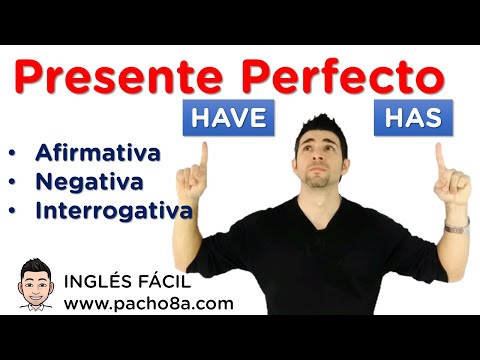
🔴 Todo lo que debes saber sobre el PRESENTE PERFECTO en inglés | Explicación fácil y clara
Understanding the Present Perfect Tense
Introduction to Present Perfect
- Francisco introduces the topic of the present perfect tense, thanking María Teresa from Spain for recommending the video.
- The present perfect is formed using the verb "have" and its variation "has."
Regular vs. Irregular Verbs
- Explanation of regular verbs, which end in "-ed," versus irregular verbs that do not follow this pattern.
- A list of verbs is presented, showing their infinitive forms, simple past, and past participle forms.
Formation of Past Participle
- The focus is on the third column (past participle), which typically ends in "-ado" or "-ido."
- Examples include:
- Work: worked (trabajado)
- Laugh: laughed (reído)
- Eat: ate (comido)
Challenges with Irregular Verbs
- Discussion on irregular verbs like "read," which have identical spelling but different pronunciations.
- Emphasis on learning these irregular forms as they do not follow a clear trend.
Usage of "Have" and "Has"
- Clarification on when to use "have" (I, you, we, they) versus "has" (he, she, it).
- The verb “have” also means “to have done something,” focusing on activities completed but still relevant.
Constructing Sentences in Present Perfect
- Example sentence structure using “we have worked a lot” to illustrate usage.
- Shortened form can be used as well: “we worked a lot.”
Negative and Interrogative Forms
Negative and Interrogative Structures in Present Perfect Tense
Overview of Present Perfect Structure
- The present perfect tense is introduced, focusing on affirmative, negative, and interrogative structures. It is described as easy to understand.
Affirmative Structure
- Example given: "They have found the shoes." The structure includes the subject "they," the auxiliary verb "have," and the past participle "found."
Negative Structure
- To form a negative sentence: "They have not found the shoes." The contraction can be used as "they haven't found" but should not be confused with other negations like "they don't have."
Interrogative Structure
- For questions, the auxiliary verb moves to the beginning: "Have they found the shoes?" This highlights that English does not use an opening question mark.
Practice Exercises
- Three exercises are provided for practice:
- Exercise 1: Peter has walked for three hours. (Correct structure: “Peter has walked.”)
- Exercise 2: You have not studied for the exam. (Negative structure emphasized.)