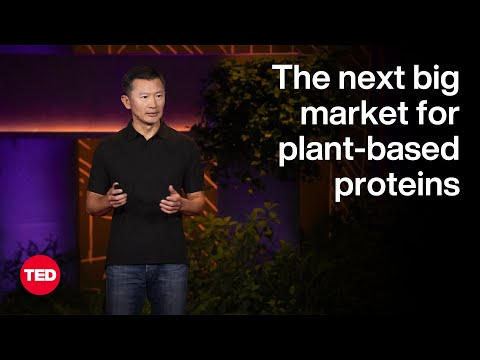
Is Alternative Meat the Recipe for a Healthier Planet? | Tao Zhang | TED
The Impact of Food Choices in China
In this section, the speaker discusses their personal journey and how they found their calling as an impact investor in the food industry. They highlight the importance of engaging China in achieving global climate goals.
Investing in Environmental Entrepreneurs (14s)
- The speaker's wife was initially surprised when they expressed interest in food as an impact investor.
- The speaker focused on supporting environmental entrepreneurs in China, particularly in the industrial space such as energy and recycling.
New Proteins as a Solution (40s)
- The speaker realized that reaching Chinese consumers is crucial for addressing environmental challenges.
- Alternative proteins, including plant-based, microbial, and cell-based options, can be sustainable alternatives to resource-intensive animal proteins.
- China consumes a significant portion of the world's meat and seafood, making it essential to engage Chinese consumers in adopting new proteins.
Business Opportunity and Investment (59s)
- Consumption per person of meat and milk is still relatively low compared to the US but is expected to increase due to rising incomes and demand.
- Global investments in innovative foods, including new proteins, have been substantial. However, China's share of these investments is relatively small.
- Investing in new proteins presents both an environmental solution and a long-term business opportunity for China.
Challenges with Consumer Adoption (162s)
- Encouraging Chinese consumers to embrace new proteins poses unique challenges.
- Food holds great cultural significance in China, often associated with banquets and abundance of meat dishes.
- Plant-based mock-meat products have had negative perceptions among mainstream consumers due to being seen as cheap or unhealthy alternatives primarily for religious vegans or vegetarians.
- Moral arguments alone may not sway Chinese consumers; taste, price, convenience are highly valued factors.
Regional Diversity and Innovation (280s)
- Chinese cuisine varies greatly across regions with distinct cooking styles.
- Successful alternative protein products must be regionally appropriate, affordable, and tasty.
- Innovation, research and development, as well as new distribution channels, are necessary to promote adoption.
- Engaging high-end chefs and creating compelling brands can help attract younger consumers.
Marketing and Collaboration (359s)
- Effective marketing campaigns are needed to raise awareness of new proteins on a wholesale level.
- Entrepreneurs should support one another and collaborate with relevant stakeholders to gain momentum.
- Investment and patience are required for long-term success.
Progress in China (365s)
- The speaker mentions the success of Oatly's oat-based drink in replacing cow's milk for milk tea in China.
- The product has gained significant traction with over 50,000 tea stores carrying it by the end of 2022.
Timestamps have been associated with bullet points where available.
New Section
This section discusses the popularity of plant-based milk in China and the potential for new protein products to have an impact in the country.
Plant-Based Milk and New Proteins
- Mainstream Chinese consumers have been consuming plant-based milk due to the lack of cow milk products.
- Plant-based drinks are seen as a low-hanging fruit for introducing new proteins in China.
- Dao Foods, an investment firm, has invested in about 20 new protein companies in China.
- Companies like Starfield, Xing Qi Ling, and Plant Now! are introducing plant-based meat alternatives at restaurant chains and stores across China.
- Zhi Wu Jia Dao has entered local convenience stores with their plant-based milk tea product.
New Section
This section highlights the efforts being made to develop the new protein sector in China.
Entrepreneurial Efforts
- Young entrepreneurs are developing products that appeal to mainstream consumers and working with distribution partners to overcome negative perceptions of plant-based products.
- Boot camps have been organized across China to inspire entrepreneurs and help them improve their technology, marketing, distribution, and funding.
- Chinese President Xi Jinping has encouraged seeking new proteins from plants and microbes.
- Local governments are getting involved by offering support programs for new protein entrepreneurship.
New Section
This section emphasizes the importance of investing in new proteins in China for both climate-friendly investors and consumers.
Importance of Investing
- Given China's rising demand for quality proteins and climate ramifications, climate-friendly investors should focus on new proteins in China.
- However, many international investors continue to shy away from investing in China due to various reasons such as geopolitical concerns or assumptions about unique solutions led by Chinese people alone.
- The speaker encourages investors, entrepreneurs, and consumers to support the new protein sector in China.
New Section
This section emphasizes the need for collective efforts to address global climate change and make China part of the global solution.
Addressing Global Climate Change
- China's role in addressing global climate change is indispensable.
- Collective efforts are needed to make China part of the global solution.
- The speaker calls for collaboration and collective action to drive positive change.
The transcript provided is already in English.
Turn any video into a summary like this
YouTube links, meetings, lectures. With transcripts, search, and chat.