Tejido epitelial y conectivo | Khan Academy en Español
Types of Animal Tissue and Focus on Epithelial and Connective Tissue
Overview of Animal Tissues
- There are four main types of animal tissues made up of eukaryotic cells: epithelial, connective, muscular, and nervous tissue. This video will focus specifically on epithelial and connective tissues.
Epithelial Tissue Characteristics
- Epithelial tissue serves as both an internal and external lining for organs; it forms the outer layer of skin and lines the cavities within the body. It also constitutes glands, including exocrine (releasing substances directly to target organs) and endocrine glands (releasing hormones into the bloodstream).
Types of Epithelial Tissue
- Epithelial tissue can be classified as simple (one layer thick) or stratified (two or more layers). Simple epithelium is found in areas where diffusion occurs, such as alveoli in lungs, while stratified epithelium is present in areas subject to mechanical stress like the esophagus.
Functionality Based on Structure
- Simple epithelium allows for efficient gas exchange due to its thin structure, whereas stratified epithelium provides protection against physical damage from food passing through the esophagus. The thickness helps shield underlying tissues from chemical or mechanical stress.
Membrane Basal Connection
- Epithelial cells are anchored to a non-cellular membrane called the basal membrane, composed of various fibers like collagen. This semi-permeable membrane allows nutrients to diffuse from underlying tissues since epithelial tissue is avascular (lacking blood vessels). Nutrients reach epithelial cells through this diffusion process.
Locations of Epithelial Cells
- Common locations for epithelial cells include:
- Outer skin layer.
- Lining of the mouth.
- Esophagus.
- Gastrointestinal tract.
- Kidney tubules.
- Blood vessels and lymphatics (known as endothelium).
Understanding Connective Tissue
Functions of Connective Tissue
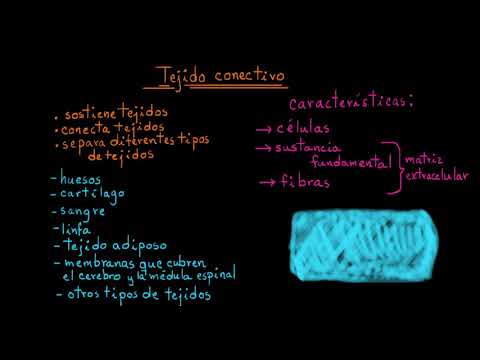
- Connective tissue primarily supports, connects, and separates different types of tissues within the body. Various types exist that may not fit neatly into these categories but serve essential functions nonetheless. Examples include bones, cartilage, blood, lymph, adipose tissue (fat), membranes covering brain/spinal cord among others.
Components of Connective Tissue
- Key components include:
- Cells: Various cell types depending on specific connective tissue function.
- Ground Substance: A viscous fluid that fills spaces between cells.
- Fibers: Provide structural support; together with ground substance they form extracellular matrix which is crucial for overall function.
Types of Connective Tissue
- Loose connective tissue is common; it connects different tissues providing flexibility and cushioning.
- Adipose tissue stores energy and provides cushioning but lacks fibers typical in other connective types.
- Dense connective/fibrous tissue offers strength/support found in dermis layer skin along with tendons/ligaments.
Special Cases in Connective Tissue
- Blood is unique as it does not contain fibers; its extracellular matrix is plasma—a yellowish liquid suspending blood cells.