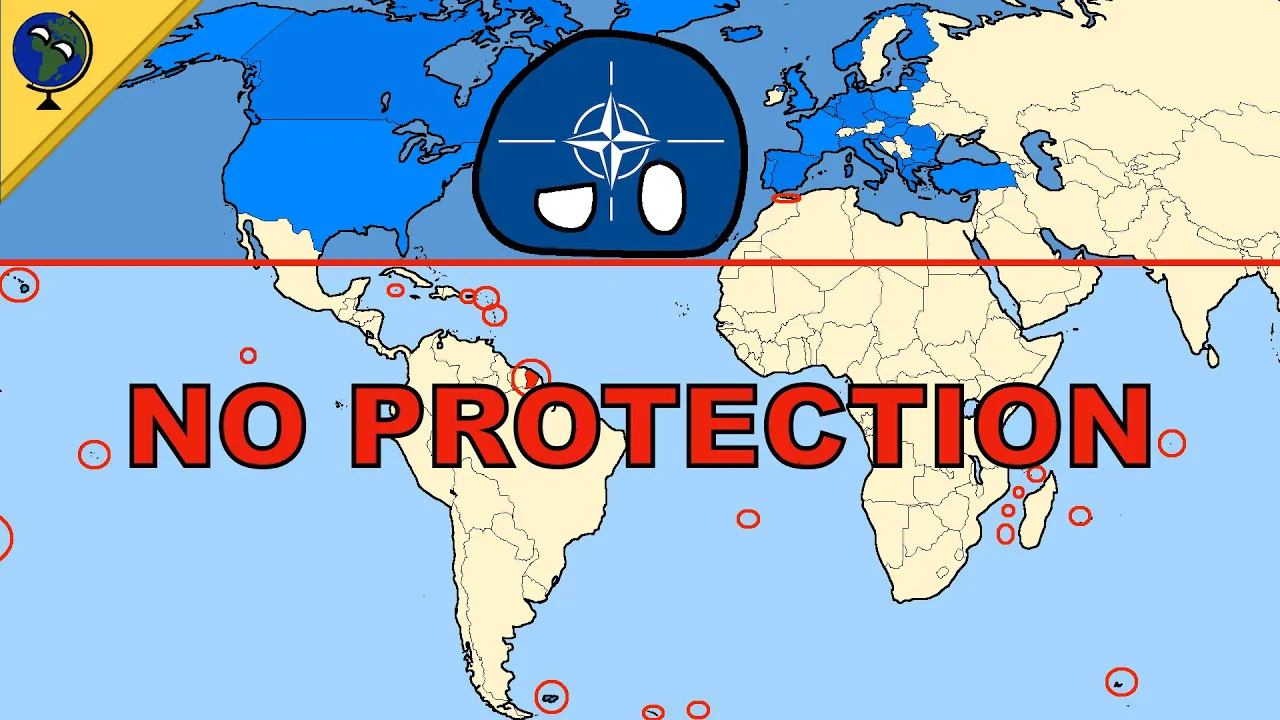
Why NATO doesn't protect members everywhere
NATO: Geographic Limits Explained
This section delves into the geographic limitations of NATO's Article 5, exploring the areas covered and excluded from protection under the treaty.
NATO Membership and Geographic Limitations
- NATO's core strength lies in Article 5, which ensures collective defense. However, this article has geographic limits specified in Article 6.
- The geographic area covered by Article 5 includes North America, Europe, Turkey (including its Asian part), and islands above the Tropic of Cancer.
- NATO's founding aimed to contain the Soviet Union during the Cold War, leading to limitations on alliance scope through vague definitions of territories.
Unprotected Territories within NATO
- Overseas territories like those owned by the UK and France fall outside Article 5 protections due to geographic constraints.
- The Falkland Islands conflict in 1982 highlighted how UK territories were not covered by NATO's collective defense.
Territorial Disputes Impacting NATO Members
This section explores territorial disputes involving NATO members' overseas territories and their implications for Article 5 protection.
French Territories and Historical Context
- French Guiana and scattered overseas territories are excluded from Article 5 coverage due to geographical limitations.
- The inclusion of French Departments of Algeria in the treaty raises questions post-Algerian independence.
Spanish Territories and Security Concerns
The Importance of NATO's Article 5 for Spanish Territories
The discussion revolves around the significance of NATO's Article 5 for protecting Spanish territories in North Africa and the potential implications of lacking such protection.
Significance of Article 5 for Spanish Territories
- Spain's concern over the lack of clarity regarding whether its North African territories are covered by NATO's Article 5 due to their location outside Europe.
- Attempts by Spanish officials to secure written guarantees for protection, with mixed results, highlighting uncertainties during the Madrid NATO Summit in July 2022.
- Emphasis on the political nature of invoking Article 5, leaving room for interpretation and potential resistance from NATO members like the United States with close ties to Morocco.
Challenges and Considerations Surrounding NATO's Article 5
Delving into complexities surrounding invoking NATO's Article 5, particularly in scenarios involving non-traditional threats or territories.
Complexities of Invoking Article 5
- The dilemma posed by the US-Morocco relationship and its impact on potential responses to a conflict involving Spain's North African territories.
- Discussion on the strength of the US military within NATO and its ability to provide security independently, raising questions about invoking Article 5 in unconventional scenarios.
- Rare historical use of Article 5 underscores its gravity as a last resort option reserved for emergencies, emphasizing that its invocation is a political decision influenced by alliance members' will.
Geopolitical Implications and Future Scenarios
Exploring geopolitical considerations related to territorial protection under NATO, potential shifts in focus towards Asia-Pacific dynamics, and evolving alliances beyond traditional boundaries.
Geopolitical Considerations
- Evaluation of how political weight influences decisions on invoking Article 5, especially concerning edge-case territories like Spain's North African holdings.
- Questioning whether adjustments to NATO's geographic scope defined by Article 6 could be made to encompass all member territories effectively.