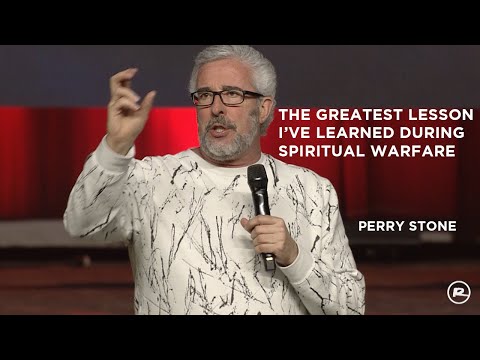
The Greatest Lesson I've Learned During Spiritual Warfare | Perry Stone
Are You Ready for the Word?
Introduction and Anticipation
- The speaker expresses excitement about sharing a verse from 1 Peter, emphasizing the importance of yearning for the word of God.
- Acknowledges the presence of attendees and encourages them to honor Brother Perry Stone, indicating a communal atmosphere.
Upcoming Events and Engagement
- The speaker shares gratitude for being part of a loving community, mentioning prayer meetings and upcoming overseas events scheduled for Thursday at 10:30 AM.
- Highlights that over 3,000 people have been saved in recent overseas meetings due to local support, particularly mentioning a generous donation that provided Bibles.
Personal Connections and Community Involvement
- Mentions an upcoming Skype event with Shane Warren on March 7th, where he will preach during a prophecy night but clarifies it won't be streamed online.
- Announces participation at Ramp Chattanooga on March 14th, encouraging attendance while introducing Rick, who has personal significance to him.
Reflections on Past Experiences
- Shares a personal story about his first computer gifted by Rick and reflects humorously on past theft incidents involving college students.
- Expresses appreciation for community support and excitement about an upcoming conference featuring Jason Upton.
Registration Announcements
- Urges attendees to register for the International Prophetic Summit in June as well as Warrior Fest happening in July with notable guests like Sean Foyt.
Spiritual Focus and Prayer Intentions
- Introduces a man who traveled 16 hours seeking prayer, highlighting dedication within the community.
- Prepares to discuss themes of hurt and offense while inviting attendees to open their Bibles to Job chapter 42.
Perry Stone's Spiritual Warfare Discovery
Personal Reflections and Apologies
- Perry Stone shares his dual nature as a bold minister yet a gentle individual, acknowledging past mistakes in preaching that may have alienated some partners.
- He expresses sincere remorse for any hurt caused to individuals, emphasizing his integrity and intention not to harm anyone during his ministry.
Overcoming Physical Challenges
- Stone recounts a period of physical collapse where he felt vulnerable, allowing the enemy to take advantage of him; however, he now feels rejuvenated.
- He describes an electrifying sensation while preaching recently, reminiscent of his teenage years when miracles were prevalent in his ministry.
The Concept of Divine Restoration
- Introducing Job 42:10, Stone discusses how God restored Job’s fortunes after he prayed for others, highlighting the theme of divine restoration.
- He emphasizes the desire for "double for your trouble," indicating that God can return one to their original state with even greater blessings.
Understanding Trouble and Responsibility
- Stone challenges the notion that all troubles stem from external forces like the devil; instead, he suggests they often arise from personal choices or attitudes.
- He recalls a message titled "It Ain't the Devil, It's You," stressing self-accountability in facing life's challenges rather than blaming external entities.
God's Methodology: Adding by Subtracting
- Discussing biblical examples like Gideon’s army reduction from 32,000 to 300 men, he illustrates how God often adds blessings through subtraction.
- Stone highlights Jesus’ miracle of feeding 5,000 with five loaves and two fish as another instance where multiplication occurs without traditional means or time constraints.
The Supernatural Dimension of God
- He explains how God operates outside natural laws—turning water into wine instantaneously demonstrates divine power over time and process.
- By removing time elements in miracles (e.g., growing crops), God showcases His ability to provide abundantly without human limitations.
Kingdom Principles: Giving to Receive
- Emphasizing kingdom principles, Stone asserts that receiving requires giving—a counterintuitive concept contrary to worldly views on acquisition.
- He encourages listeners to embrace this flipped perspective on generosity within God's dimension as essential for spiritual growth and blessing.
Understanding the Kingdom of Opposites
The Concept of Giving in the Kingdom
- The speaker emphasizes a principle of reciprocity: "give give give to get get get," highlighting that true giving is essential in the kingdom.
- A contrast is drawn between earthly responses to conflict and spiritual teachings, suggesting that instead of retaliating when harmed, one should offer the other cheek.
Dimensions of Reality
Exploring Dimensionality
- The speaker introduces the idea that there are both earthly and spiritual dimensions, indicating a complexity beyond our immediate perception.
- Different shapes represent different dimensions: a line (1D), square (2D), and cube (3D), illustrating how we can visualize dimensional progression.
Time as a Dimension
- Time is identified as the fourth dimension, measurable in various units such as seconds and years, emphasizing its significance in understanding reality.
- The concept expands to suggest that scientists propose up to ten dimensions exist within the universe, with nine being spatial and one temporal.
God's Dimensions vs. Scientific Understanding
Divine Attributes
- The speaker posits that God encompasses at least eight dimensions—length, width, depth, sound, light—indicating an expansive nature beyond human comprehension.
- An intriguing claim is made about accessing eleven dimensions potentially allowing for extraordinary feats like peeling an orange from within.
Spiritual Warfare and Satan's Realm
Understanding Satan's Operations
- Transitioning to discuss spiritual adversaries, particularly Satan as an angel operating across multiple realms—earthly and heavenly.
- Citing Ezekiel 1, it’s noted that angels can travel at incredible speeds ("as fast as lightning"), underscoring their supernatural capabilities.
Access Across Dimensions
- The speed of light serves as a benchmark for understanding angelic movement; they can respond almost instantaneously to calls for help.
- This rapid response reinforces faith in divine assistance: "before you call I will hear."
Satan's Influence Across Realms
Accessing Different Realms
- In Job's narrative, God questions Satan about his movements on Earth and through other realms like Hades or Tartarus.
- It’s revealed that Satan has access not only to Earth but also operates within higher spiritual realms (the second heaven).
Conclusion on Spiritual Authority
- The discussion concludes with insights into how Satan operates across three distinct realms: underworld (Hades), Earth itself, and higher heavens.
Understanding the Advantages of Spiritual Realms and Invisibility
The Multi-Dimensional Realm of Spirits
- The speaker discusses how spiritual beings, particularly Satan, operate in a multi-dimensional realm that includes three heavens: the cloud, stars, and beyond. This gives them an advantage over humans who can only be in one place at a time.
- Emphasizes that humans cannot access certain realms (like the underworld) without a spirit body similar to Jesus' resurrection body, highlighting limitations on human experience compared to spiritual entities.
The Mystery of Invisibility
- The speaker notes that angels and demons are invisible to humans due to a veil over our eyes. This invisibility is presented as a significant advantage for spiritual beings.
- Provides an example from the Bible where men walking with Jesus did not recognize Him until their eyes were opened, illustrating how veils prevent recognition of spiritual realities.
Fear Induced by Spiritual Encounters
- Discusses the fear experienced by individuals who encounter angels or spirits; biblical accounts show that such encounters often lead to great fear, necessitating reassurances from angels.
- Shares personal experiences with demonic attacks and visions of spirits during his youth, emphasizing the psychological impact these encounters can have on individuals.
The Consequences of Spiritual Invisibility
- Argues that if people could see into the spirit realm, it would likely induce constant fear akin to living in a nightmare. This suggests that ignorance may serve as a protective mechanism.
- Mentions instances in scripture where prophets were allowed glimpses into divine realms (e.g., Daniel's vision), indicating rare moments when God permits visibility into these dimensions.
Spiritual Warfare and Misplaced Blame
- Highlights how Satan’s invisibility allows him to orchestrate attacks without being recognized as the source. People often misattribute their struggles to other individuals rather than recognizing them as spiritual assaults.
- Explains how this dynamic complicates interpersonal relationships within communities; conflicts may arise from unseen influences rather than direct confrontations between individuals.
Personal Testimony and Community Dynamics
- Shares an anecdote about experiencing resistance during a revival event due to underlying tensions among church members who opposed change brought by new visitors.
- Reflecting on community dynamics during revivals reveals how unaddressed issues can lead to conflict; emphasizes communication as essential for resolving misunderstandings before they escalate.
A Terrifying Encounter: The Night of the Demon
Decision to Marry
- The speaker reflects on a past event in 1981 that led him to decide never to live alone again, prompting his marriage as a means of shared safety.
Strange Noises at Night
- At 3 AM, the speaker hears noises outside his apartment, including someone trying to enter the church. He notes the absence of phones or computers in the vicinity, heightening his concern.
A Frightening Vision
- Upon hearing jiggling at his door, he experiences fear and anticipates it might be the pastor with urgent news. Instead, he sees a terrifying being resembling an Egyptian mummy.
Description of the Entity
- The entity is described as having gnarly teeth and red eyes, creating an atmosphere of dread. The speaker attempts to feign sleep out of fear.
Chaos Unfolding
- The demon moves into different rooms within the church, causing chaos and destruction. This unsettling experience continues for two weeks during a revival meeting.
The Aftermath: Church Dynamics and Confusion
Revival Meeting Closure
- Despite successful revivals attracting many young people, church leaders decide to end the meetings prematurely due to fatigue and pressure from congregants.
Drug Issues in Community
- Years later, revelations emerge about drug dealers struggling due to increased youth engagement in church activities. This shift leads to significant community changes regarding drug sales among teenagers.
Threat from Drug Dealers
- Former drug dealers plot against the speaker but instead consult an occult figure connected with dark forces who sends confusion into their midst.
Internal Church Conflict
- Following these events, a chaotic church meeting ensues where members express conflicting opinions about ongoing issues without recognizing external influences at play.
Reflection on Leadership Response
- The speaker expresses disappointment over older congregation members' lack of action against perceived evil influences during this tumultuous period within the church community.
Perry Stone's Reflections on Love and Conflict
The Importance of Love
- Perry Stone emphasizes the significance of love, particularly in relation to his own life experiences and relationships with older individuals who have influenced him.
- He expresses a belief that Jesus loves everyone, including himself, which serves as a foundation for his message.
Confusion and Misunderstanding
- Stone reflects on moments during preaching where confusion arises, noting that no one stepped forward to clarify misunderstandings or read scripture.
- He identifies ego and pride as contributing factors to conflicts within the church community, suggesting that these issues lead to misinformation being spread.
Misinformation and Its Consequences
- Stone recounts false accusations made against him in 1982, highlighting how rumors can damage reputations without basis in truth.
- He discusses the impact of unreliable sources spreading lies about him, emphasizing the need for discernment among church members.
Spiritual Warfare
- The narrative shifts towards discussing spiritual warfare within the church context, indicating that invisible forces often cause division among congregants.
- Stone stresses that many fail to recognize these spiritual battles, leading to conflicts based on personal disagreements rather than understanding the true nature of their struggles.
Testimony and Healing
- During a revival years later, he shares his past experiences with demonic influences affecting church dynamics.
- A significant moment occurs when he recalls witnessing a blind woman receive healing during a service after he had prophesied about her condition.
Miraculous Events
- Stone describes an instance where God revealed specific details about an individual’s healing through vision, showcasing divine intervention.
- The emotional response from both the congregation and himself highlights the power of faith and miracles within their community.
This structured summary captures key themes from Perry Stone's reflections while providing timestamps for easy reference.
Understanding Spiritual Warfare and the Limitations of Satan
The Encounter with Pam
- The speaker recalls a conversation with someone named Pam, highlighting a change in appearance over time. This moment serves as an analogy for healing and transformation.
- The speaker emphasizes the importance of recognizing spiritual battles, suggesting that understanding these encounters can lead to greater awareness of the enemy's tactics.
Dimensions of Spiritual Warfare
- The speaker discusses Satan's advantage in invisibility but contrasts it with God's omnipresence across time—past, present, and future.
- Prophecy is described as God’s foresight into events, illustrating how divine knowledge predates human actions and decisions.
Limitations of the Enemy
- While Satan can plan attacks based on past experiences, he operates within limitations that prevent him from knowing future outcomes.
- The speaker illustrates how guilt from past actions can hinder worship and spiritual progress, emphasizing the need to overcome such feelings to move forward.
Mechanisms of Torment
- The discussion highlights how living in past mistakes paralyzes individuals from progressing into their futures.
- Fear stemming from uncertainty about tomorrow is identified as another tool used by the enemy to keep individuals immobilized.
Authority Over Outcomes
- Despite planning strategies against believers, Satan lacks authority over their reactions; this underscores personal agency in spiritual warfare.
- An example involving Job illustrates that while Satan may initiate attacks, he cannot foresee or control how individuals will respond to those challenges.
Conclusion on Divine Knowledge vs. Enemy Strategy
- God’s ability to see beyond current struggles allows Him to provide assurance that victory is possible despite immediate circumstances.
- The narrative concludes by reinforcing that while adversities may arise, faith and trust in God can lead one through trials without succumbing to despair.
Understanding Spiritual Warfare and Resilience
The Power of Perseverance
- The speaker emphasizes the importance of resilience, suggesting that even in moments of despair, individuals can find strength to rise again. They highlight a divine assurance that God has already planned for their struggles.
The Disappearance of Satan in Job's Story
- Notably, Satan is mentioned explicitly in the early chapters of Job but disappears later on. This absence signifies a shift in strategy as Job does not react as expected to his trials.
Attack Patterns and Responses
- The speaker explains how Satan employs a "hit and run" tactic against Job, inflicting suffering without provoking a curse towards God from him. This reflects an understanding of spiritual warfare where responses matter significantly.
Temptation and Authority
- Jesus faced three temptations from Satan, who departed after realizing he could not provoke Jesus into misusing his authority. This illustrates the nature of temptation as targeting fundamental human weaknesses: lust, pride, and desire.
Observing Reactions to Attacks
- The speaker encourages listeners to reflect on their own lives regarding how they respond to attacks. A response contrary to biblical teachings can open doors for prolonged spiritual battles.
Manipulation Through Accusation
- After initiating an attack on Job, Satan uses friends as instruments of accusation rather than continuing direct confrontation. Their misguided counsel serves to further torment Job while obscuring the true source of his suffering.
Misunderstanding God's Role
- Despite being under attack by Satan, Job attributes his suffering to God’s will without recognizing it was actually orchestrated by the devil. This highlights a common misunderstanding about divine involvement during trials.
The Role of Friends in Trials
- Friends become unwitting agents for Satan's agenda by spreading misinformation about Job’s character and actions. Their accusations serve only to deepen his distress while they remain unaware they are being manipulated.
Maintaining Integrity Amidst Accusation
- Throughout the accusations from friends, Job maintains his integrity and refuses to blame God for his circumstances. His steadfastness exemplifies resilience amidst external pressures aimed at causing doubt or despair.
Conclusion: Learning from Warfare Experiences
- The speaker concludes with insights gained through experiences in spiritual warfare, emphasizing that maintaining faith despite challenges is crucial for overcoming adversities without succumbing to negativity or blame towards God.
The Power of Speaking in Spiritual Battles
The Role of Personal Expression in Healing
- The speaker emphasizes that individuals have the power to determine the outcome of their spiritual battles through their words and actions.
- There is a call for maintaining an active dialogue with God, suggesting that speaking can keep one's spiritual connection open and powerful.
- Acknowledgment of a specific individual’s need to release burdens at the altar, indicating that personal expression is crucial for healing.
- The speaker reassures that releasing emotions or burdens is necessary before divine healing can occur, highlighting the importance of vulnerability in faith.
- The act of prayer and seeking guidance from God is portrayed as essential during times of distress.
Understanding Spiritual Warfare
- The speaker distinguishes between common struggles and significant spiritual battles, asserting that true challenges are often supernatural rather than natural.
- Three potential sources for these challenges are identified: self-inflicted issues, attacks from the enemy, or lessons permitted by God for personal growth.
- Emphasizes the importance of patience and discernment when facing difficulties; one should wait for divine wisdom instead of reacting impulsively.
Personal Struggles and Divine Guidance
- The speaker shares a moment of personal crisis where he contemplated leaving ministry due to overwhelming challenges but felt called to persist.
- A pivotal moment occurs during late-night prayer where he experiences intense emotional warfare followed by a profound sense of God's presence.
- Describes an encounter with God characterized by deep weeping and fear, illustrating how divine encounters can lead to transformative experiences.
Signs from God
- After praying for a sign from God, an unexpected event occurs—screens turning on—indicating divine intervention at a critical moment.
- This experience reinforces the belief in supernatural occurrences as confirmations from God during moments of doubt or struggle.
Identity and Self-Control
- Reflecting on his background, the speaker discusses how different cultural influences shape his identity while emphasizing humility in his approach to ministry.
- He acknowledges internal conflicts between fleshly desires and spiritual obedience; highlights God's instruction to remain silent during trials as part of learning trust.
Spiritual Lessons on Overcoming Challenges
The Importance of Restraint in Difficult Situations
- The speaker emphasizes the need for restraint and not reacting humorously or impulsively when faced with challenges, particularly in spiritual contexts.
- Reflecting on personal experiences, the speaker acknowledges that following divine guidance can be difficult, especially when provoked by others.
Personal Growth Through Adversity
- The speaker shares a lesson learned over 45 years: one's words can either prolong or shorten battles faced in life.
- A humorous anecdote about family dynamics illustrates how personal reactions can provoke further conflict, highlighting the importance of self-control.
Letting Go and Moving Forward
- The necessity of letting go of grievances is discussed; holding onto anger can lead to spiritual stagnation.
- A personal story reveals a period of lost anointing due to harboring resentment towards another preacher, emphasizing the consequences of negative emotions.
Divine Intervention and Revival
- An encounter with a spiritual mentor led to a pivotal moment where the speaker was reminded to focus on God's greatness rather than personal woes.
- This shift in perspective resulted in significant revival experiences marked by miraculous events during prayer meetings.
Steps Toward Spiritual Freedom
- The speaker encourages humility, repentance, and forgiveness as essential steps toward overcoming captivity caused by negative influences.
- A testimony from an attendee highlights faith's power; despite physical ailments, she believed healing would come through obedience to divine instruction.
Healing Testimony and Faith in Action
Personal Healing Experience
- The speaker recounts a past experience preaching at a church in Tulsa, Oklahoma, where he met a woman who had previously been gravely ill.
- The woman shares her miraculous healing story, stating that after returning home from the event, doctors found nothing wrong with her blood, leading to overall health restoration.
- Emphasizing the importance of faith, the speaker reflects on how genuine belief can lead to significant healing outcomes.
The Role of Faith in Healing
- The speaker highlights that true faith is demonstrated through actions, such as driving long distances for healing.
- A participant shares their struggle with a stomach infection and its lingering effects on their mental health, indicating the need for divine intervention.
Prayer and Divine Intervention
- The speaker encourages participants to believe wholeheartedly in God's power during prayer sessions for healing.
- A prayer is offered invoking Jesus Christ's name to heal physical ailments and restore brain function affected by medication.
Spiritual Empowerment
- Participants are encouraged to remain open and receptive during prayer, allowing themselves to absorb spiritual presence.
- There is an emphasis on continuous worship and prayer as essential components of receiving divine healing.
Call for Collective Faith
- The speaker invites anyone needing healing to stand up and express their faith publicly while placing hands on areas requiring attention.
- Instructions are given for participants to focus on specific areas needing healing while engaging in collective prayer.
This structured approach captures key moments from the transcript while providing timestamps for easy reference.
Healing and Deliverance Through Faith
The Power of Prayer and Authority
- The speaker emphasizes the necessity of asking for healing in faith, invoking the name of Jesus with authority to rebuke sickness and weakness.
- A call to collective prayer is made, urging everyone present to lift their voices in worship, seeking God's intervention for those who need healing.
- The importance of experiencing God's power is highlighted; many profess Christianity but have not felt His presence. The speaker prays for peace and repentance among the congregation.
Worship and Spiritual Experience
- An invitation to worship is extended, encouraging attendees to focus on God while standing in reverence.
- As worship begins, participants are encouraged to engage deeply with God’s spirit, fostering an atmosphere of healing and divine connection.
- Personal testimonies of feeling God's presence are shared, illustrating a tangible experience of spiritual empowerment during worship.
Transformation and New Beginnings
- A declaration is made about entering a new phase spiritually; past burdens are acknowledged as being lifted away.
- The speaker encourages shouting the name of Jesus from various places as a proclamation of faith and deliverance.
Deliverance from Struggles
- A strong emphasis on deliverance from mental struggles such as depression and anxiety is presented. The speaker reassures that Jesus can heal these afflictions.
- Salvation, healing, deliverance, and infilling by the Holy Spirit are proclaimed over individuals present; there’s an encouragement to speak Jesus' name over personal challenges.
Commitment to Faith
- Attendees are urged to declare their commitment to Jesus over every aspect of their lives—past, present, future—emphasizing total surrender.
- A communal affirmation follows where participants express their dedication to serving God eternally.
This structured summary captures key moments from the transcript while providing timestamps for easy reference back to specific parts of the discussion.
No Weapon Formed Against You
Control Your Response
- The speaker emphasizes the biblical principle that "no weapon formed against you will prosper," highlighting a message of resilience in the face of adversity.
- They acknowledge that challenges, symbolized by "winds and waves," will arise but stress the importance of controlling one's response to these challenges.
- The speaker invokes a spiritual assurance, stating that when faced with overwhelming opposition ("like a flood"), the "spirit of the Lord" will provide support and protection.
- A declaration of blessings is made over the audience, indicating a desire for positive outcomes and divine favor in their lives.
- The speaker concludes with a prayer for the Holy Spirit to nurture and protect the message shared, ensuring it takes root in listeners' hearts.