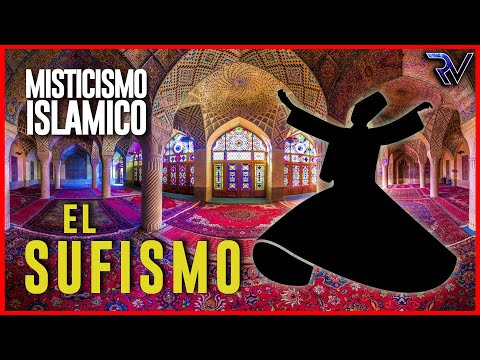
El Sufismo - Antigua Tradición Secreta #7
[Música] hola bienvenidos a revelando el velo hoy vamos a hablar sobre un tema que ha sido masivamente pedido por la comunidad del canal desde que yo recuerdo el sufismo en todo oriente próximo desde la arabia preislámica hasta la edad de oro islámica y el período otomano el pensamiento religioso se vio influenciado en mayor o menor medida por
The introduction discusses the influence of Sufism on religious thought in the Middle East from pre-Islamic Arabia to the Islamic golden age and the Ottoman period.
The Ancient Secret Tradition
- Sufism, a secret tradition, influenced religious thought in Islamic circles.
- It spread among elite scholars and princes, such as in the courts of Omella.
- The origin of these teachings is linked to ancient Babylonian knowledge passed down by fallen angels.
Teachings and Influence
- Quran mentions magic taught by fallen angels in Babylon.
- Some learned discord-causing practices but gained no benefit.
- Knowledge acquired through negative means harms oneself.
Mystical Aspects of Sufism
- Blurry line between religious and supernatural worlds observed in some sects like Sufis.
- Sufism involves seeking divine truths through personal experiences with God.
Evolution of Sufism
- Three main growth stages identified in Sufism's development.
Introduction to Sufism
This section introduces the early mystics of Christianity who focused on concepts central to Sufism, such as absolute trust in God and strict self-control.
Early Christian Hermits and Mystics
- Christian hermits, many of whom were Gnostics, concentrated on tawakkul (absolute trust in God), a central concept in Sufism.
- The Iraqi school of mystical sects emphasized strict self-control and psychological insight, influenced by early mystics like the nun Rabia al-Adawiyya.
- The Egyptian school of Sufism emerged in the 9th century with mystical speculations on human nature and the essence of Prophet Muhammad.
Development of Sufi Thought
This section discusses the transmission of Sufi teachings through small circles initially and later through written manuals to address suspicions from orthodox Islam.
Transmission and Writing Manuals
- Early Sufi thought was transmitted within small circles to avoid scrutiny but later necessitated writing manuals in the 10th and 11th centuries.
- Compendiums written in Arabic and Persian aimed to prove compatibility with orthodox Islam, despite some mystics belonging to Islamic law schools.
Comparison Between Sufism and Kabbalah
A comparison is drawn between Sufism and Kabbalah regarding their exoteric and esoteric interpretations of religious texts.
Theosophical vs. Static Approaches
- Both Sufis and Kabbalists attribute exoteric and esoteric meanings to scriptures, focusing on supernatural understanding or refinement of the soul.
Key Figures in Classical Sufism
This section highlights key figures like Al-Ghazali who contributed significantly to classical Sufi thought.
Contributions of Al-Ghazali
New Section
This section discusses the practices and rituals of mystics on their spiritual journey.
Practices and Rituals
- Mystics used ritual prayers, including repeating God's names or using rosaries with 99 or 33 beads.
- Divine truths were conveyed through visions, auditions, colors, and dreams; mystics had to rely on non-worldly trust to share these experiences.
- Sufi orders emerged in the 12th century, with Abdul Qadir Gilani forming the first significant one.
- Initiations involved a ceremony where adepts pledged loyalty to their master, resembling other mystical initiations like Ismailism.
New Section
This section delves into the disciple's training process within Sufi orders.
Disciple Training
- Disciples underwent rigorous training, often performing menial tasks and enduring harsh conditions for spiritual growth.
- A period of seclusion and initiation marked the disciple's entry into the mystical succession chain back to the Prophet.
New Section
The interaction between Sufi orders and political authorities is explored in this section.
Relations with Authorities
- Various Sufi orders had different approaches towards political rulers; some avoided contact while others fostered friendly relationships.
New Section
Explanation of the Hellenistic wave being eventually overcome by Roman Christianity. Acknowledgment and gratitude to viewers for their support.
Hellenistic Wave and Rise of Roman Christianity
- The Hellenistic wave was ultimately suppressed by Roman Christianity.
- Viewers are thanked for their continued support throughout the series.
New Section
Encouragement for viewers to engage with the content through likes, shares, and subscriptions.
Viewer Engagement
- Encourages viewers to like and share the content if they found it informative.