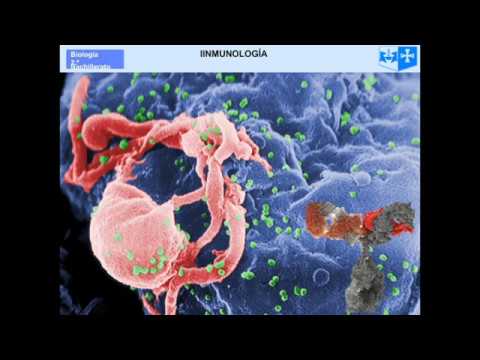
Inmunologia_Conceptos clave
What is Immunity?
Introduction to Immunity
- Immunity is defined as the ability of an organism to remain free from infectious diseases or pathogens.
- The immune system comprises a collection of organs, tissues, cells, and molecules that work together to protect the body from infections.
Types of Immune Responses
Innate vs. Adaptive Immunity
- Innate immunity: Present in most living beings; characterized by a lack of immunological memory and rapid response. It includes both internal and external mechanisms such as barriers and phagocytic cells.
- Adaptive immunity: Exclusive to vertebrates; slower to develop but provides immunological memory, allowing for a more effective response upon subsequent exposures to pathogens. This type of immunity is acquired over an individual's lifetime.
Defense Mechanisms
First and Second Lines of Defense
- The first line consists mainly of physical barriers (like skin) and mucosal surfaces that respond quickly when pathogens enter the body through wounds or other means. This results in inflammation, which can produce pus among other responses.
- If pathogens bypass these initial defenses, the second line involves cellular barriers including proteins known as complement and various types of phagocytes that act against invaders.
Third Line of Defense
- The third line represents a slower but more specific immune response involving antigens and antibodies, which will be discussed in detail later on in the video. This response has memory capabilities allowing for improved recognition during future encounters with similar pathogens.
Characteristics of Immune Responses
Innate Immunity Features
- Cells involved in innate immunity (e.g., phagocytes) respond uniformly regardless of the pathogen type or number; they do not have memory capabilities leading to consistent action against any microorganism encountered.
Adaptive Immunity Features
- In contrast, adaptive immunity exhibits high specificity towards particular antigens and possesses memory, enabling it to recognize previously encountered pathogens more effectively during subsequent exposures—this principle underlies vaccine development strategies.
Understanding Innate and Adaptive Immunity
Overview of Immune Memory Types
- The discussion begins with the distinction between innate and adaptive immunity, emphasizing that innate immunity lacks memory and serves as the first line of defense.
- Key cells involved in innate immunity include phagocytes such as macrophages and neutrophils, which perform phagocytosis, along with cytotoxic NK (natural killer) cells.
Mechanisms of Adaptive Immunity
- Adaptive immunity is historically categorized into humoral (antibody-mediated) and cellular responses; however, this classification is evolving due to new insights.
- The production of antibodies requires cooperation between B lymphocytes (which produce antibodies) and T lymphocytes, indicating a more complex interaction than previously understood.
Characteristics of Adaptive Immune Response
- A defining feature of adaptive immunity is its memory capability; it can remember pathogens for a more specific response upon re-exposure.
- Humoral responses involve antibodies primarily produced by B lymphocytes but also require T helper cells for activation.
Role of T Lymphocytes in Antibody Production
- B lymphocytes activate upon contact with antigens, transforming into plasma cells that secrete antibodies. This process necessitates help from T helper cells (Th).
- Th2 cells play a crucial role in regulating the functions of both macrophages and B lymphocytes through interleukins, facilitating antibody production.
Cellular Immune Response Dynamics
- In contrast to humoral responses, cellular immune responses do not involve antibodies; they target intracellular pathogens like viruses directly.
- Cytotoxic T lymphocytes destroy infected cells directly while requiring assistance from Th1 cells to generate memory cells.
Antigens: Triggers for Immune Response
Understanding Antigens and Epitopes
- An antigen is defined as any substance capable of triggering an adaptive immune response against a pathogen.
- Antigens can be large molecules containing multiple epitopes; each epitope represents a specific part recognized by antibodies produced by B lymphocytes.
Antibodies: Structure and Function
Understanding Antibodies
- Antibodies, also known as immunoglobulins, are globular proteins found in the serum and on the membrane of B lymphocytes. They play a crucial role in recognizing antigens.
- The structure of antibodies is significant; they consist of two heavy (H) chains and two light (L) chains, linked by disulfide bonds, providing flexibility to their overall shape.
- The constant region anchors the antibody to the cell membrane, while the variable region binds specifically to antigens, allowing for high specificity based on antigen shape.
Functions of Antibodies
- The primary function of antibodies is to identify and bind to pathogens through their variable regions. This binding can block pathogen effects or physically eliminate them.
- Key contributions of antibodies include memory formation and specificity in immune responses.
Immunological Memory
Primary vs. Secondary Immune Response
- Immunological memory allows for a faster response upon re-exposure to previously encountered pathogens compared to new ones. This capability is unique to adaptive immunity.
- Upon first exposure (primary response), B lymphocytes produce IgM antibodies after a latency period before generating specific immune responses.
Characteristics of Responses
- In primary responses, memory cells are created that enhance future reactions against familiar antigens.
- During secondary exposure, these memory cells facilitate a quicker and more robust production of antibodies due to prior contact with the antigen.
Differences Between Primary and Secondary Responses
Enhanced Response Mechanism
- In secondary responses, IgM is produced again but at a much higher rate due to pre-existing clones from memory cells that recognize the antigen quickly.
- The speed and quantity of antibody production during secondary exposure surpasses that of primary exposure due to established memory cells.
Longevity of Immune Response
- Secondary immune responses not only occur faster but also result in longer-lasting antibody presence compared to primary responses which diminish more rapidly over time.
Immune System Dysfunctions
Overview of Immune Deficiencies
- The immune system's main role is protection against infections while preserving body tissues; however, it can sometimes fail leading to dysfunction or deficiencies which may be inherited or acquired.
Understanding Immune System Malfunctions
Allergies and Immunodeficiencies
- The opposite of a well-functioning immune system includes allergies and immunodeficiencies, both of which can cause harm. Allergies represent an excessive response, while immunodeficiencies indicate an inadequate response.
- In allergies, the body mistakenly identifies harmless substances as harmful pathogens or parasites. During the first exposure, lymphocytes produce immunoglobulins as a primary response.
- Upon subsequent exposures to the allergen, a strong inflammatory reaction occurs, leading to tissue damage due to what is termed a secondary response. This reflects hypersensitivity where non-harmful substances are treated as threats.
Autoimmune Diseases
- Immunodeficiencies occur when certain immune agents are altered or absent, increasing susceptibility to infections. Here, defense cells may mistakenly attack the body's own tissues instead of foreign invaders.
- Autoimmune diseases arise from errors in the immune system's ability to detect and attack foreign cells. The immune system erroneously targets its own organs and tissues as if they were pathogens, potentially causing tissue destruction and inflammation; rheumatoid arthritis is one example of such conditions.