Ingresos Costos y Gastos en Hoteles
Analysis of Hotel Operations: Revenue, Costs, and Expenses
Overview of Hotel Financial Management
- The video discusses the management of revenues, costs, and expenses in hotel establishments, building on previous content about hotel structure by processes and departments.
- It emphasizes that hotels often divide their financial analysis by processes or regions to better manage costs associated with different areas within the establishment.
Revenue Generation in Hotels
- Most hotel revenues are operationally generated from their services, contrasting with travel agencies where income is primarily non-operational as they act as intermediaries.
- In the hotel sector, it is crucial for most revenues to be derived directly from operations rather than third-party sources.
Types of Revenues
Operational vs. Non-Operational Income
- The distinction between operational (directly related to core business activities) and non-operational income (from unrelated activities) is highlighted.
- For hotels, primary operational revenue comes from accommodation services; this includes various forms of lodging arrangements.
Accommodation Revenue Models
- Nightly Rates
- Traditional model where guests pay for overnight stays; check-in typically occurs in the afternoon with check-out by noon.
- Day Use Rates
- Guests pay for a fraction of a day without overnight stay; common for airline passengers needing temporary lodging due to flight delays.
- Monthly Stays
- Longer-term contracts usually preferred by companies requiring consistent accommodations for executives; however, regulations limit stays over 30 days to maintain tourist status.
- Packages and All-Inclusive Plans
- These include bundled services such as transportation and meals alongside accommodation; popular among tourists seeking comprehensive experiences.
Additional Revenue Streams
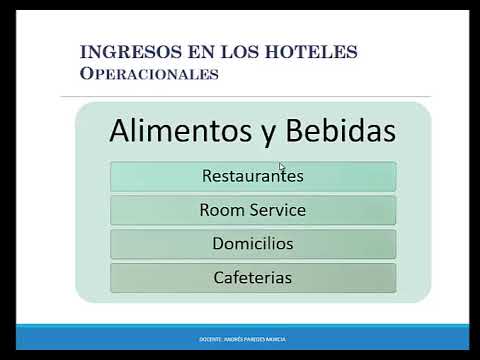
- Besides accommodation, hotels also generate significant income through food and beverage sales from restaurants, room service, catering services, and cafes.
Understanding the Structure of Food and Beverage Departments in Hospitality
Overview of Food and Beverage Management
- Some authors and hotel companies view events and banquets as a subsection within food and beverage departments, while others treat them as an independent department due to their scale and significance.
- Regardless of classification, events contribute to operational income within food and beverage sectors.
Analysis of Bars and Cantinas
- Bars are analyzed independently from other beverage services because they sell different types of products, particularly alcoholic beverages.
- The lobby bar serves direct drinks without mixology, catering primarily to guests arriving at the establishment.
Mini Bars and Additional Services
- Mini bars are included in the food and beverage department despite being operated by staff or through self-service; they are considered part of bars due to their offerings.
- Four main revenue streams identified: accommodation, food & beverages, banquets & events, bars & cantinas. A fifth category includes smaller service areas that do not warrant independent departments.
Minor Departments in Hospitality
- Minor departments encompass areas providing direct customer service but lack sufficient size for independence; examples include telecommunications billing for long-distance calls.
- Business centers offering internet access, photocopying services, small meeting spaces also fall under minor departments.
Non-operational Income Sources
- Non-operational income is categorized into four parts; financial income includes interest from bank accounts which does not relate directly to the hotel's core business operations.
- Currency exchange differences can generate non-operational income when hotels manage foreign currency transactions differently than market rates.
This structured summary captures key insights from the transcript regarding the organization of food and beverage departments in hospitality settings while linking each point back to specific timestamps for easy reference.
Currency Fluctuations and Non-Operational Income in Hotels
Understanding Currency Exchange Losses
- The currency exchange market can fluctuate, impacting the value of money received. For instance, if a hotel receives 300 pesos but the bank's exchange rate drops to 2900 pesos per dollar, it results in a loss of 100 pesos for each dollar exchanged.
- Despite initially appearing profitable with an income of 300 pesos, fluctuations can lead to actual losses when the final conversion rate is lower than expected.
Non-Operational Income Sources
Rental Income from Leases
- Hotels often generate non-operational income through leasing spaces within their premises. This income comes from activities not directly related to core hotel services like lodging or food and beverage sales.
Asset Sales and Depreciation
- When hotels upgrade equipment (e.g., replacing old televisions), they may sell depreciated assets at a lower price. The revenue generated from these sales is classified as non-operational income.
- Even though selling old televisions generates revenue, it does not align with the hotel's primary business objective; thus, it's categorized as non-operational income.
Classification of Hotel Revenues
Operational vs. Non-Operational Income
- There are various types of revenues in hotels: operational (from core services) and non-operational (like rental or asset sales). Some revenues may not fit neatly into these categories and are classified under "diverse" accounts.
Overview of Hotel Expenses
Types of Expenses
- Similar to revenues, hotel expenses are divided into operational (related to daily operations) and non-operational expenses.
Detailed Expense Classifications
- Operational expenses include costs associated with administration or sales activities necessary for running the establishment effectively.
Distinction Between Costs and Expenses
- Unlike traditional businesses that differentiate between costs (directly tied to product production) and expenses, hotels typically classify all expenditures as expenses except for food and beverage costs.
Specific Examples of Operational Expenses
Administrative Costs
- Administrative operational expenses encompass all necessary costs for effective hotel operation, including salaries for staff involved in service delivery.
Importance of Accurate Classification
- Proper classification is crucial; even though certain roles contribute to revenue generation (like receptionists), their salaries are recorded as administrative operational expenses rather than direct costs associated with sales.
This structured overview provides insights into how currency fluctuations affect hotel finances, sources of non-operational income, classifications of revenues and expenses within the hospitality industry.
Understanding Professional Fees and Operational Costs in Hospitality
Overview of Professional Fees
- Professional fees are associated with services provided by qualified individuals, requiring a certain level of expertise.
- Examples include rental agreements for equipment or furnishings needed during operations, such as hotels renting out rooms under property management structures.
Administrative Expenses
- All expenses related to tourism associations and community participation must be recorded, including contributions to local organizations.
- Hotels often belong to various community action boards, necessitating the registration of all related payments.
Insurance and Service Costs
- Insurance is categorized as an operational expense essential for service quality and risk management.
- Other operational costs include public services, legal fees (e.g., notary services), and maintenance expenses for hotel infrastructure.
Travel and Depreciation Expenses
- Travel expenses are limited to those incurred by managerial staff representing the hotel; other travel costs are not included.
- Depreciation reflects the loss of asset value over time, impacting financial statements significantly.
Miscellaneous Operational Costs
- A miscellaneous account captures unclassified operational expenses like office supplies or parking fees that do not fit into predefined categories.
Sales Operational Expenses: Key Components
Sales Promotion Expenditures
- This section records all costs associated with sales promotions, advertising, and marketing efforts aimed at boosting business visibility.
Personnel Costs Related to Sales
- Personnel-related expenses specifically tied to sales departments include salaries for sales staff and commissions for promotional activities.
Additional Marketing Contributions
- Marketing expenditures may also cover specialized publications or travel costs directly linked to sales initiatives.
Financial Non-operational Expenses
Financial Management Costs
- Non-operational financial expenses encompass necessary but indirect costs such as currency exchange losses or bank interest charges.
Banking Fees
- Various banking fees arise from transactions or credit assessments that need recording under financial management.
This structured approach provides a comprehensive overview of professional fees, administrative costs, operational expenditures in hospitality settings while ensuring clarity through timestamps for easy reference.
Understanding Hotel Financials
Revenue and Losses in Hotel Operations
- The hotel can sometimes resemble a garage sale, where sales generate income despite the asset's book value being depreciated. Selling above this value results in profit, while selling below incurs a loss.
- When losses occur from selling below recorded values, it indicates that money is being lost in the process. Various accounts are used to track non-operational expenses that do not fit into previous categories.
Classification of Income and Expenses
- Revenues are categorized into operational and non-operational types, while expenses are divided into operational (sales and administration) and non-operational categories.
- Costs refer to recoverable expenditures made shortly after product sales, whereas expenses may take longer to recover at the end of an accounting period. This distinction highlights the difference between costs and expenses.
Understanding Costs in Hospitality
- Expenses relate directly to administrative departments and sales tracking, while costs are associated with products sold. Costs can be easily inventoried compared to expenses.
- Costs are immediately recoverable upon sale; however, expenses are identified by periods and recovered later. Key elements of cost include raw materials, labor, and indirect service costs.
Components of Costing
- Raw materials encompass all necessary supplies for producing goods or services; they should be identifiable and measurable. In hospitality, measuring certain costs like water usage per guest is challenging due to variability.
- The only recognized cost in hotels is food and beverage; everything else falls under expense classification. Labor costs include salaries plus additional benefits related to employees involved in service delivery.
Indirect Service Costs
- Indirect service costs involve resources needed for service provision but not directly tied to specific products (e.g., bellhops or receptionists). These roles can be eliminated without affecting room sales directly.
Practical Application of Cost Classification
- A practical exercise is suggested for students: classify a list of 25 items as either operational or non-operational revenues/expenses based on their definitions discussed earlier.
- Students will categorize items digitally according to their classifications—operational vs. non-operational—and analyze scenarios where hotels incur losses when selling below original purchase values.