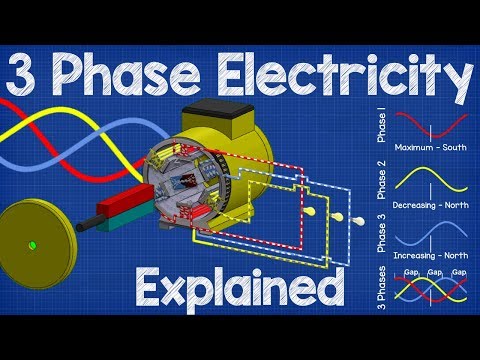
How Three Phase Electricity works - The basics explained
Three Phase Electricity Explained
Introduction to Three Phase Electricity
- Paul introduces the topic of three-phase electricity, indicating it follows a series on electrical engineering.
- The video will cover how a simple AC generator works, progressing from single phase to two phase and finally three phase power.
Understanding AC Generators
- A basic setup involves wrapping copper wire into coils placed opposite each other within a stator, creating a complete circuit.
- Rotating a magnet between these coils disturbs free electrons in the copper wire, initiating an electrical current flow.
Magnetic Field Dynamics
- As the magnet rotates, its polarity changes; this affects electron movement in the coils as they experience varying magnetic field intensities.
- The magnetic field's intensity peaks at either side of the coil before returning to neutral, influencing electron speed and direction.
Alternating Current (AC)
- The alternating nature of AC is explained: electrons move back and forth due to changing magnetic fields, resembling ocean tides.
- A graph plotting electron speed during rotation reveals a sine wave pattern representing current flow over time.
Frequency and Power Representation
- Each full rotation of the magnet constitutes one cycle; frequency (measured in hertz) indicates cycles per second (e.g., 50 or 60 Hz).
- This frequency impacts power delivery; connecting devices must match their required frequency for optimal operation.
Challenges with Single Phase Power
- When connected to a lamp, brightness fluctuates with current flow—leading to flickering light that can be annoying in practical use.
Introducing Multi-phase Systems
- To mitigate flickering, adding another set of coils (second phase), positioned 120 degrees apart improves lighting consistency.
- Further enhancement comes from introducing a third phase; this arrangement ensures at least one lamp remains bright at all times.
Conclusion on Three Phase Power Efficiency
Understanding Three Phase Power
Basics of Lighting and Power Phases
- The lamps in homes operate on a single phase, which can cause flickering that is imperceptible to the human eye unless recorded in slow motion.
- Single-phase power is less efficient for powering larger equipment; three-phase power is preferred for industrial applications.
Advantages of Three Phase Power
- Three-phase power provides significantly more energy, allowing for higher water pumping and faster motor operation.
- Most electrical generation and distribution systems utilize three-phase power, with transformers adjusting voltage levels as needed.
Distribution of Electricity in Buildings
- Large buildings often connect all three phases to supply substantial industrial equipment while also allowing single-phase connections for smaller devices.
- In skyscrapers, essential services like lift motors and air conditioning require three-phase power, whereas office equipment typically uses single-phase.
City-Wide Electrical Distribution