UD4 Normas de PRL y protección ambiental 6
Fire Safety and Ergonomics in the Workplace
Importance of Fire Extinguishers
- It is crucial to have fire extinguishers readily available in work areas, not just for electrical causes but for all potential fire risks.
- Regulations mandate that extinguishers be located near electrical equipment or heat sources, with specific types designated for different kinds of fires (solids, liquids, gases).
- Proper training on how to use extinguishers is essential; specialized instruction should be provided to ensure effective use during emergencies.
Emergency Planning
- Companies must establish an emergency plan detailing evacuation procedures and actions to minimize harm during a fire incident.
Tool Safety and Usage
- Misuse of tools can lead to accidents; it’s important to use specific tools designed for handling equipment safely.
- General guidelines are available regarding the safe handling of common tools like pliers, screwdrivers, and drills.
Ergonomic Considerations
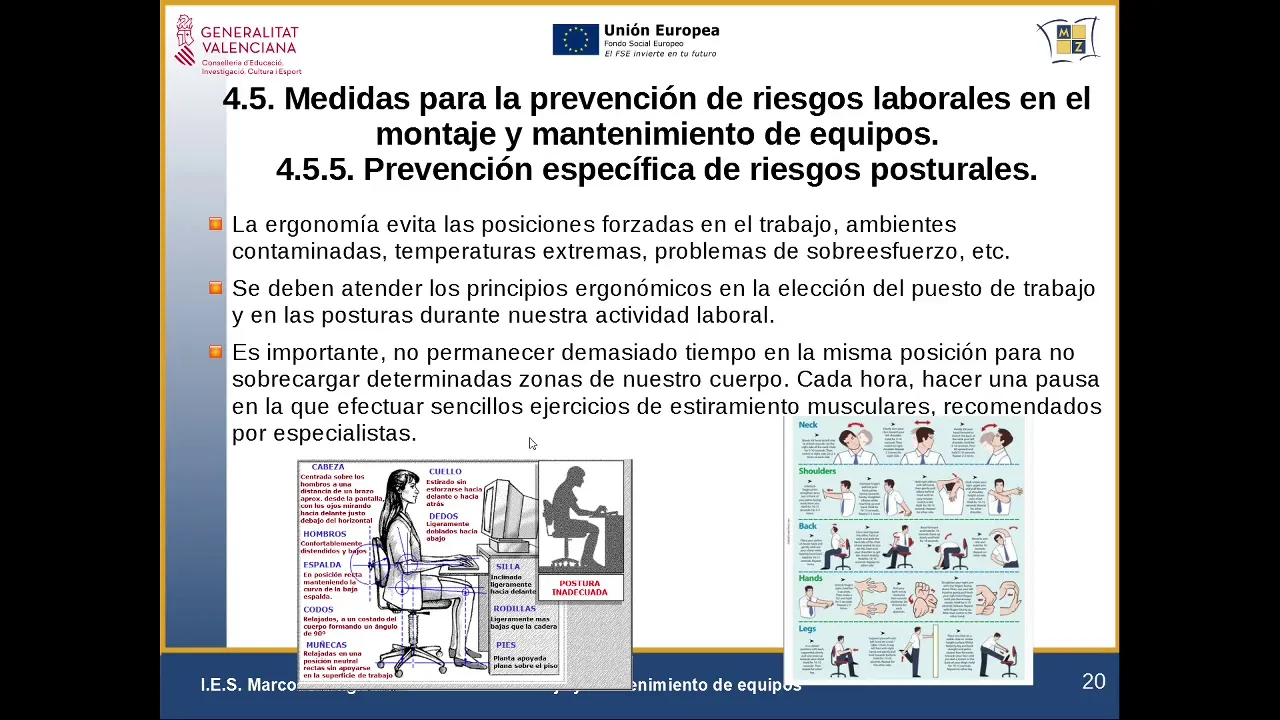
- Ergonomics involves selecting appropriate workstations and maintaining proper posture to prevent physical strain.
- Choosing a suitable workspace helps avoid hazards such as contamination or extreme temperatures.
- Regular breaks are recommended every hour for stretching exercises to alleviate muscle tension and prevent injuries.
Posture Guidelines
- Maintain a 90-degree angle with legs while seated; keep back straight and arms positioned correctly at the workstation.
- Use wrist supports when typing or using a mouse to prevent repetitive strain injuries like carpal tunnel syndrome.
Chemical Safety Awareness
- Be aware of hazardous chemicals in electronic components; always check product instructions for safety information.
Prevention of Chemical Risk in the Workplace
Understanding Mental Load Risks
- The discussion begins with the importance of recognizing chemical risk prevention measures in the workplace, highlighting a visual representation of these risks.
- It emphasizes that mental load risks are often caused by excessive workloads, leading to stress due to time constraints and task complexity.
- Stress can result in both physical and psychological disorders, significantly impacting overall work performance and well-being.
Impact of Work Environment on Stress
- Poor workplace relationships and an inadequate physical environment contribute to increased stress levels, which can deteriorate job performance.
- Companies should implement flexible working hours to help employees balance their professional responsibilities with personal life.
Strategies for Stress Management
- Key strategies for preventing stress include maintaining a balanced diet, exercising regularly, limiting work hours to no more than 10 per day, and ensuring at least 6 hours of sleep each night.
Turn any video into a summary like this
YouTube links, meetings, lectures. With transcripts, search, and chat.