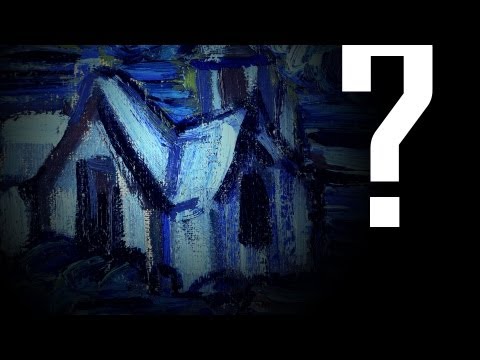
ArtSleuth 1 : VAN GOGH - The Starry Night (final version) - MOMA
ArtSleuth: Van Gogh's Nightscapes
The Context of Van Gogh's Art
- Vincent van Gogh painted "The Starry Night" while in a lunatic asylum, reflecting his turbulent mental state and the contrast between urban life and rural tranquility.
- His nightscape is not merely a product of insanity; it incorporates real astronomical phenomena, showcasing his engagement with contemporary scientific interests in astronomy.
Composition and Technique
- Van Gogh inventively constructs landscapes by adding elements like cypress trees and village steeples to create depth, demonstrating a blend of sanity in composition with madness in brushwork.
- The painting contrasts the solid earth with a dynamic sky, using vibrant colors and swirling patterns to evoke emotional responses from viewers.
Themes of Night
- Van Gogh’s portrayal of night diverges from that of other artists who celebrate city nightlife; he emphasizes the peacefulness found in rural settings after labor.
- He depicts intimate family meals under dim light as moments of dignity, contrasting this with the dehumanizing effects of urban nightlife.
Critique of Urban Life
- In works like "The Dance-Hall in Arles," Van Gogh illustrates the chaos and isolation within city life, where individuals are lost amidst artificial lights and distractions.
- He employs techniques reminiscent of Japanese prints to critique modernity, highlighting the stark difference between natural beauty and urban superficiality.
The Fascination with the Night Sky
- Van Gogh addresses “light pollution,” illustrating how artificial lights obscure our connection to celestial bodies, which leads him to retreat into nature for inspiration.
- His later works reflect an intense glorification of the heavens, merging beauty with existential contemplation about life and death.
Philosophical Reflections on Stars
- The night sky symbolizes both beauty and sublime experiences; despite modern physics challenging traditional views, there remains a yearning for perfection represented by stars.
- Van Gogh expresses profound thoughts on existence through his art, suggesting that even illness can be viewed as part of life's journey akin to travel across celestial realms.
Exploring the Sublime in Art and Music
The Duality of Celestial Imagery
- The sky is depicted as both a divine, unchanging canvas and a realm evoking death through cypress trees, reflecting contrasting responses to the heavens.
- Mozart’s “Magic Flute” uses the vault of heaven as a backdrop, illustrating how celestial imagery influences artistic expression.
The Shift from Order to Immensity
- In the Queen of the Night’s aria, there is a transition from yearning for order to recognizing human insignificance against vastness.
- Architectural elements like Boullée’s Cenotaph for Isaac Newton symbolize starlight and highlight humanity's smallness in relation to reason and imagination.
Celebrating Human Will Against Nature
- Van Gogh's second nightscape emphasizes elemental power in nature, celebrating human willpower that defies destructive forces.
- This concept is termed the "dynamic sublime," showcasing steadfast figures standing firm against overwhelming natural elements.
Mythical Status of Ordinary Places
- El Greco’s depiction of Toledo features an unyielding cathedral under a stormy sky, while Van Gogh transforms Saint-Rémy into a mythical place guided by reason rather than madness.
- The star-filled sky above Saint-Rémy elevates its ordinary status, merging reality with myth through artistic interpretation.