Shannon's theory of Confusion and Diffusion | Cryptography and Network Security
Understanding Cipher Security: Confusion and Diffusion
Statistical Characteristics of Plain Text
- Attackers can exploit the statistical characteristics of plain text, such as letter frequency distribution, to decipher messages.
- The frequency distribution of letters in a message can reveal patterns; for instance, certain letters appear more frequently than others.
Impact of Frequency Distribution on Encryption
- If an attacker understands the frequency statistics reflected in ciphertext, they may reduce encryption strength and potentially uncover the encryption key.
- Shannon proposed two methods—confusion and diffusion—to complicate attacks on encrypted messages.
Concept of Diffusion
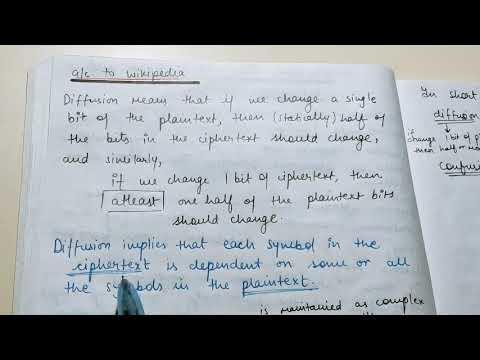
- Diffusion ensures that changing one bit in the plain text results in significant changes across the ciphertext, obscuring relationships between them.
- The goal is to hide connections between plaintext symbols and their corresponding ciphertext symbols.
Definition and Importance of Diffusion
- Changing a single bit in plain text should statistically alter at least half of the bits in the ciphertext, enhancing security.
- Each symbol in ciphertext must depend on multiple symbols from plain text to ensure robust encryption.
Understanding Confusion
- Confusion hides relationships between ciphertext and keys, making it difficult for attackers to deduce keys from observed data.
- A complex relationship between cipher text and key is crucial; if a single bit in the key changes, most bits in the ciphertext will also change.
Summary of Key Concepts: Confusion vs. Diffusion
- In diffusion, altering one bit of plaintext affects many bits of ciphertext; this relationship is straightforward yet vital for security.
Turn any video into a summary like this
YouTube links, meetings, lectures — with transcripts, search, and chat.