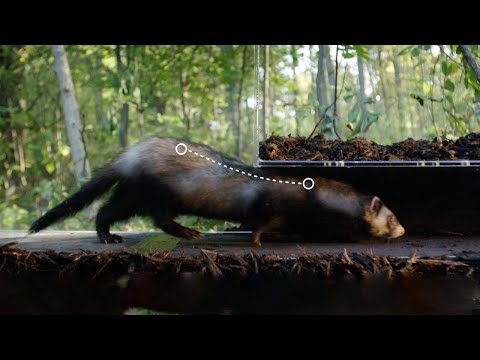
Why are Ferrets So Bendy? | Weasels: Feisty & Fearless | BBC Earth
Ferret Locomotion
In this video, Dr. Angela Horner, the world's leading expert in ferret locomotion, studies how ferrets move underground and how their unique body design allows them to do so.
Ferret Body Design
- Ferrets have a well-adapted body design that allows them to move rapidly through tunnels and change direction quickly.
- Their unique body shape is crucial for an animal that spends 90% of its time underground.
- When moving around above ground, they have an arched back posture. As they enter a tunnel, they seamlessly lower that posture until their spine is stretched out.
- This flexibility in their spine is due to a unique set of back vertebrae with thinner processes than other animals, creating flexibility and movement.
- Their spine can stretch out when they go underground making their body 30% longer.
Transition from Above Ground to Below Ground
- A special setup designed by Dr. Horner allows her to see what's happening during the transition from above ground conditions to below ground conditions.
- Footage shows how easily the ferrets can transition from above to below ground without losing much speed at all.
- Their shorter than average limbs allow them to still be able to move very well and they aren't restricted in limb movement in that position.
- In burrowing mustelids like the ferret, their legs are only half the length of their body which means they can run in enclosed spaces without tripping over their own limbs.
Conclusion
- The ability of ferrets to shift so seamlessly between above ground and underground environments is just one of the remarkable ways that mustelids have refined their agility to catch prey.