Insuficiência Mitral: primária vs secundária | Valvopatias Aula 5
Understanding Mitral Insufficiency
Overview of Mitral Insufficiency
- The discussion begins with the transition from mitral stenosis to mitral regurgitation, emphasizing the importance of understanding different mechanisms involved in these conditions.
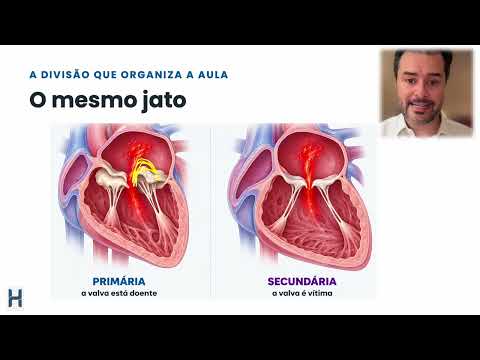
- Key distinctions are made between primary and secondary mitral insufficiency, highlighting that various factors can affect the valve structure and function.
- The significance of assessing left ventricular ejection fraction is stressed, as it may not accurately reflect effective cardiac output due to regurgitation.
Classification and Mechanisms
- The lecture outlines how to differentiate between primary and secondary causes of mitral insufficiency, focusing on structural changes in the valve apparatus.
- Visual aids illustrate differences in valve pathology: primary issues involve direct valve damage while secondary issues relate to ventricular dilation affecting valve closure.
Clinical Implications
- It is noted that half of all cases are secondary; thus, a broader context must be considered when diagnosing and treating patients.
- Secondary mitral insufficiency presents unique challenges since treatment often requires addressing underlying cardiac conditions rather than just the valve itself.
Diagnostic Criteria for Severe Mitral Insufficiency
Identifying Severity
- Important metrics for diagnosing severe mitral insufficiency include regurgitant orifice area greater than 0.40 cm² and regurgitant volume equal to or exceeding 60 mL.
- Reversed systolic flow in pulmonary veins indicates significant hemodynamic impact from severe regurgitation during systole.
Symptoms and Assessment
- Various etiologies such as rheumatic disease or trauma can lead to acute presentations; identifying these helps guide management strategies.
- Patients may remain asymptomatic for extended periods despite significant valvular dysfunction due to compensatory mechanisms like atrial dilation.
Treatment Strategies for Mitral Insufficiency
Surgical Indications
- Surgical intervention criteria include ejection fraction below 60%, left ventricular diameter ≥40 mm, or presence of atrial fibrillation regardless of symptoms.
- A mnemonic (40, 50, 60, FA) assists clinicians in remembering key thresholds for surgical consideration even in asymptomatic patients.
Repair vs. Replacement
- Preference is given to repair techniques over replacement whenever feasible due to lower mortality rates associated with preserving native valves.
- Specific surgical techniques such as edge-to-edge repair via catheterization are discussed as alternatives when traditional surgery poses risks.
Addressing Secondary Mitral Insufficiency
Treatment Focus
- Management begins outside the valve by optimizing treatment for underlying heart conditions contributing to secondary insufficiency before considering surgical options.
Advanced Techniques
- Edge-to-edge repair becomes a viable option particularly when there’s concurrent ventricular dilation requiring intervention during other cardiac surgeries like bypass grafting.
Summary Insights on Mitral Valve Pathology
Key Takeaways
- Differentiating between primary and secondary causes is crucial; understanding which part of the apparatus is affected informs treatment decisions significantly.
Turn any video into a summary like this
YouTube links, meetings, lectures. With transcripts, search, and chat.