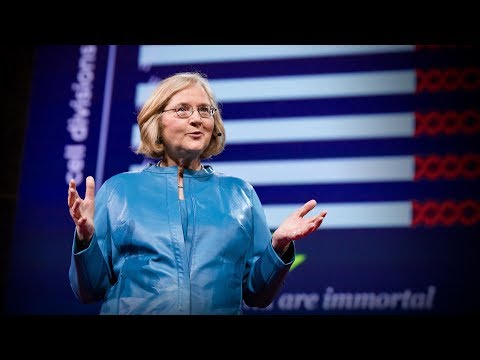
The science of cells that never get old | Elizabeth Blackburn
New Section
The speaker introduces the topic of telomeres and their role in aging, starting with her own fascination with the single-celled organism Tetrahymena.
The Beginning: Pond Scum and Curiosity
- Where does the end begin? The speaker's interest in telomeres started with her study of Tetrahymena, a single-celled organism also known as pond scum.
- Curiosity about everything alive Growing up, the speaker was curious about all living things and even interacted with lethal jellyfish.
- The mystery of chromosomes The speaker's curiosity led her to study chromosomes and specifically the telomeres at their ends.
Telomeres: Protecting Chromosomes
- Telomeres consist of special DNA segments Through her research, the speaker discovered that telomeres are made up of noncoding DNA segments located at the ends of chromosomes.
- DNA copying and telomere shortening Every time a cell divides, its DNA is copied but some telomere DNA gets worn down and shortened. This can send a signal for cells to die.
- The importance of telomerase Working with her student Carol Greider, the speaker discovered an enzyme called telomerase that replenishes and lengthens telomeres. Without it, cells age and die.
Aging and Telomere Shortening
- Telomere shortening leads to aging In humans, as we age, our telomeres naturally shorten. This overshortening contributes to signs of aging such as wrinkles, gray hair, weakened immune system, and increased risks of diseases like cardiovascular diseases, Alzheimer's, cancer, and diabetes.
Hope from Pond Scum
- Tetrahymena's secret to eternal youth The speaker found that Tetrahymena cells never aged or died because of their plentiful telomerase.
- The potential for humans Understanding telomeres and telomerase gives hope for combating aging-related issues in humans.
Timestamps are approximate and may vary slightly.
What Happens When Our Telomeres Get Shorter? The Impact of Telomeres on Aging
In this section, the speaker discusses the impact of telomeres on aging and the connection between telomere length and feelings of youthfulness. They also address the misconception that simply increasing telomerase levels can reverse signs of aging.
Telomeres and Aging
- Telomeres are losing the war of attrition faster as we age, leading to feelings of getting older.
- Individuals who feel youthful for longer periods have longer telomeres, extending their feelings of youthfulness and reducing the risks associated with aging.
- However, simply increasing telomerase levels is not a solution to reverse signs of aging due to the increased risk of certain cancers.
Health Span vs Disease Span
- The focus should be on health span rather than extending human lifespan or achieving immortality.
- Health span refers to the number of years spent free from disease, while disease span represents the time spent feeling old, sick, and dying.
Impact of Chronic Stress on Telomeres
- Chronic psychological stress has an effect on telomere length.
- Caregivers, such as mothers dealing with children with chronic conditions, experience significant psychological stress that can affect their telomere length.
- Studies have shown that individuals under chronic stress have shorter telomeres and lower levels of telomerase.
Conclusion
- Telomere length is not solely determined by age but can be influenced by life events and how individuals respond to them.
The Discovery of Telomeres
In this section, the speaker discusses their research on telomeres and their importance in protecting the ends of chromosomes during cell division. They express their curiosity about the composition of telomeres and the need for a large quantity of them to conduct further investigations.
Telomeres: Chromosome End Protectors
- Telomeres were initially known to protect chromosome ends during cell division.
- The speaker wanted to understand the composition of telomeres and required a significant number of them for their research.
Tetrahymena: A Source of Telomeri
- Tetrahymena, a small organism with approximately 20,000 small linear chromosomes, was found to have many telomeres.
Special DNA Segments at Chromosome Ends
- Telomeres are composed of special non-coding DNA segments located at the ends of chromosomes.
- Every individual starts life as a single cell that multiplies into two, four, eight cells, and so on until forming trillions of cells in an adult body.
- Some cells need to divide thousands of times to fulfill specific functions.
DNA Replication and Telomere Shortening
- During cell division, all DNA within chromosomes must be copied, including the coding DNA that carries vital instructions for cellular function.
- However, there is an error in how DNA is copied. Part of the telomeric DNA at chromosome ends gets consumed and shortened with each replication.
- When telomeres become too short, they send signals indicating that the DNA is no longer protected. This can lead to cell death or malfunction.
The Role of Telomerase
- The speaker conducted experiments with Carol Greider and discovered an enzyme called telomerase that could replenish and elongate telomeres.
- Removing telomerase from Tetrahymena resulted in weakened and dying telomeres.
- Telomerase abundance in the organism explained why it did not age.
Telomere Length and Aging
- Telomere length is associated with aging. As telomeres shorten, signs of aging become more apparent.
- Skin cells die, leading to the appearance of fine lines and wrinkles.
- Hair pigment cells die, causing gray hair.
- Immune system cells die, increasing the risk of illness.
The Impact on Human Health
In this section, the speaker discusses how telomere shortening contributes to various diseases and health conditions. They emphasize the importance of understanding telomeres' role in order to find potential treatments for these conditions.
Telomere Shortening and Disease Risk
- Research over the past 20 years has revealed that telomere shortening contributes to an increased risk of cardiovascular diseases, Alzheimer's disease, certain types of cancer, diabetes, and other illnesses.
- These conditions are often challenging to treat effectively.
The Need for Further Consideration
- The speaker emphasizes the need to address the impact of telomere shortening on human health due to its association with diseases that affect both adults and children.
- Understanding telomeres could provide hope for developing interventions or treatments for these conditions.
Telomeres and Aging
In this section, the speaker discusses the relationship between telomeres and aging. They explore the idea that telomeres may become shorter as we age, leading to a more aged appearance and feeling.
Telomere Length and Aging
- Telomeres are protective caps at the ends of chromosomes.
- As we age, telomeres may become shorter.
- Shorter telomeres can make us look and feel older.
Research Study on Mothers
- A study was conducted on a group of mothers to investigate telomere length.
- The researchers wanted to understand if telomere length correlated with caring for children with chronic illnesses.
- The study aimed to determine if longer telomeres were associated with feeling younger for an extended period.
Results of the Study
- After four years, the results were analyzed.
- A graph showed a pattern indicating a connection between telomere length and how old one feels.
- If telomeres can be renewed by an enzyme called telomerase, it could potentially reverse signs of aging.
Implications of Telomere Length
- Understanding where to obtain biologically fair-trade telomerases could help reverse signs of aging.
- However, increasing telomerases might also increase the risk of cancer.
Stress and Telomere Length
This section explores the relationship between stress levels and telomere length. It highlights how chronic stress can lead to shorter telomeres and increased risk of certain diseases.
Stress Levels and Telomore Length
- Chronic stress is linked to shorter telomers.
- Higher stress levels result in lower levels of an enzyme called telomerases, which maintain telomore length.
Impact on Health
- People who experience chronic stress are more likely to develop diseases earlier in life.
- The rate at which telomeres shorten can be influenced by events and how individuals respond to them.
Balancing Telomere Maintenance
- Increasing telomerases can reduce the risk of certain diseases but may increase the risk of aggressive cancers.
- Maintaining telomore length is not about extending lifespan or achieving immortality, but rather about maintaining healthspan.
Resilience to Stress
This section discusses the concept of resilience to stress and its impact on telomere maintenance. It highlights that some individuals who have taken care of others for many years have been able to maintain their telomeres due to their resilience.
Resilience and Telomore Maintenance
- Some mothers who have taken care of their children for many years have maintained their telomeres.
- These individuals exhibit resilience towards stress and do not perceive it as a daily threat.
The Human Challenge
- Humans face challenges throughout life, but it is essential to view them as opportunities rather than constant threats.
- Our response to events can influence how we maintain our telomeres and overall health.
Conclusion
Telomeres play a crucial role in aging, with shorter telomeres associated with an aged appearance and feeling. Chronic stress can lead to shorter telomeres, increasing the risk of certain diseases. However, some individuals who exhibit resilience towards stress can maintain their telomeres despite caring for others for extended periods. Understanding how to balance telomore maintenance without increasing cancer risks is key. Maintaining healthspan rather than extending lifespan is the ultimate goal.
Italian Risultati in massa
In this section, the speaker mentions that the results have arrived in large numbers.
Results Achieved
- The speaker states that the desired outcomes have been achieved.
- The results are described as being abundant or plentiful.
Please note that the timestamps provided are approximate and may not be exact.
Turn any video into a summary like this
YouTube links, meetings, lectures. With transcripts, search, and chat.