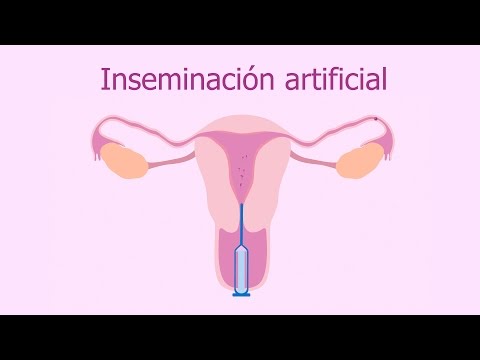
Inseminación artificial
Insemination Techniques in Assisted Reproduction
The transcript discusses the process of artificial insemination as a simple assisted reproduction technique, outlining different types of insemination procedures and the requirements for successful outcomes.
Types of Insemination
- Artificial insemination can be categorized into two types:
- Homologous (IAC): Uses semen from the woman's partner.
- Heterologous (IAD): Involves donor semen from a sperm bank.
Requirements for Successful Insemination
- Essential criteria for ensuring safety and success in artificial insemination include:
- Semen sample free from infectious particles.
- Patency of at least one fallopian tube.
- Sperm count of at least 3 million.
- Ovulation capability in women through natural or induced means.
- Good ovarian reserve and age below 37 years for optimal pregnancy chances.
Procedure Steps
- The steps involved in artificial insemination are:
- Ovarian stimulation through hormonal medication to mature eggs.
- Induction of ovulation by triggering with hCG hormone post adequate follicle growth.
- Sperm capacitation to concentrate high-quality sperm for insemination.
- Post-insemination progesterone administration to aid embryo implantation and sustain pregnancy. Success rates vary based on age and type of semen used, with multiple attempts recommended if initial ones fail before considering in vitro fertilization.
Advantages and Risks