Modelo de Evaluación de Arturo de la Orden Hoz
Understanding the Systemic Model of Educational Evaluation
Introduction to Arturo de la Orden's Work
- The systemic model developed by Dr. Arturo de la Orden, a Spanish expert in educational evaluation from the Complutense University of Madrid, emphasizes a comprehensive approach to assessing educational quality.
Defining Evaluation
- Evaluation is described as a value judgment that guarantees objectivity and effectiveness regarding reality, relying on comparisons to accurately describe aspects of education.
- It is emphasized that evaluation is a process rather than an event; it serves as a means to an end rather than an end itself.
Components of the Systemic Model
- The systemic model evaluates various educational elements, including student learning, teacher effectiveness, program methods, departmental organization, and overall functioning of educational institutions.
- A structured evaluative process includes determining solutions, identifying areas for assessment within the educational context, establishing reference points, gathering information, applying this information against established criteria for judgment.
Quality in Education
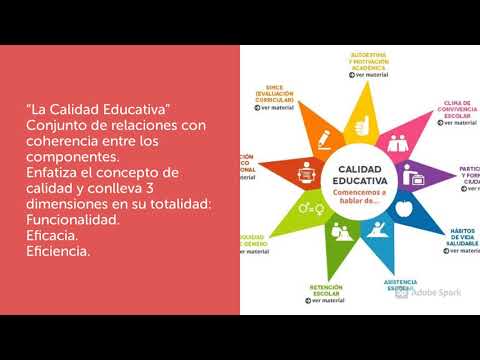
- Educational quality involves coherent relationships among components and encompasses three dimensions: functionality, efficacy, and efficiency.
- The systemic approach integrates psychopedagogical principles related to subject logic and didactic processes while encompassing systems of knowledge (theoretical concepts and laws) and skills (psychomotor and mental abilities).