UD2 Componentes fundamentales de los sistemas microinformáticos 6
Microprocessor Design and Architecture
Overview of Microprocessor Characteristics
- The discussion begins with an emphasis on microprocessor characteristics, highlighting technology as a key factor in enhancing processor performance and efficiency.
- Focus shifts to the internal design of processors, detailing how various blocks are arranged, their communication methods, and their specific functions.
Internal Processor Design Concepts
- Introduction to two primary processor designs: CISC (Complex Instruction Set Computing) and RISC (Reduced Instruction Set Computing).
- Explanation of instruction execution time; complex instructions take longer and consume more energy compared to simpler ones.
CISC vs. RISC Architectures
- CISC allows for executing complex instructions that can perform multiple tasks simultaneously, potentially improving response times by minimizing memory access.
- CISC is defined as a set of complex computer instructions designed for CPUs capable of executing many intricate operations but at a higher energy cost.
Advantages and Disadvantages
- RISC architecture features fewer instructions that are generally simpler, allowing for faster execution within a single clock cycle.
- While RISC instructions are executed quickly due to their simplicity, achieving the same functionality as a complex instruction from CISC requires multiple simple instructions.
Application Context
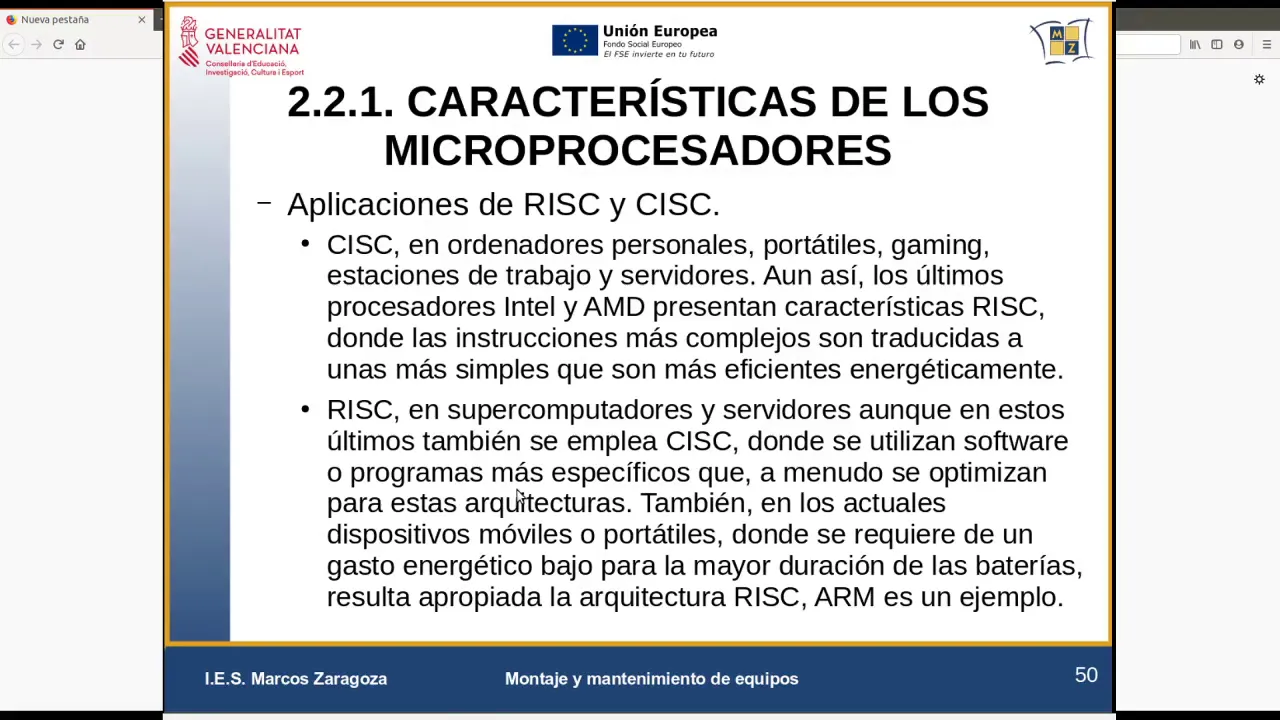
- RISC processors tend to be more energy-efficient, making them suitable for mobile devices where battery life is crucial.
- In programming contexts, CISC applications require fewer lines of code due to the complexity of each instruction compared to RISC applications which need more lines for similar tasks.
Historical Context and Usage Trends
- Intel's early adoption of the x86 architecture established its dominance in personal computers using CISC designs.
Understanding RISC Architecture in Mobile Devices
Overview of RISC in Software and Hardware
- RISC (Reduced Instruction Set Computing) architecture is primarily utilized in specific applications, particularly for mobile and portable devices due to its energy efficiency.
- The company ARM has advanced the development of RISC machines, focusing on licensing their architecture rather than manufacturing processors directly.
- Major manufacturers like Apple, Samsung, and Qualcomm produce processors based on ARM's designs for mobile devices such as smartphones and tablets.
Comparison with Intel
- While ARM dominates the mobile device market with its efficient architecture, Intel remains a significant player in the computer sector but lacks a strong presence in mobile computing.
Turn any video into a summary like this
YouTube links, meetings, lectures. With transcripts, search, and chat.