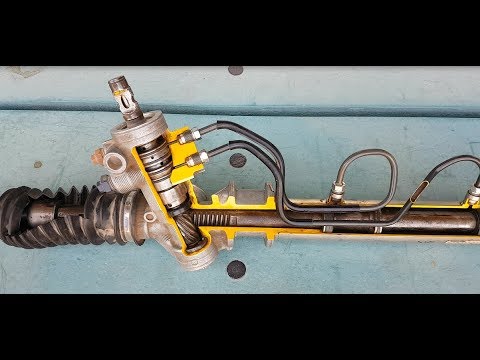
Power Rack and Pinion Steering System

Power Rack and Pinion Steering System

Understanding Power Rack and Pinion Steering Systems

Components of the Steering System

  • The power rack and pinion steering system consists of several key components, including the steering column, outer case, high-pressure lines, rotary valve, rack, upper pellets, ball gun, tie rods, and tie rod ends.
  • The mechanical part includes the rack and tie rods that connect to the wheel hub. The hydraulic part involves the pump and fluid lines that assist in steering.
  • A significant advantage of this system is its dual functionality; if there is a failure in the hydraulic system (pump or fuel lines), the mechanical parts still allow for control over steering.

Working Mechanism of the System

  • When the driver rotates the steering wheel, this motion is transferred through the steering column to a rotary valve connected to high-pressure lines.
  • Hydraulic oil from a pump flows into chambers within a retrieval mechanism when turning the wheel. This pressurized fluid directs movement based on which direction is indicated by the driver's input.
  • As fluid enters one chamber while exiting another due to changes in pressure from turning left or right, it moves the steering rack accordingly. This action translates into movement at the wheels via tie rods and knuckles.
  • The inlet and outlet functions of these hydraulic lines are dynamic; they switch roles depending on whether fluid needs to enter or exit based on steering direction.

Conclusion

Video description

Here's how a hydraulic steering rack works to turn the wheels on your car. Hydraulic steering has been used for decades to provide assist to drivers turning the wheels of especially heavy vehicles. Fluid is pressurized by a hydraulic pump and is sent to the rotary valve via the high pressure hose. Depending on the direction, the fluid is pushed into the opposite side of the cylinder housing, pushing the piston. The piston is connected to the rack, which connects the tie rods and hence the wheels at the steering knuckle. Its all explained in the video, Thanks Subscribe for more videos https://www.youtube.com/channel/UCi2OWCXyWqD_WKc0a4AsLTA Other videos to watch; Working of an alternator (cutaway model) https://www.youtube.com/watch?v=Y2fQOi0pGzo&t=104s Working of a starting motor (cutaway model) https://www.youtube.com/watch?v=aihbidw_OpI Dual over head cam DOHC (cutaway model) https://www.youtube.com/watch?v=qXyU7aJXtrg&t=9s Working of a Torque convertor (cutaway model) https://www.youtube.com/watch?v=GF0yGPpezCc&t=13s @ncsmusic9958 #automotive #engine #automotiverepair #auto #cars #vehiclerepair #automotive #chrixfix #ericthecarguy #tzworkshop #autorepairguys #southmainautorepairLLC #themechanic #learningzone #mehcanic #automechanic #autoelectrician #autorepair #overhauling #engineinspection #engineoverhauling #pistons #connectingrod #engineassembling #engines #vehicleengine #vehicles #vehicle #cars #car #autocar #autocardoctor