Tipos de respuesta inmune: Innata y adaptativa, humoral vs. celular | Khan Academy en Español
Understanding the Immune System: Non-Specific Defense Mechanisms
Overview of the Immune System
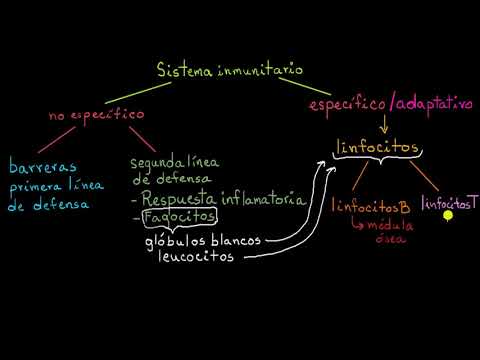
- The video introduces the immune system, focusing on non-specific defenses, which are divided into two types of barriers.
- The first line of defense includes natural barriers like skin and stomach acid that prevent foreign substances from entering the body.
Second Line of Defense
- If pathogens breach the first barrier, the second line of defense activates; it is also non-specific and responds to any suspicious entity without needing to identify it.
- This response leads to inflammation, which directs resources to areas where action is needed.
Phagocytes and White Blood Cells
- Phagocytes, including dendritic cells, macrophages, and neutrophils (all types of white blood cells), play a crucial role in ingesting harmful entities.
- The term "leukocytes" refers broadly to white blood cells; phagocytes are a specific type involved in non-specific immunity.
Specific vs. Non-Specific Immunity
- The discussion transitions to specific immunity as an adaptation unique to humans, often referred to as adaptive immunity.
- Adaptive immunity involves exposure to pathogens and relies on antigen-presenting molecules produced by phagocytes.
Lymphocyte Types
- Key players in adaptive immunity are lymphocytes—distinct from other leukocytes—and include B-cells and T-cells.
- B-cells develop in bone marrow while T-cells mature in the thymus; their names reflect these origins (B for Bursa of Fabricius in birds).
The Role of B-Lymphocytes
Focus on B-Lymphocytes
- The video emphasizes B-cells due to their significant role in humoral responses against pathogens.
Humoral Response vs. Cellular Immunity
- While B-cells are involved in humoral responses, T-cells participate in cellular immunity; both have distinct functions but work together during infections.
Infection Response Dynamics
- When a virus enters the body, it initially floats freely until it infects cells; this changes how the immune system must respond.
Importance of Understanding Responses
- Recognizing whether pathogens are free-floating or cell-invading helps determine whether humoral or cellular responses will be activated for effective defense.