Chapter 9 Part 6 animations
Introduction
The video introduces the concept of eukaryotic cells and focuses on the role of mitochondria in energy production.
Mitochondrial Function
- Mitochondria are double-membraned organelles present in eukaryotic cells, responsible for generating energy.
- Nearly all cell energy comes from reactions at the inner mitochondrial membrane.
- The inner mitochondrial membrane acts as a barrier to protons, maintaining a concentration gradient crucial for energy production.
ATP Synthesis
- ATP synthase is a protein complex that uses the proton gradient to produce ATP molecules, essential for cellular functions.
- ATP synthesis relies on proton flow across the inner membrane to rotate protein subunits.
- Disruption of the proton gradient can lead to cell energy depletion and death.
Electron Transport Chain
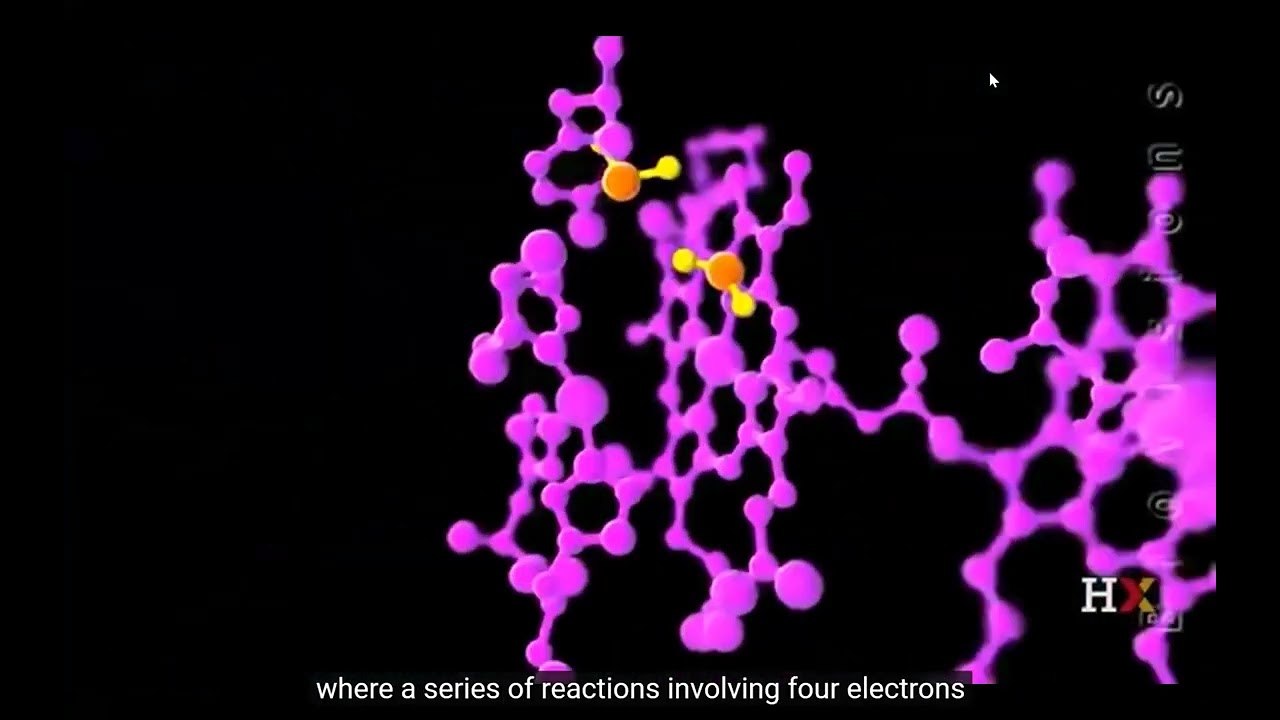
- Four protein complexes (I-IV) facilitate electron transfer and proton pumping in the electron transport chain.
- Complexes I, III, and IV pump protons into the intermembrane space.
- Complex II promotes proton pumping indirectly by supporting other complexes.
Complex I: Redox Centers
Focuses on how electrons move through redox centers in complex I of the electron transport chain.
Electron Movement in Complex I
- NADH deposits high-energy electrons into complex I, initiating electron transfer between redox centers.
- Electrons move based on affinity differences between redox centers and optimal distances for jumps.
- Energy released during electron transfer is harnessed to pump protons across redox centers.
Complex II: Electron Transfer
Explores similarities and differences between complex I and complex II in electron transfer processes.
Complex II Functionality
- FADH2 delivers high-energy electrons to complex II, which transfers them through multiple redox centers before donating them further.
- Unlike complex I, complex II does not utilize liberated energy for proton pumping but aids in electron transfer efficiency.
ATP Synthase Mechanism
Details how ATP synthase converts proton gradient energy into chemical energy stored in ATP bonds.
Proton Gradient Conversion
- Proton flow down an electrochemical gradient drives rotor rotation within ATP synthase, converting this energy into mechanical rotational energy.