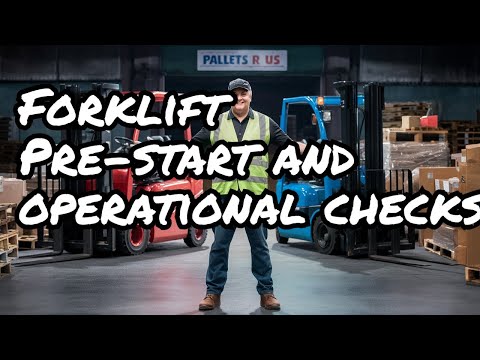
Simple Forklift Pre Start Checks to Improve Your Driving Skills FAST!
Forklift Inspection Process
Pre-Operational Checks
- Before operating a forklift, it is crucial to inspect it for safety and functionality to prevent serious injuries or accidents.
- Start the inspection by locating the log book, typically found at the back of the seat; ensure it's filled out correctly with relevant details.
- Follow a systematic inspection pattern from front to back and bottom to top, checking components like forks for wear and damage.
- Inspect critical parts such as load backrest, hoses, chains, pulleys, and safety stickers for any signs of damage or illegibility.
- Check lift cylinders and other hydraulic components; note that different forklifts may have varying numbers of cylinders.
Underneath and Tire Inspection
- Examine underneath the forklift for oil or water leaks and check for any damaged panels.
- For solid rubber tires, verify wheel nuts are secure, check tire wear limits, evenness of wear, and absence of significant rubber pieces missing.
- Ensure footstep security to prevent slipping while entering or exiting the forklift.
Data Plate and Safety Features
- The data plate must be legible; it should display maximum vertical lift capacity clearly. If not readable, tag out the machine for service.
- Inspect seat belts for tears or worn stitching; ensure they lock properly during use.
Gas Bottle Inspection
- Check gas bottle date codes to confirm they are within operational limits; expired bottles need testing before use.
Engine Bay Inspection
Accessing Engine Components
- Open the engine bay according to manufacturer instructions; this often involves moving components like gas bottles aside first.
Fluid Levels Check
- Inspect battery water levels and terminals along with securing mechanisms.
- Verify fluid levels including engine oil, transmission fluid, brake fluid, hydraulic oil, and coolant.
Operational Checks
Preparing for Operation
- Turn on gas by adjusting the valve half a turn before mounting the forklift safely from the left side using three points of contact.
Control Functionality Test
- Adjust your seat comfortably before fastening your seatbelt. Check all controls while engine is off to ensure proper functioning without risk during operation.
Starting Up Procedures
- Start up checks include verifying gauge functionality (temperature & warning lights), ensuring all lights work correctly including headlights and indicators.
Final Operational Tests
Mast Functionality Checks
- Lift mast slightly then fully extend it before lowering it again to waist level. Ensure tilting functions both forward and backward smoothly.
Brake System Verification
- Confirm handbrake effectiveness by releasing foot brake in gear without movement. Repeat in reverse gear as well.
Shutdown Procedures
Safe Parking Practices
- Park in designated areas applying handbrake in neutral gear while lowering forks flat on ground without damaging tips.
Post-operation Checklist
- After dismounting using three points of contact check underneath for leaks or damages before turning off gas supply.
Turn any video into a summary like this
YouTube links, meetings, lectures. With transcripts, search, and chat.