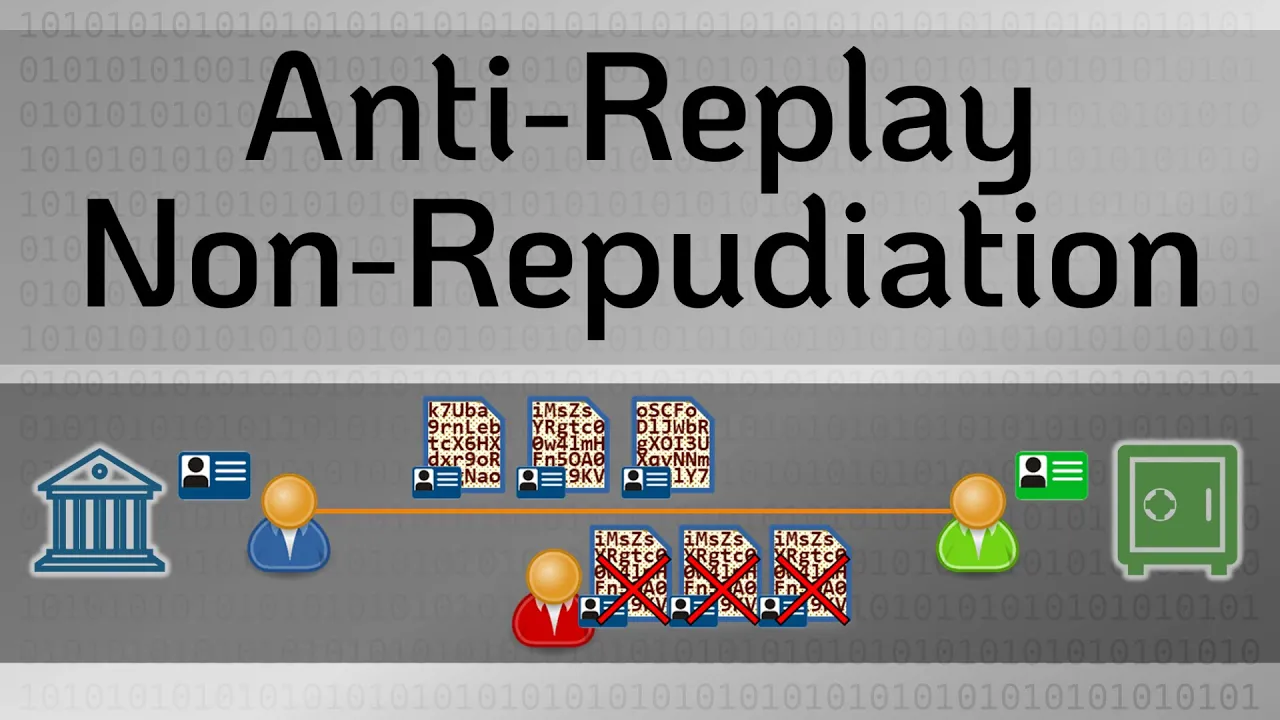
Anti-Replay and Non-Repudiation - Practical TLS
Music
In this section, the terms confidentiality, integrity, and authentication in SSL and TLS are defined. The importance of these concepts in protecting data during transmission is highlighted.
Understanding Confidentiality, Integrity, and Authentication
- Confidentiality ensures data cannot be read by unauthorized parties.
- Integrity prevents unauthorized modification of data.
- Authentication guarantees the identity of the sender.
Anti-Replay and Non-Repudiation
This part delves into anti-replay and non-repudiation within SSL and TLS protocols, explaining their significance in ensuring data security.
Anti-Replay Mechanism
- Anti-replay prevents malicious users from duplicating messages to repeat transactions.
- Sequence numbers are added to messages for tracking and identifying replayed packets.
Illustration of Anti-Replay
An example is provided to illustrate how anti-replay works in a scenario involving a bank branch and headquarters.
Scenario Explanation
- Messages represent transactions between a bank branch (client) and headquarters (server).
- Anti-replay adds sequence numbers to prevent malicious duplication of messages.
Non-Repudiation Concept
Non-repudiation's role in preventing senders from denying message transmission is discussed, emphasizing its connection to integrity and authentication.
Understanding Non-Repudiation
- Non-repudiation ensures senders cannot deny sending a message later on.
- It is a byproduct of integrity and authentication mechanisms in SSL/TLS protocols.
Conclusion
The lesson wraps up by summarizing key points about non-repudiation, anti-replay, integrity, authentication, and how SSL/TLS ensure data security.
Key Takeaways
- Non-repudiation prevents denial of message transmission post-sending.
- Integrity and authentication mechanisms inherently provide non-repudiation.