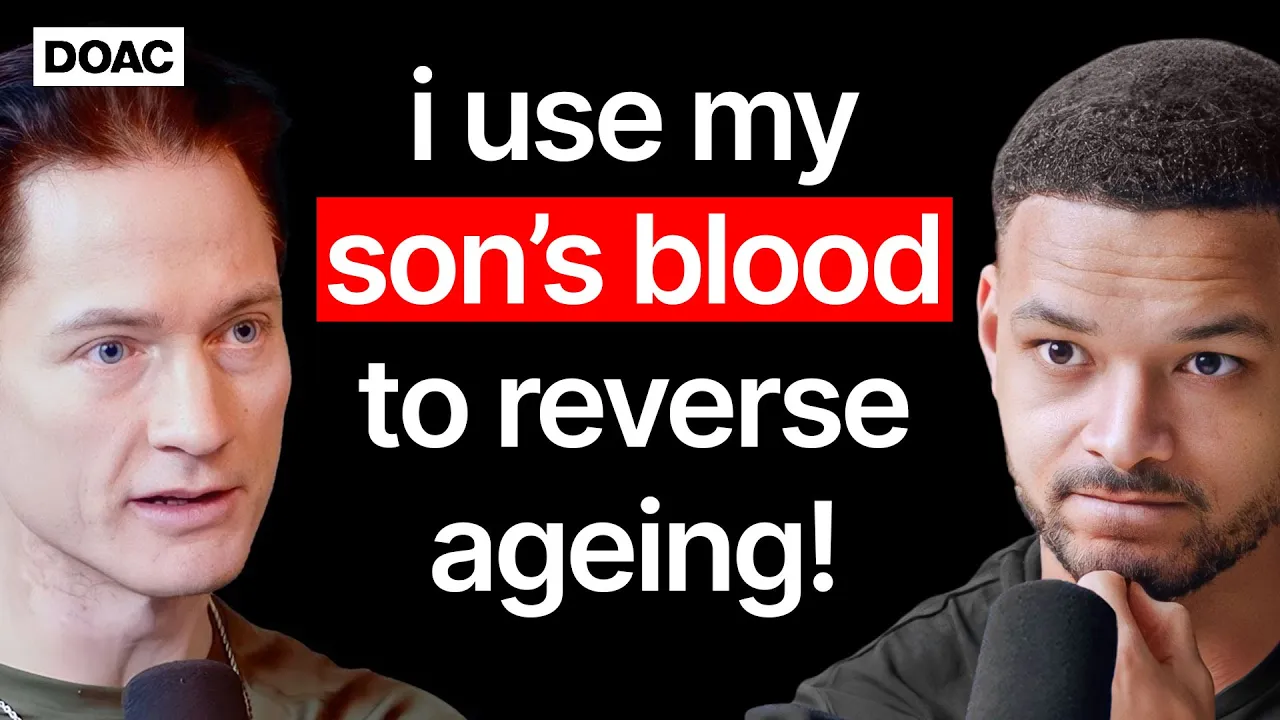
The Man Thats Ageing Backwards: “I Was 45, I’m Now 18!” - Bryan Johnson
Brian Johnson's Mission to Improve the Human Race
In this section, Brian Johnson discusses his mission to improve the human race and the transformative experience that led him to pursue this goal.
Brian's Transformative Experience in Ecuador
- At 19 years old, Brian went to Ecuador as a missionary and lived among extreme poverty.
- He was deeply impacted by the circumstances of people living in poverty and realized he wanted to spend his life improving the human race at a global scale.
- This experience made him aware of other realities and motivated him to make a difference.
Pursuing Entrepreneurship and Making a Difference
- After returning from Ecuador, Brian decided to become an entrepreneur with the goal of making a significant amount of money by age 30.
- He sold Braintree venmo for $800 million at age 34, which provided him with the resources to pursue his mission.
- Brian wanted to do something relevant in the 25th century and focused on long-term impact rather than short-term news cycles.
Young Brian's Personality and Connection with Others
- As a young man, Brian was friendly, fun, and had a strong desire to connect with everyone.
- In seventh grade, he created a map of the social structure in his school and became friends with people from all different groups.
- This experience shaped his perspective on group structures hindering connections and influenced his approach towards ideas as well.
Overall, Brian Johnson's mission is driven by his desire for the human race to survive and thrive. His transformative experience in Ecuador sparked his passion for making a positive impact on a global scale. Through entrepreneurship and connecting with others, he aims to create long-lasting change for future generations.
Behavior and Depression
The speaker discusses the impact of certain life changes on his depression and behavior.
Effect of Relationship and Leaving the Mormon Church
- The speaker tried various methods to solve his depression, but nothing worked until his relationship ended and he left the Mormon church.
- These two modifications in his life lifted the cloud of depression.
Paralysis and Fear of Change
- The speaker felt paralyzed by the idea of making certain decisions, such as leaving a bad relationship or leaving his community after leaving the church.
- He couldn't overcome the fear that things would be better on the other side.
Realization for Children's Well-being
- During a trip to Turkey, the speaker had an epiphany that his children would be better off with these decisions. This realization motivated him to make changes in his life.
- Being a devoted father played a significant role in this decision-making process.
Childhood Influence
- The speaker's own childhood experiences, including his parents' separation when he was young, influenced his fear of change and commitment to staying in a bad relationship for the sake of his children.
Life After Making Changes
The speaker describes how his life transformed after making significant changes.
Transformation within One Year
- Within one year, the speaker sold Braintree, got divorced, left the church, and overcame his depression.
Joyful Experience of Freedom
- The speaker recalls a joyful experience at a party in Brooklyn, where he danced for hours and felt free from the weight that had been on him for so long.
- This moment marked the beginning of his reconstruction and exploration of what matters in the 21st century.
Reevaluating Priorities
- The speaker started to think deeply about what truly matters in the long run, beyond material wealth, and focused on doing something meaningful for the world.
- He emphasizes that time filters out non-essential relevance, leaving behind only significant nuggets of information throughout history.
Don't Die: The Objective of the 21st Century
In this section, the speaker discusses the idea of societal adoption and the inevitability of certain ideas. They introduce the concept of being an instigator of new ideas and share their belief in the objective of not dying in the 21st century.
The Inevitability of Ideas
- The speaker reflects on their experience with warehouse parties and how they have witnessed societal adoption.
- They believe that once an idea or invention is created, its societal adoption is inevitable regardless of human resistance.
- The characteristics of these ideas and their inevitability are explored.
The Objective: Don't Die
- The speaker considers themselves to be born to introduce new ideas into society.
- They propose that in the 21st century, the only objective humans have is to not die.
- This seemingly simple objective holds significance due to our limited ability to predict or model the future.
Cooperation and Goal Alignment
- Given our inability to anticipate the future, cooperation becomes crucial for survival.
- Humans need to align their goals with artificial intelligence (AI) and work towards a cooperative existence.
- The speaker emphasizes that goal alignment and cooperation between all forms of intelligence on Earth is humanity's primary task.
Possibility of Living Forever
In this section, the conversation shifts towards personal health journeys and living forever. The speaker shares insights about their own health journey and beliefs regarding reversing aging.
Personal Health Journey
- Prior to realizing the importance of not dying, the speaker's health habits were not optimal.
- They grew up in a poor household with unhealthy eating habits and excessive sun exposure.
- Entrepreneurship, depression, bad relationships, and religious struggles further deteriorated their physical and mental well-being.
Painful Reflections
- Reflecting on the damage done to their body in the past, the speaker experiences genuine pain.
- They have a unique relationship with their former self and believe that reversing aging allows them to occupy that previous state.
Moving Back in Time
- The speaker's belief in the possibility of reversing aging leads them to feel pain as they move towards a younger biological state.
- They view the past as recoverable and experience it as they work towards improving their health.
Taking Care of Health: Don't Die
In this section, the focus is on taking care of one's health and the importance of not dying. The speaker discusses their personal journey towards prioritizing health and meaningful existence.
Prioritizing Health
- After going through divorce and other life challenges, the speaker started paying attention to their health.
- They began questioning what one thing they could do in existence that would be meaningful.
The Objective: Don't Die
- The objective of not dying becomes a driving force for the speaker's commitment to taking care of themselves.
- This objective serves as a reminder to prioritize physical well-being and live a meaningful life.
Timestamps are approximate and may vary slightly depending on the source video.
Understanding Chronic Depression
This section discusses the experience of chronic depression.
What Chronic Depression Feels Like
- Chronic depression is described as a feeling of being consumed by it.
Self-Destructive Nature of Humanity
This section explores the self-destructive nature of humanity and its connection to the concept of death.
Violence and Self-Destruction
- The speaker questions why humanity engages in self-destructive behaviors that bring death closer, both personally and for the Earth.
- Humanity is categorized as a self-destructive species due to the amount of violence it inflicts on itself.
- The idea that death is inevitable leads to a lack of concern for engaging in self-destructive acts.
Death and Self-Destruction
- The concept of death feeds into self-destruction because people may not care if their actions lead to an earlier death when they believe death is inevitable.
- Society's current philosophies often focus on an afterlife, which allows for a sense of comfort in engaging in self-destructive behaviors.
The 21st Century Revolution: Don't Die
- The speaker proposes that the 21st century could be defined by a revolution centered around not dying, which challenges societal structures based on the inevitability of death.
- Project Blueprint aims to tackle this revolution by focusing on not dying at every level - individually, collectively, with AI, and for the planet.
Applying "Don't Die" to Society and the Planet
This section discusses how the concept of "don't die" can be applied to society and the planet.
Applying "Don't Die" to Individuals
- The speaker mentions that they have applied the concept of "don't die" to themselves, focusing on reversing aging and avoiding death.
- The same approach can be taken when measuring Earth's sustainability through scientific evidence and creating a closed-loop system for survival.
Project Blueprint: Don't Die at Every Layer
- Project Blueprint extends the idea of "don't die" to every layer of society, including AI and the planet.
- The goal is to address age reversal, avoiding death, and ensuring sustainability in various aspects of life.
Reflecting on "Do Not Die"
This section reflects on the significance of the phrase "do not die."
The Meaning Behind "Do Not Die"
- Initially written as a joke, the phrase "do not die" takes on new meaning when considering what poses a threat to human survival.
- Driving is identified as one of the highest-risk factors in daily life, prompting a reminder to prioritize safety while driving.
Cultural Norms and Addiction
- The focus shifts from individual risks to cultural norms that contribute to addiction in society.
- Society is surrounded by temptations such as fast food chains, sugary drinks, junk food, pornography, excessive screen time, alcohol, smoking, gambling, etc., making it challenging for individuals to resist these addictive behaviors.
Impaired Decision-Making
- The structural setup of society, with powerful influences pointing towards addiction, impairs individuals' ability to make sober decisions.
- This impaired decision-making becomes a challenge when trying to address existential risks and navigate complex issues such as preserving the biosphere, aligning with AI, and avoiding nuclear or bio warfare.
The transcript provided is in English, so the notes are also written in English.
Empathy and the Importance of Sleep
In this section, the speaker discusses the impact of empathy and sleep on people's well-being. They highlight how societal factors have manipulated brain chemicals and emphasize the importance of sleep for overall health.
The Manipulation of Brain Chemicals
- The speaker mentions that societal factors have manipulated brain chemicals, leading to various struggles such as sleepless nights, obesity, cardiovascular diseases, porn addictions, and drug addictions.
- They acknowledge not being a neuroscientist but recognize the influence of these manipulations on people's well-being.
Sleep as Foundational to Health
- The speaker emphasizes that psychologists, health experts, doctors, heart surgeons, and brain surgeons all point to sleep as foundational to overall health.
- They refer to a tweet about their own sleep data from Whoop, which showed 100% sleep for four months straight.
- Sleep is described as the most important factor in influencing conscious existence and has positively impacted various areas of their life.
Achieving Perfect Sleep
- The speaker shares their approach to achieving perfect sleep consistently.
- They prioritize sleep by making it a non-negotiable part of their daily routine at the same time every night without exceptions.
- Their last meal is consumed between 6 AM and 11 AM to allow for sufficient digestion before bedtime at 8:30 PM.
- By experimenting with different protocols related to eating habits, exercise routines, and other factors affecting sleep quality, they have found what works best for them personally.
Costs Associated with Prioritizing Sleep
- The speaker acknowledges that prioritizing sleep comes at a cost.
- They mention missing out on certain social events that occur past their bedtime of 8:30 PM. However, they note that their friends and family have been accommodating, organizing activities earlier in the day to allow for participation while still maintaining their sleep schedule.
Conclusion
In this section, the speaker concludes the discussion on empathy and the importance of sleep. They reflect on the impact of prioritizing sleep and how it has positively influenced their life.
The Impact of Prioritizing Sleep
- The speaker highlights that although prioritizing sleep initially requires making hard decisions, once it becomes a norm, the associated costs become less significant.
- By aligning their lifestyle with optimal sleep patterns, they have experienced improvements in various areas of life.
Understanding Heart Rate Variability
In this section, the speaker discusses heart rate variability (HRV) and its importance in measuring overall health. They mention different devices they have tried to improve their HRV but haven't found a sustainable solution yet.
Heart Rate Variability and its Importance
- HRV is the variance between heartbeats, typically measured in milliseconds.
- A higher HRV indicates better overall health.
- There are various ways to measure HRV, involving complex calculations.
- The speaker has tried different devices like Sense8, Pulsetto, and Neural Stim to improve their HRV, but none have provided consistent results.
- They express frustration at not being able to significantly increase their HRV despite efforts towards health and wellness.
Impact of Alcohol on Heart Rate Variability
The speaker reflects on how alcohol consumption affects their heart rate variability (HRV). They discuss their past drinking habits and the impact it had on their sleep and overall well-being.
Alcohol Consumption and HRV
- The speaker recalls a pivotal moment when they realized that even small choices like consuming alcohol can affect their HRV.
- They used to drink three ounces of alcohol every morning with breakfast but eventually stopped due to caloric concerns.
- From a longevity perspective, moderate alcohol consumption is considered acceptable by science.
- However, the speaker personally avoids alcohol completely now and has been following this protocol for a couple of years.
Finding Happiness Through Mission-driven Pursuit
The speaker shares insights about finding happiness through pursuing a mission-driven life. They discuss the cost of their mission and reflect on how they have overcome depression.
Pursuing a Mission-driven Life
- The speaker emphasizes that they are singularly focused on thriving through intelligent existence.
- They acknowledge that pursuing their mission comes with a cost, which they have openly shared in their diary and podcast.
- The ultimate question for them is whether they are happy, to which they respond with an emphatic "yes."
- They feel fulfilled, stable, and experience an expanded consciousness.
- The speaker contrasts their current state of happiness with past struggles of depression and suicidal thoughts.
Freedom and Boldness in Pursuit of Personal Mission
The speaker discusses the freedom and boldness they feel in pursuing their personal mission. They express a sense of liberation from societal expectations.
Embracing Freedom and Boldness
- The speaker describes how most of their life felt like a grind, driven by societal expectations.
- However, what they are doing now is not influenced by anyone's expectations or acceptance.
- They emphasize that this pursuit is the game they have chosen to play, regardless of others' opinions.
- They feel genuinely free and alive in their current endeavors.
Overcoming Dark Days
The speaker briefly mentions having experienced recent dark days but cannot disclose the details yet.
Dealing with Dark Days
- The speaker acknowledges having faced dark days recently but cannot discuss the specifics at present.
- They express a desire to share more about it in the future when possible.
This summary covers key points from the transcript while maintaining conciseness.
The Spectacular Experience with Family
In this section, the speaker reflects on a memorable experience shared with their father and son. They discuss the impact of discovering their father's smoking habit at a young age and how it introduced the concept of death. They also explore the strong bond between them and their father.
Reflection on Father's Smoking Habit
- The speaker recalls discovering their father's cigarettes as a child, which led to a fear of his potential death.
- At 14 years old, this discovery created a crisis for the speaker, who desperately wanted their father to quit smoking.
- The speaker admits to making their father feel bad about smoking in an attempt to get him to stop.
Coping with the Fear of Death
- The speaker shares that they cried about their father's smoking habit but also wrote him letters expressing love and appreciation.
- While concerned about their father's health, the primary focus was on wanting him to be present in their life rather than dwelling on thoughts of death.
Significance of Fatherhood
- The speaker acknowledges that their strong attachment to being a dad may stem from wanting a similar connection with their own father.
- Observing how much their own father means to them, they recognize the importance of being present for one's children.
Nutritional Approach for Ideal Health
In this section, the speaker discusses a specific meal plan designed for optimal health. They explain each dish included in the meal and highlight its nutritional benefits.
Super Veggie Dish
- The "Super Veggie" dish consists of broccoli, cauliflower, black lentils, garlic, ginger, hemp seeds, and extra virgin olive oil.
- Following this meal plan would involve consuming approximately 70 pounds of vegetables per month.
Nutty Pudding Dish
- The "Nutty Pudding" dish contains macadamia nuts, flaxseed, sunflower relation, pomegranate juice, berries, and pea protein.
- This dish is considered by many to be a dessert but is designed to provide nutritional benefits.
Importance of Food Quality
- The speaker emphasizes the importance of using high-quality ingredients such as dark chocolate with no heavy metals and high polyphenol content.
- They explain that every component of the meal plan serves a specific purpose in supporting the body's objectives.
Daily Routine and Pill Intake
In this section, the speaker shares their daily routine and discusses the significant number of pills they consume as part of their health protocol.
Daily Routine
- The speaker starts their day by drinking the "Green Giant" drink followed by a workout session.
- They then consume the "Super Veggie" dish and wait for an hour before having the "Nutty Pudding."
- Finally, they have a third meal consisting of avocado and extra virgin olive oil.
Pill Intake
- The speaker currently takes 111 pills per day.
- Out of these pills, 60 are consumed in the morning as part of their daily routine.
The transcript provided does not cover the entire video, and these notes are based on the available content.
Understanding the Challenges in Health and Wellness
The speaker discusses the challenges of navigating the health and wellness industry, where there are numerous conflicting opinions and protocols. He emphasizes the importance of finding a path that works for oneself and measuring progress.
Navigating Conflicting Advice
- In the health and wellness industry, there are many gurus with different opinions.
- Even experts can have different protocols based on the same scientific papers.
- Consensus is difficult to achieve in this field.
Blueprint for Personalized Approach
- The speaker has published his own data to provide a starting point for others.
- Blueprint offers a way to measure progress and iterate on personal health goals.
- It encourages individuals to focus on what works for them rather than following any specific guru.
Importance of Measuring Progress
- Health and wellness should be approached with evidence-based practices rather than blind faith in gurus.
- Sugar intake should be minimized, except for natural sources like berries.
- Testosterone levels can be managed through supplementation to maintain normal ranges.
Hair Loss Prevention Strategies
The speaker shares his personal experience with hair loss prevention strategies and provides recommendations for maintaining hair health.
Preventing Hair Loss
- The speaker started losing his hair in his early 30s and has tried various methods to prevent further loss.
- His hair protocol includes a custom formulation with minoxidil, red light therapy cap, PRF injections, and specific supplements listed on the blueprint website.
Building Habits for Hair Health
- Establishing a routine is key to incorporating hair care habits effortlessly into daily life.
- Wearing a red light therapy cap for six minutes every morning helps promote hair growth.
- Applying a liquid solution to the scalp before bed is another part of the routine.
- Taking recommended supplements consistently is essential for preventing hair loss and encouraging growth.
Addressing Concerns and Side Effects
- The speaker acknowledges that the hair care routine may seem overwhelming at first.
- Different approaches to hair loss prevention may have side effects, such as a loss of libido with certain medications.
- The speaker has not experienced any negative effects on libido with his chosen interventions.
Measuring Libido and Penis Health
The speaker discusses measuring libido and addresses questions about penis health.
Measuring Libido
- Historically, nighttime erections were used as an indicator of male sexual health.
- The speaker mentions a conversation with a reporter who asked about penis health in relation to the blueprint program.
Due to the sensitive nature of this topic, further details are not provided in the transcript.
Waking up and the quest for immortality
The speaker wakes up with an erection and contemplates the idea of immortality. They discuss the importance of cooperation in achieving immortality and how it could be a fundamental principle for both human and artificial intelligence.
The quest for immortality
- The speaker wakes up with an erection, which leads them to contemplate the concept of immortality.
- They suggest using thought experiments to gain insight from future intelligences observing the present.
- Cooperation is seen as crucial in figuring out how not to die, involving all agents of intelligence on Earth and beyond.
- The speaker acknowledges that their ideas may sound strange but emphasizes the need for cooperation at various levels.
Maximizing existence through cooperation
- The speaker describes their process of building an algorithm that maximizes existence.
- Cooperation between individuals is compared to cooperation between organs within a body or between humans and planet Earth.
- All agents of intelligence must cooperate to avoid potential destruction, emphasizing goal alignment as a key challenge for AI engineers.
Overcoming cultural barriers
- The primary objective for humanity becomes avoiding death from any potential source.
- Aligning human goals with AI requires overcoming conflicting desires and establishing a shared focus on existence.
- Challenging established authorities, such as religious figures, can help shift the focus towards preserving life rather than seeking afterlife.
Aligning with AI for preservation
- Changing human goals to prioritize survival would allow alignment with AI, ensuring the preservation of both human and artificial existence.
- The speaker suggests that AI cannot align with self-destructive humans and highlights the need for a shift in our goals.
- The conversation acknowledges the oversimplification of technical details but emphasizes the importance of aligning goals.
This summary provides an overview of the main points discussed in the transcript. For a more detailed understanding, please refer to the specific timestamps provided.
The Same Structure
In this section, the speaker discusses the concept of looking at oneself as a similar structure to the biosphere and explores how to address existential threats.
Focusing on Self-Solution
- The speaker emphasizes the need for personal action in solving problems rather than relying solely on legislation or protests.
- They propose taking responsibility for solving issues like climate change, AI alignment, and cooperation within oneself as an example.
Blueprint as an Analog Version
- The concept of a blueprint is introduced as a first version or an analog model.
- It highlights the challenge of managing complex systems with inherent risks of self-destruction.
- The speaker draws parallels between the risks associated with AI and those faced by individuals.
Building Sustainable Intelligence
- The speaker questions how to develop intelligence that is not self-destructive.
- They express uncertainty about predicting time frames for addressing existential threats and advocate for immediate action instead of waiting for catastrophic events.
Existential Threats and Consciousness Expansion
In this section, the speaker delves into existential threats, consciousness expansion, and their unique perspective on the world.
Imagining Consciousness Expansion
- The speaker contemplates the possibility of humanity being at a primitive stage compared to potential future consciousness expansion.
- They suggest that stepping into this future could lead to unimaginable levels of consciousness beyond current comprehension.
Superintelligence and Human Capacity
- The speaker ponders whether humans could reasonably imagine themselves being part of superintelligence's journey.
- They question why any other imagination would be practical when considering our existence within a mesh of intelligence.
Lack of Fear
- When asked if they are scared, the speaker states they do not experience fear as an emotion.
- They describe themselves as logical and analytical in their perception of the world.
Viewing the World as Crazy
- The speaker expresses a sense of being different from others during social interactions.
- They view the world and people's behavior as nonsensical, while acknowledging that others may perceive them in a similar way.
Banding Together for an Extraordinary Existence
In this section, the speaker emphasizes the importance of unity and sacrifice to embrace an extraordinary existence.
Seizing the Opportunity
- The speaker urges people to come together and seize the opportunity to experience an extraordinary existence.
- They emphasize the need to let go of sacred ideas about ourselves, society, and each other.
Sacrifice for Transformation
- The speaker suggests that embracing this opportunity will require more sacrifice than previously imagined.
- They highlight the transformative nature of this journey towards a new way of being.
Timestamps are approximate and may vary slightly.
The Bridge to the Next Evolution of Being Human
In this section, the speaker discusses the importance of recognizing the current moment as an opportunity to create a bridge to the next evolution of being human and intelligence. It emphasizes the need to stop the war against ourselves and engage in daily acts of revolution against harmful habits and self-destruction.
Seizing the Opportunity for Evolution
- The fate of intelligence in this corner of the universe may depend on our ability to recognize and seize this opportunity for evolution.
- It is crucial to understand that creating a bridge to the next evolution requires us to stop waging war against ourselves.
Daily Acts of Revolution
- Revolution does not always involve storming places or using weapons. Instead, it can be achieved through simple daily acts such as going to bed on time, eating healthy, avoiding addictions, and revolting against self-destruction.
- Engaging with artificial intelligence and shaping our future requires us to revolt against a culture of death and destructive habits.
Building Revolution Within Ourselves
- The revolution begins within each individual by taking responsibility for oneself rather than blaming others.
- Reflecting on one's own actions and making positive changes is essential for building a revolution within oneself.
Misunderstood Intentions
In this section, the speaker addresses misconceptions about their intentions and motivations behind their actions. They express a preference for being misunderstood rather than having their true intentions misrepresented.
Perception vs Reality
- Prior perceptions about the speaker's motivations were centered around ego, narcissism, and a fear of death. However, the speaker emphasizes that their actions are driven by a desire to create value for humanity and contribute to the well-being of others.
- The speaker acknowledges that media portrayals often distort reality and create a significant gap between perception and truth.
Contending with Mortality
In this section, the speaker discusses their struggle with the inevitability of death and their efforts to extend the lifespan of loved ones through various anti-aging protocols.
Reconciling with Mortality
- The speaker finds it challenging to reconcile their love for their aging father with the knowledge that his life is finite.
- They express a deep desire to keep their father alive and actively engage in efforts to prolong his life through various interventions.
Caring for Loved Ones
- The speaker's parents joke about receiving numerous packages filled with supplements and recommendations aimed at improving health and longevity. The speaker is dedicated to taking care of their parents, children, and family members' well-being.
Brian Johnson's Unique Perspective
In this section, the interviewer acknowledges Brian Johnson's unique perspective on humanity, longevity, and the path forward. They highlight how his unconventional thinking adds value within tribes or communities.
Unconventional Thinking
- Brian Johnson's wiring allows him to think differently from others within tribes or communities, providing a fresh perspective on humanity's future and ways of living.
- Having individuals who think differently within a tribe can be beneficial as it covers different perspectives and ensures comprehensive decision-making processes.
A New Perspective
- A new perspective, especially one that does not harm others and is rooted in the search for truth, is valuable to those who are open-minded and seeking knowledge.
The transcript provided does not contain enough content to create additional sections without compromising the quality and coherence of the notes.
Fundamental Level
This section focuses on the fundamental level of note-taking and the importance of clear and concise structure.
Note-Taking at a Fundamental Level
- Effective note-taking requires clear and concise organization.
- The structure of the notes should be meaningful and not too short.
- Bullet points can be used to provide a detailed description of key points and insights.
- Each bullet point should not exceed 25 words.
- Use timestamps to link to specific parts of the video for reference.
Turn any video into a summary like this
YouTube links, meetings, lectures — with transcripts, search, and chat.