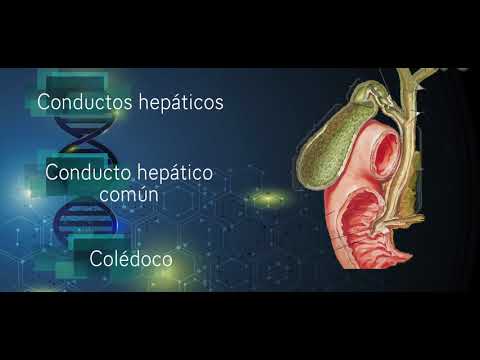
Anatomía y fisiología vesícula biliar
Understanding the Gallbladder and Bile Production
Anatomy and Function of the Gallbladder
- The gallbladder is a pear-shaped organ located beneath the liver, primarily responsible for concentrating and storing bile. It measures 7 to 10 centimeters in length and can distend to hold up to 300 milliliters when obstructed, while its normal capacity is between 30 to 50 milliliters.
- Blood supply to the gallbladder comes from the cystic artery, a branch of the right hepatic artery, situated within an anatomical area known as Calot's triangle. This triangle is defined by the cystic duct, common hepatic duct, and liver border.
- The gallbladder can be divided into three parts: fundus, body, and neck. At the junction of the cystic duct and neck are spiral valves known as Heister's valves that help regulate bile flow. Venous return occurs through small-caliber veins directly entering the liver from the gallbladder body.
Bile Secretion Pathway
- Bile is secreted by hepatocytes in the liver through hepatic ducts that converge into a common hepatic duct; this joins with the cystic duct to form the common bile duct (choledochus). The choledochus then enters the second portion of the duodenum at a site called Vater's ampulla, which was first described by anatomist Abraham Vater in 1720.
- The sphincter of Oddi regulates bile flow into the duodenum while preventing regurgitation of intestinal contents back into biliary pathways. In cases where cholecystectomy (gallbladder removal) occurs, awareness of small ducts draining bile directly into gallbladder body is crucial due to potential bile leakage leading to biloma formation.
Formation and Functions of Bile
- Daily production of bile ranges from 500 to 1,000 milliliters in response to neurogenic, hormonal, and chemical stimuli. Bile plays two critical roles: aiding digestion/absorption of fats and serving as an excretory medium for waste products like bilirubin (from heme degradation), cholesterol, and drug metabolites.
- The emulsification process facilitated by bile breaks down large fat particles into smaller ones for easier digestion by pancreatic enzymes; it also enhances absorption through intestinal mucosa for final digestion products. Additionally, it helps eliminate waste products effectively from metabolism processes via biliary secretion pathways involving sodium ions and bicarbonate solutions added along biliary ducts during transport towards terminal ducts.
Regulation of Gallbladder Contraction