Edward Said - An Introduction to Orientalism
Analysis of Edward Said's Orientalism
Overview of Edward Said and Orientalism
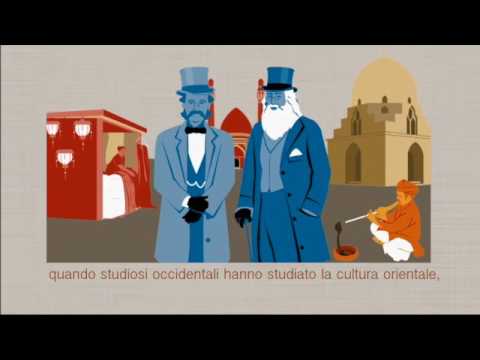
- Edward Said is recognized as a pivotal cultural figure of the late 20th century, particularly for his 1978 book Orientalism, which critiques Western representations of Eastern cultures.
- He posits that the Orient serves as a stage where the entirety of the East is confined, leading to biased perceptions that obstruct genuine understanding of Middle Eastern and East Asian cultures.
The Party Scene Analogy
- To illustrate his point, Said uses an analogy involving a Western professor attending a party, highlighting how cultural differences can lead to misunderstanding and misrepresentation.
- The professor struggles to relate to the party-goers due to differing values, mirroring how Western scholars often fail to comprehend Eastern cultures.
Misrepresentation and Stereotyping
- The professor publishes a report depicting party-goers negatively, reflecting how Western scholars project their own biases onto Eastern societies.
- Said argues that such stereotyping justifies colonial attitudes, portraying Eastern societies as needing civilizing interventions from the West.
Political Implications of Scholarship
- He asserts that much Western scholarship is politically motivated and intellectually flawed, reinforcing imperialist ideologies.
- Orientalism has become foundational in post-colonial studies and continues to influence discussions on cultural representation today.
Turn any video into a summary like this
YouTube links, meetings, lectures. With transcripts, search, and chat.