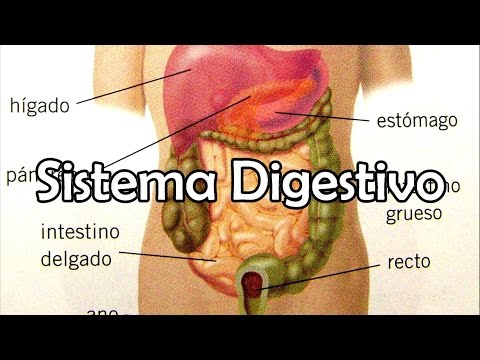
El Sistema Digestivo
Understanding the Digestive System
Overview of the Digestive Process
- The digestive system breaks down food into absorbable components while eliminating indigestible parts. This includes mechanical digestion through chewing and the action of the small intestine, which initiates carbohydrate breakdown.
Role of Saliva and Esophagus
- Salivary amylase begins chemical digestion as chewed food is pushed to the back of the mouth by tongue movements, forcing it down the esophagus. The esophagus connects to the stomach and uses rhythmic contractions (peristalsis) to move food along.
Stomach Functionality
- The stomach has three muscular layers that aid in mechanical digestion, further breaking down food with gastric glands secreting acids necessary for chemical digestion. A malfunctioning upper sphincter can lead to acid reflux into the esophagus.
Gastric Acidity and Absorption
- The stomach's acidic environment facilitates digestion but can damage its lining if not properly regulated; substances like alcohol and aspirin are absorbed here when empty or full (2-4 liters capacity).
Formation of Chyme and Intestinal Digestion
- Once food exits the stomach, it becomes chyme due to mixing with hydrochloric acid. The small intestine measures about 7 meters long, continuing chemical digestion with assistance from accessory organs like the pancreas and liver.
Accessory Organs' Contributions