The brain benefits of deep sleep -- and how to get more of it | Dan Gartenberg
What Makes Sleep More Efficient?
The Importance of Sleep and Circadian Rhythm
- The speaker, a sleep scientist, emphasizes the need for efficient sleep due to modern technology disrupting our natural circadian rhythm.
- The average American now sleeps one hour less than in the 1940s, leading to a health crisis linked to various diseases such as Alzheimer's and cardiovascular issues.
- Poor sleep affects mental states, causing risky decisions and reducing empathy; it also heightens sensitivity to pain.
Understanding Sleep Stages
- Research indicates three main stages of sleep: light sleep, REM (rapid eye movement), and deep sleep; deep sleep is considered the most regenerative stage.
- Deep sleep is characterized by delta waves—long-burst brain waves distinct from waking life brain activity.
Consequences of Insufficient Deep Sleep
- Lack of deep sleep impairs learning and cellular recovery; it plays a crucial role in converting daily interactions into long-term memory.
- As people age, they tend to lose delta waves, making deep sleep a marker for biological youth.
Innovations in Enhancing Deep Sleep
- After exploring various methods for improving deep sleep, the speaker collaborated with Dr. Dmitry Gerashchenko from Harvard Medical School on sound-based techniques.
- They received funding from reputable institutions like the National Science Foundation to develop technology that stimulates deeper sleep through sound.
Mechanism of Sound-Stimulated Deep Sleep
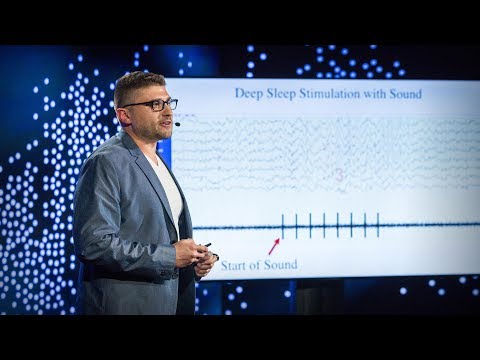
- Participants were connected to devices that played specific sounds during deep sleep phases, which aligned with their brain wave frequencies.
- This sound pattern was shown to enhance delta wave production without participants being aware of it at the time.
Results and Future Directions
- Data collected indicated that sound stimulation effectively increased regenerative delta waves during deep sleep sessions.
Turn any video into a summary like this
YouTube links, meetings, lectures. With transcripts, search, and chat.