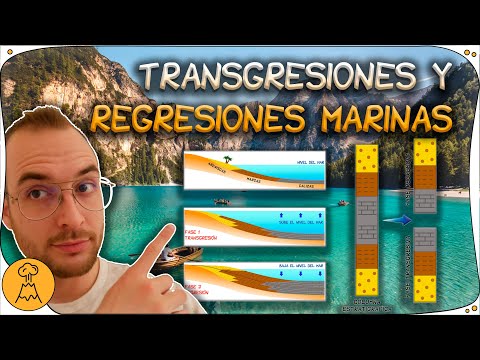
🌍 TRANGRESIONES y REGRESIONES MARINAS (3 min) 💧 (¿Realmente sabes lo que ocurre en las costas?) 😵
What Happens Geologically When Sea Levels Change?
Introduction to Sea Level Changes
- The video introduces the topic of geological changes associated with sea level fluctuations, emphasizing the importance of understanding these processes.
Marine Transgressions and Regressions
- A marine transgression occurs when sea levels rise and inundate coastal areas, often due to land subsidence or melting glaciers.
- Conversely, regression happens when sea levels fall, exposing previously submerged materials; this was notably observed during the Pleistocene ice age when ocean levels dropped by 120 meters.
Geological Time Scale and Processes
- Both transgressions and regressions are long-term phenomena influenced by tectonic or volcanic events over millions of years.
- Identifying these processes in geological cuts requires understanding specific characteristics: coarse-grained rocks indicate high-energy environments near coasts, while finer sediments accumulate in deeper waters.
Identification of Geological Features
- Transgressions reveal a shift from older coastal facies to more recent ones, such as fossiliferous limestones; regressions show an opposite pattern with continental facies emerging.
- Recognizing regressions often involves identifying erosional unconformities in geological sections, highlighting the complexity of distinguishing between these two processes.
Conclusion and Engagement