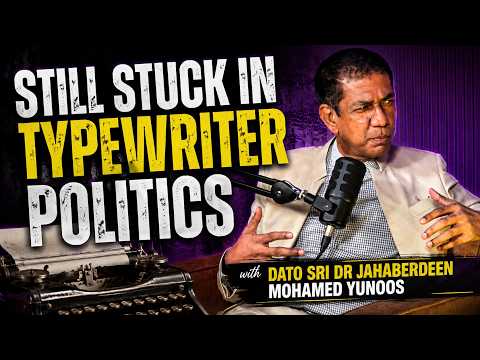
Our Politicians Still Think It's 1985 | with Dato Sri Dr Jahaberdeen Mohamed Yunoos
Introduction to the Podcast
Welcoming a Former AMNO Member
- The host introduces the podcast and mentions it is the first time having a former AMNO member as a guest.
- The guest, Dat Sri Dr. Jahabarin Muhammad, is introduced as a senior lawyer and founder of the Rapera Movement, which promotes community-based learning and compassionate thinking among Malaysians.
Understanding New Politics
Defining New Politics
- The guest clarifies that he does not represent AMNO but shares insights on Malaysian politics. He expresses confusion about what "new politics" means, stating that slogans often lack substance.
- He reflects on past elections where "reformation" was the key term, contrasting it with the current focus on new politics without clear definitions or understanding of its implications.
Historical Context of Malaysian Politics
Political Changes Over Time
- The guest discusses significant political unrest in Malaysia around 2006 to 2008 and how Mahathir's departure marked a new era in politics. He notes that despite expectations for change, results from elections showed surprising support for AMNO in 2004.
- He highlights how public sentiment shifted after Abdullah Badawi's initial success led to disillusionment within one year due to unmet expectations, culminating in losses during the 2008 elections.
Calls for Political Reform
Lack of Transformation in Politics
- The guest emphasizes that while other sectors have seen reforms, Malaysian politics remains stagnant with no substantial changes since 2008. He points out that discussions often overlook deeper issues within political ideologies and party manifestos.
- He criticizes sensationalism in media coverage of political events rather than focusing on substantive discussions about political ideologies and citizen engagement in governance.
Reflections on AMNO's Evolution
Historical Perspective on AMNO
- The guest reminisces about earlier perceptions of AMNO as a party representing all Malaysians rather than just Malay interests before Mahathir’s leadership changed its trajectory towards ethnic nationalism.
- He acknowledges that while there were positive aspects to early AMNO leadership, subsequent shifts led to increased polarization along ethnic lines within Malaysian society and politics.
Influence of Islamic Movements
Impact of Islamism on Politics
- Discussing his university years during the Iranian revolution, the guest reflects on how Islamic movements influenced his views and those around him at that time but later recognized their potential negative impacts when politicized excessively.
- He notes Anwar Ibrahim’s role as a moderate figure who attempted to balance rising Islamism within Malaysian politics by promoting multi-racialism through PKR (Parti Keadilan Rakyat).
Fragmentation vs Diversification
Current State of Malay Political Identity
- The conversation shifts towards fragmentation within Malay voter bases; however, the guest argues this should be viewed as diversification rather than division—indicating an evolution in political thought among Malays over time.
- He asserts that voters are increasingly prioritizing issues over racial identity when making electoral decisions—a sign of maturity within Malaysia’s electorate despite lingering challenges related to race-based voting patterns.
This structured markdown file captures key insights from the transcript while providing timestamps for easy reference back to specific parts of the discussion.
The Evolution of Malay Politics and Nation Building
The Changing Landscape of Malay Identity
- Politics is compared to riding a tiger, where followers maintain authority out of self-interest, despite a larger, diverse population outside traditional political blocks.
- The notion that the Malay community is no longer homogeneous is emphasized; past assumptions about unity are outdated.
- The failure of racial-based politics (rumah bangsa) is discussed; voters do not support it as they perceive it as a tactic for politicians to retain power.
Future Political Dynamics
- Predictions suggest that upcoming elections will see further fragmentation among parties, with no single party gaining strong power being viewed positively.
- Citizens should ensure that no politician or party holds excessive power; discussions on the role of politicians need reevaluation.
- Politicians are criticized for their minimal contributions to societal well-being compared to professionals and scientists.
Facilitating Progress Over Control
- A call for politicians to act as facilitators rather than controllers in creating employment opportunities is made.
- Deregulation and reduced government interference in daily life are advocated for better economic conditions and job creation.
Critique of Current Political Leadership
- AMNO's potential for reinvention is hindered by fear of losing voter base; leaders fail to recognize their declining support.
- Anwar Ibrahim's shift towards playing the Malay card is seen as a significant mistake, undermining his multi-racial roots.
Missed Opportunities in Leadership
- Discussion on how past leaders like Abdullah Badawi had the potential for positive change but were politically naive or too gentle.
- The importance of balancing kindness with political toughness in leadership roles is highlighted.
Historical Context and Its Impact on Nation Building
- Reflecting on Malaysia's early political alliances reveals missed chances for building a more inclusive nation beyond race-based politics.
- Anwar Ibrahim’s historical significance as a leader who could have driven change but ultimately fell short due to missteps.
Navigating Modern Challenges
- Emphasis on the need for modern solutions that transcend ethnic lines amidst evolving global challenges such as AI and technology changes.
- Leaders must adopt clear philosophical stances instead of ambiguous positions that confuse public perception.
Conclusion: Rethinking Malaysian Solutions
- Malaysian solutions should focus on human-centric approaches rather than ethnic divisions, especially considering future technological advancements.
- Traditional policies may become obsolete if they do not adapt to new realities; leaders must prepare citizens for real-world challenges ahead.
The Future of Malays in Politics and Technology
Observations on Cultural Differences
- The speaker reflects on a personal experience selling burgers in the UK, noting how ministers are treated differently there compared to Malaysia, highlighting cultural differences in political engagement.
Potential for Growth Among Malays
- The speaker expresses optimism about the future of Malays, suggesting that they will thrive with new technology due to their inherent creativity and artistic talents often overlooked by traditional career paths.
Education and Career Choices
- A critique is made regarding the pressure on young Malays to pursue conventional careers like law or medicine instead of following their passions, which can lead to wasted potential.
Political Engagement of Young Voters
- There is a call for politicians to rethink their roles as younger generations become more independent and less reliant on traditional political structures.
Expectations from Politicians
- The speaker discusses what might attract young voters, emphasizing the need for politicians to focus on providing opportunities rather than adhering strictly to outdated practices.
Changing Dynamics in Employment and Politics
Efficiency Through Technology
- With advancements in AI, information processing has become faster; thus, young voters expect leaders who can provide quick results and opportunities reflective of this efficiency.
Transitioning Political Landscape
- The current political chaos is seen as part of a transitional phase where older politicians must adapt or risk becoming irrelevant as younger generations seek different forms of engagement.
Generational Divide in Communication
- A generational gap exists where older politicians may not resonate with younger voters due to differing communication styles and priorities.
Youth Disengagement from Politics
Risks of Disengagement
- Concerns are raised about youth disengagement from politics if they feel alienated by older generations' approaches, potentially leading to long-term apathy towards political participation.
Understanding Political Participation
- The discussion differentiates between actual political participation versus passive observation among youth, indicating that many still care about politics even if they do not actively engage.
Evolving Political Structures
Need for Change in Leadership
- There's an argument for reducing cabinet sizes and streamlining government roles as many positions may be redundant or ineffective given modern needs.
Balancing Experience with Innovation
- While younger leaders bring energy and creativity, it’s important not to overlook the wisdom that comes with experience; a balance between both is essential for effective governance.
Adapting Language in Politics
Importance of Communication Style
- Successful politicians must adapt their language and communication methods to connect effectively with today's youth who demand factual discourse over traditional rhetoric.
In summary, the conversation emphasizes the necessity for Malaysian politics to evolve alongside technological advancements while addressing generational divides. It advocates for greater inclusivity and responsiveness from leaders towards younger constituents.