Tema 4 Dolor, y escalas de evaluación y analgesia en el paciente en cuidados paliativos (umh3665)
Understanding Pain Management in Palliative Care
Overview of Pain and Its Evaluation
- The topic focuses on pain management, evaluation scales, and treatment approaches in palliative care.
- Pain is described as an unpleasant sensory and emotional experience, which may or may not be associated with tissue injury.
- In oncology patients, pain is a primary symptom; it can manifest as nociceptive (somatic or visceral) or neuropathic pain.
- The classic "Socrates" scale is introduced for evaluating pain based on location, onset, alleviating factors, and aggravating factors.
- Intensity measurement methods include numerical scales (0 to 10), visual analog scales (VAS), and facial expression scales for children or elderly patients.
Treatment Approaches to Pain
- Treatment strategies vary based on individual patient experiences and the subjective nature of their pain.
- C.S. Sanders' concept of "total pain" encompasses physical, social, emotional, and spiritual dimensions affecting palliative patients.
- Addressing total pain involves recognizing accompanying issues such as anxiety, depression, appetite loss, and environmental challenges.
Pharmacological Strategies in Pain Management
- A balance must be struck between effective analgesia and avoiding overmedication in palliative care settings.
- Initial pharmacological principles emphasize achieving relief while managing side effects through appropriate dosing strategies.
Analgesic Ladder Approach
- First Step: Non-opioid medications combined with adjuvants are recommended (e.g., acetylsalicylic acid).
- Second Step: If discomfort persists with first-step treatments, weak opioids like codeine may be introduced alongside non-opioids.
Hydrocodone and Tramadol Usage in Pain Management
Overview of Opioid and Non-Opioid Analgesics
- Discussion on the use of hydrocodone with analgesics that are not yet available, highlighting tramadol as a weak opioid option combined with paracetamol.
- Introduction to stronger opioids such as morphine, fentanyl, oxycodone, methadone, and newer medications; emphasis on the importance of family care (emotional, physical, spiritual) during treatment.
Side Effects of Opioids
- Common side effects include constipation, nausea, vomiting (especially in initial days), sedation tendencies, respiratory depression risks which can be managed with naloxone.
- Other potential symptoms: pruritus (itching), myoclonus (muscle spasms), delirium, and urinary retention; some patients may require catheterization when using opioids.
Mechanism of Action and Dosing Considerations
- Explanation of analgesic action through interaction with mu receptors; effective for pain control but requires careful dosing to avoid adverse effects.
- Equianalgesia tables provided for converting between oral and subcutaneous routes; example given for morphine dosing every 12 or 24 hours based on route.
Fentanyl Administration Techniques
- Initial dosing strategies for transdermal fentanyl patches; comparison made to oral morphine equivalents.
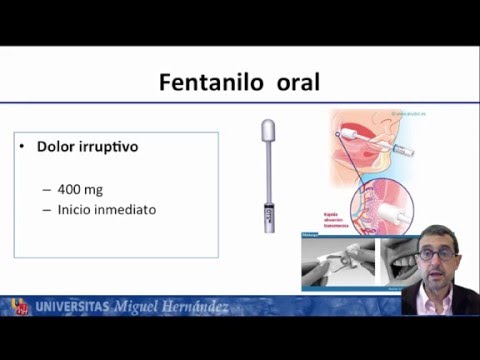
- Description of various forms of fentanyl including oral transmucosal options for rapid absorption; nasal formulations also mentioned.
Oxycodone Use in Pain Management
- Introduction to oxycodone as a mu receptor agonist effective for neuropathic pain; different release formulations discussed including immediate-release and controlled-release options.
- Combination therapy with oxycodone and naloxone to enhance analgesic effect while mitigating side effects; bupre norfina introduced as a second-line opioid option.
Bupre Norfina Applications
- Bupre norfina's role as an agonist-antagonist opioid used in moderate to severe pain management when other opioids are intolerable.
Medication Equivalences and Pain Management Strategies
Opioid Equivalences
- Discusses the equivalence of various opioids including buprenorphine, oxycodone, oral morphine, fentanyl, and tramadol. Provides specific dosage conversions for effective pain management.
- Mentions a table summarizing drug types, starting doses, titration guidelines, and additional notes for practical use in clinical settings.
New Medications in Pain Management
- Introduces new opioid medications such as hydromorphone and tapentadol. Highlights hydromorphone's minimal pharmacological interactions due to its low metabolism via cytochrome P450.
- Describes the administration frequency of these medications (once daily for hydromorphone), emphasizing their potential to improve sleep quality with fewer side effects compared to traditional opioids.
Adjuvant Medications for Neuropathic Pain
- Explains the role of adjuvant medications like amitriptyline and gabapentin in enhancing analgesic effects. Notes that while older options are less favored due to side effects, newer alternatives are being utilized more frequently.
- Details dosing strategies for gabapentin and pregabalin in managing neuropathic pain among oncology patients. Emphasizes individualized dosing based on patient response.
Managing Complex Pain Scenarios
- Discusses additional strategies for managing pain related to metastasis or hypercalcemia using zoledronic acid. Also mentions muscle relaxants like baclofen for muscle contractions.