[Aula 1] Mecanismo de Ação de Antimicrobianos & Resistência Bacteriana
Introduction to Antimicrobials and Bacterial Resistance
Overview of Microorganisms
- The lecture focuses on antimicrobials, their mechanisms of action, and bacterial resistance, referencing Brock Biology of Microorganisms and Veterinary Microbiology.
- Historically viewed as villains, microorganisms are now recognized for their beneficial roles in society, including genetic engineering applications.
Discovery of Antibiotics
- About 91 years ago, it was discovered that microorganisms produce substances toxic to others, leading to the development of antibiotics.
- The discovery of antibiotics has significantly advanced the study and treatment of infectious diseases through synthetic and semi-synthetic solutions.
Alexander Fleming and Penicillin
Accidental Discovery
- Alexander Fleming discovered penicillin in 1929 while studying Staphylococcus aureus; he noticed a contaminating fungus inhibiting bacterial growth.
- The fungus Penicillium notatum produces a toxin effective against certain bacteria but was only mass-produced for therapeutic use a decade later.
Types of Antimicrobials
Classification
- Antimicrobials can be natural (produced by microorganisms) or synthetic (laboratory-made), both capable of killing or inhibiting susceptible microbes.
- Natural antibiotics are derived from various bacteria and fungi; however, less than 1% show satisfactory clinical results due to toxicity or penetration issues.
Synthetic Antimicrobials
- Synthetic agents include growth factor analogs and quinolones; they mimic essential nutrients needed by bacteria but disrupt their metabolism.
Mechanism of Action: Growth Factor Analogs
Functionality
- Growth factor analogs compete with actual growth factors in bacteria, inhibiting their growth instead of promoting it.
- Sulfonamides act on folic acid synthesis pathways unique to bacteria, demonstrating selective toxicity since humans obtain folic acid from diet.
Quinolones: Targeting DNA Gyrase
Inhibition Mechanism
- Quinolones inhibit DNA gyrase, an enzyme crucial for bacterial DNA supercoiling post-transcription, affecting bacterial proliferation.
Main Classes of Antimicrobials Produced Annually
Production Statistics
- A high quantity of antimicrobials is produced annually; beta-lactams dominate this production due to their effectiveness against bacterial cell walls.
Spectrum of Activity Against Microorganisms
Specificity
- Different antimicrobial agents target specific classes such as antibacterials for bacteria, antifungals for fungi, and antivirals for viruses.
Selective Toxicity Explained
Definition
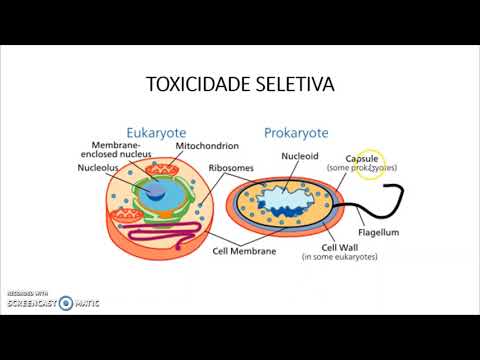
- Selective toxicity refers to an antimicrobial's ability to target pathogenic organisms without harming the host organism.
Differences Between Eukaryotes and Prokaryotes
Structural Differences
- Understanding structural differences between eukaryotic and prokaryotic cells aids in developing targeted antimicrobial therapies that minimize harm to human cells.
Bactericidal vs. Bacteriostatic Agents
Key Distinctions
Bactericidal agents kill bacteria directly while bacteriostatics inhibit growth allowing immune system clearance; maintaining levels is crucial for efficacy.
Main Classes & Modes of Action
Overview
- Beta-lactams like penicillins inhibit cell wall synthesis effectively with low toxicity but can be deactivated by beta-lactamases.
Mechanisms of Antimicrobial Agents
Overview of Antimicrobial Actions
- Streptomycin alters ribosome subunits, compromising peptide synthesis.
- Chloramphenicol binds to ribosome subunits, preventing peptide bond formation between amino acids.
- Erythromycin inhibits ribosome movement along mRNA, halting protein production.
- Tetracycline interferes with tRNA docking at the ribosome-mRNA complex, disrupting translation.
- These agents collectively inhibit protein synthesis and bacterial growth.
Selective Toxicity and Limitations
- Few antimicrobial agents target cell membranes due to similarities with eukaryotic structures.
- High toxicity limits the use of these agents; selective toxicity is a critical consideration in therapy.
- Individual drug efficacy varies against pathogens; combined therapy may be necessary for effectiveness.
Combined Therapy in Antibacterial Treatment
Effects of Combined Antibiotics
- Additive effect: combined action equals the sum of individual drug effects when used separately.
- Synergistic effect: combined action significantly exceeds the sum of individual effects.
- Indifferent effect: no increased efficacy observed from combination therapy.
- Antagonistic effect occurs when combining bactericidal and bacteriostatic agents reduces overall effectiveness.
Bacterial Resistance Concerns
Understanding Bacterial Resistance
- Bacterial resistance allows microorganisms to evade antimicrobial activity, necessitating constant review of antibiotic therapies.
- Resistance genes can spread through genetic flow mechanisms like transformation, conjugation, and transduction.
Mechanisms of Gene Transmission
- Transformation involves DNA uptake from lysed bacteria into living ones.
- Conjugation transfers plasmids containing resistance genes between bacteria directly.
- Transduction uses bacteriophages to transfer resistance genes between bacteria during viral infection.
Mechanisms of Resistance in Microorganisms
Types of Resistance Mechanisms
- Ribosomal alterations prevent antimicrobial agents like erythromycin from inhibiting protein synthesis effectively.
- Mutations in RNA polymerase render some antibiotics ineffective by altering their target sites.
- Beta-lactamases produced by bacteria can cleave beta-lactam rings, neutralizing antibiotic activity.
- Decreased affinity for penicillin-binding proteins leads to reduced effectiveness against cell wall synthesis.
- New metabolic pathways allow bacteria to bypass targets of sulfonamide antibiotics by synthesizing folic acid differently.
Strategies Against Bacterial Resistance
Addressing Antibiotic Use and Monitoring
- Monitoring supply and usage patterns for antimicrobials is crucial for controlling resistance development.
- Prescriptions must adhere strictly to therapeutic guidelines regarding dosage and duration.
- Laboratory tests should guide antibiotic selection based on specific microorganism sensitivity profiles.
- Proper dosing is essential; both underdosing and overdosing can contribute to resistance or toxicity issues.
- Implementing hygiene measures, disinfection protocols, and vaccination coverage are vital strategies for limiting bacterial resistance risks.
Turn any video into a summary like this
YouTube links, meetings, lectures. With transcripts, search, and chat.