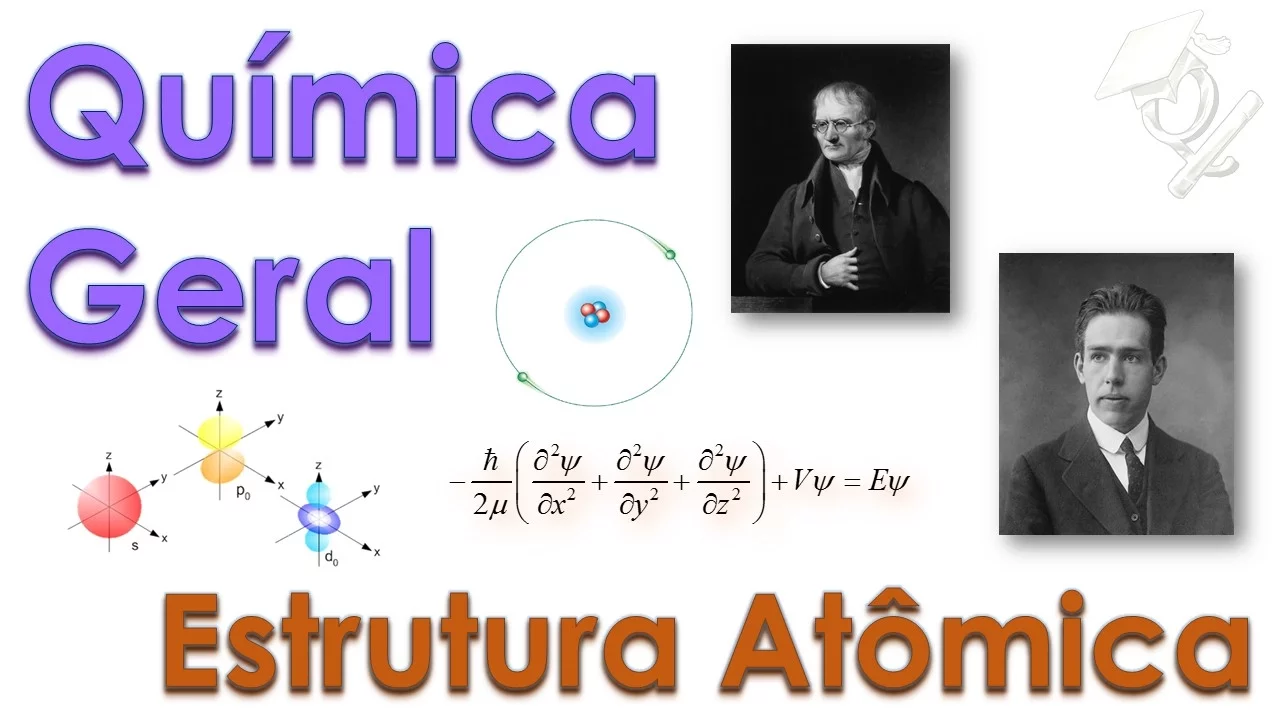
Curso Química Geral - Estrutura Atômica #1 O Átomo
Introduction to Atomic Structure
In this section, the instructor introduces a new module on atomic structure, highlighting the difference between high school teachings and the richer understanding required at higher levels of education.
Understanding Atomic Structure
- Atomic structure studies differ significantly from high school teachings, offering a deeper and evolving comprehension beyond basic models like Dalton's or Thomson's.
- The concept of the atom is continuously evolving with new subparticles theorized regularly, emphasizing its complexity over simplistic high school representations.
- Despite advancements in atomic structure understanding, limitations in undergraduate education hinder comprehensive knowledge due to time constraints and historical physics-centric development.
Evolution of Atom Concept
This part delves into the historical context of atomic theory acceptance and skepticism among prominent scientists at the turn of the 20th century.
Historical Perspectives on Atom Acceptance
- The term "atom," meaning indivisible, has evolved from ancient Greek concepts to modern understandings where atoms can be divided into smaller particles while still serving as fundamental building blocks.
- The stability of the atom as a foundational unit for matter persists despite advancements in subatomic particle theories like quarks or electrons.
Challenges to Atom Theory
Discusses early 20th-century skepticism towards atomic theory by notable scientists like William Oswald and Ludwig Boltzmann.
Scientific Skepticism Towards Atoms
- Notable figures such as William Oswald expressed disbelief in atoms despite being awarded Nobel Prizes for other scientific contributions.
New Section
The section discusses the tragic end of a scientist who fell into depression and committed suicide, delving into the concept of statistical entropy and the historical background of scientific beliefs.
Tragic End of a Scientist
- The scientist's ideas led him into a state of depression, ultimately resulting in his suicide.
- In the early 20th century, the scientific community largely dismissed the atomic hypothesis.
- The concept of atoms traces back to ancient Greece with philosophers Leucippus and Democritus.
- Democritus popularized the idea that everything is made up of indivisible particles called atoms.
- Aristotle, a critic of Democritus, believed in continuous matter rather than indivisible atoms.
Evolution of Atomic Theory
This section explores the contrasting views on atoms between Democritus and Aristotle, shedding light on how these perspectives influenced scientific thought over centuries.
Views on Atoms
- Democritus proposed that all matter consists of atoms with unique properties like color or shape.
- Aristotle's belief in continuous matter overshadowed Democritus' atomic theory for millennia.
Resurgence of Atomic Theory
This part highlights the revival and acceptance of atomic theory in the 19th and 20th centuries after being disregarded for centuries.
Revival and Acceptance
- The idea of atoms resurfaced in the early 19th century but remained dormant until the 20th century.