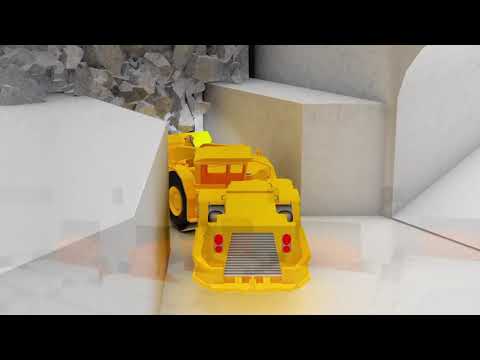
¿Cómo funciona Chuquicamata Subterránea?
What is Block Caving and How is it Implemented?
Introduction to Block Caving
- Block caving, or "hundimiento de bloque," is a mining method that utilizes controlled fracturing of rock, leveraging gravity to extract material.
- In the PMCHS (Presumably a mining site), this process involves exploitation units consisting of two macrobloques, each covering approximately 35,000 m².
- The height for the first level of exploitation ranges from 200 to 400 meters, depending on the depth of the pit.
Infrastructure Development in Mining
- Initial construction included permanent works such as bidirectional access tunnels, main transport tunnels, air injection tunnels, and an air extraction shaft.
- Following these developments was the construction of the BIS (Barrio Industrial Subterráneo), located adjacent to the first level of mine exploitation.
Preconditioning Units for Exploitation
- Preconditioning involves creating three vertical descending drill holes that reach down to each macrobloque's sinking level.
- High-pressure pumps inject water into these holes to create controlled fractures in order to weaken the rock mass; this technique is known as hydrofracturing.
Finalizing Preconditioning and Production Preparation
- The preconditioning stage concludes with confined blasting or dynamic weakening using explosives.
- After preconditioning, preparation for mineral extraction begins at the production level by blasting the base of blocks and facilitating gravitational flow as minerals are extracted.
- Extraction occurs symmetrically and alternately from the center towards both sides within each macrobloque.