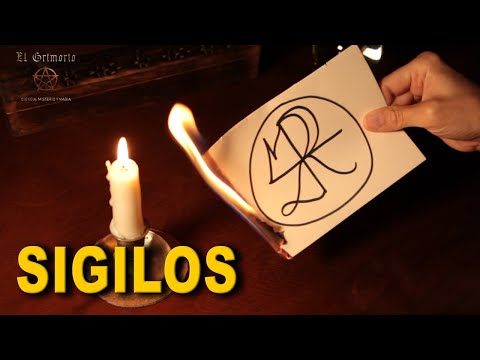
El PODER de los SIGILOS (sellos mágicos) | Qué son y cómo usar esta MAGIA 💢
Understanding Sigils: Ancient Magic Reimagined
Introduction to Sigils
- The discussion begins with an introduction to sigils, described as practical and versatile forms of enchantment, reformulated by chaos magic in recent times.
- The term "sigil" originates from Middle English and Late Latin, meaning "small seal," but is differentiated from common seals in Spanish.
Nature and Function of Sigils
- A sigil is a unique symbol that encapsulates magical power tied to a specific intention or goal.
- Historically, sigils were linked to demonic invocation during the late Middle Ages and Renaissance, particularly through grimoires like the Clavicula Salomonis.
- Chaos magicians have redefined sigils for broader applications beyond invoking spirits, focusing on personal will and intention.
The Magical Reality of Symbols
- Sigils are seen as integral parts of reality; they embody intentions that can manifest outcomes when charged with energy.
- The interconnectedness of the universe means that what occurs in the macrocosm reflects in the microcosm; symbols bridge these realities.
Working with Sigils
- To effectively use sigils, one must control their energy and direct it towards a clear intention.
- Writing down intentions affirmatively (e.g., "I am healthy") is crucial for clarity and manifestation since time is perceived differently in ultimate reality.
Considerations Before Casting Spells
- It’s important to consider potential consequences of magical acts; unintended results can arise if not carefully thought out.
- An example illustrates this: if someone wishes for money without considering how it may come about, they might face negative repercussions (e.g., injury leading to compensation).
This structured overview captures key insights into the nature and application of sigils within magical practices while providing timestamps for easy reference.
Understanding Sigils and Intentions in Magic
Juan's Journey with Intentions
- Juan receives the money he was expecting, but not in a way he would have considered appropriate. This prompts him to rethink how he formulates his desires.
- To avoid unforeseen consequences, Juan reformulates his desire: "I receive a lot of money from selling my furniture," ensuring no collateral damage occurs for himself or others.
Creating the Sigil
- The process of creating a sigil begins after formulating an intention. While prefabricated sigils exist, crafting one personally is preferred for clarity of intent.
- A method involves taking the initial letters of each word in the intention statement (ignoring those starting with vowels), leading to a unique combination that forms the basis of the sigil.
- Creativity plays a crucial role; letters can be rearranged into an abstract symbol that encapsulates Juan's intention. Various materials can be used for this creation, including common writing tools or even bodily fluids.
Refining and Charging the Sigil
- The first attempt at creating a sigil doesn't have to be final; if it’s unsatisfactory, it can be discarded. Reducing repeated letters simplifies the design process.
- A base structure like a cross can help organize remaining letters into an abstract drawing, which is then enclosed within a circle to enhance its significance.
Preparing for Focused Energy
- Choosing an appropriate time and place is essential for charging the sigil. Isolation aids concentration; if rushed, it's better to postpone until conditions are optimal.
- Environmental elements such as music or candles can facilitate focus during this process. These items serve as tools to maintain energy rather than being magical themselves.
Entering Trance States
- Concentration on the sigil while visualizing its embedded desire leads to entering a trance state—either through deep calmness or heightened emotional intensity.
- Techniques include meditation or sensory deprivation methods (like covering eyes/ears). Emotional peaks may also be harnessed, such as joy or anger, during this phase.
Releasing and Forgetting the Sigil
- After charging, it's vital to release attachment by destroying the physical representation of the sigil—burning it is recommended—to allow subconscious integration without rational interference.
- The effectiveness of magic does not solely depend on rituals but rather on intentions behind them. Dark intentions lead to negative outcomes regardless of ritual specifics.
Ethical Considerations in Magic
- Sigils are neutral tools; their moral implications arise from user intentions—whether benign or harmful actions are pursued determines their ethical standing.
- If fear surrounds potential outcomes from using magic (like sigils), abstaining is advised since projecting fear could manifest unwanted realities.