Revision Herramienta Maia ALDO 20260113 100923 Grabación de la reunión
Process Mining and Best Practices
Understanding Departmental Data Extraction
- The speaker discusses how to identify which department is being analyzed by extracting data based on user permissions during audits.
- They emphasize the ability to filter actions generated by users in specific departments, identifying potential bottlenecks in processes.
Tools for Process Analysis
- Mention of a tool called "ocultar ruido" (hide noise), which is underutilized despite its simplicity, contrasting it with more commonly used tools for identifying bottlenecks.
- The importance of cleaning up incomplete documents from historical data to ensure accurate process analysis is highlighted.
Traditional vs. Advanced Process Mining
- Discussion on generating BPMN documents and comparing best practices against actual processes observed within the system.
- Introduction of heat maps based on user activity types, aiding in targeted analysis.
Audit Process Exploration
- The speaker explains that their audit process involves exploring system logs to determine usage patterns and connect them with process maps.
- Acknowledgment of limitations in traditional processing methods, which indicate what was done but not how or where it was performed.
Transitioning to Process Design
- The conversation shifts towards designing processes based on extracted information, questioning whether the system accurately reflects client operations.
- Clarification sought regarding whether the system's process drawings are based solely on client data or if they incorporate algorithmic analysis.
Insights into User Behavior Patterns
- An example illustrates how clients may deviate from standard procedures (e.g., invoicing before dispatch), showcasing flexibility in understanding client behavior.
- Emphasis on capturing not just when activities occur but also what tools users employ during transactions, providing deeper insights into operational efficiency.
Enhancements Over Traditional Processing Methods
- Comparison between traditional processing methods and an enhanced version developed by the speaker’s team that integrates audit overlays for better insight into user activities.
- This new approach allows tracking of specific transactions and tools used by users, revealing patterns that traditional methods overlook.
Delivery Process Optimization
Understanding the Delivery Information Requirements
- The discussion begins with the importance of having the necessary information to send a delivery, leading into a process optimization phase.
Introduction to Subdog Studio
- The speaker introduces "Subdog Studio," emphasizing its uniqueness compared to other products like Celoni and Signabio, particularly highlighting features such as overlays that competitors lack.
System Integration Examples
- An example is provided using S/4HANA, illustrating how various programs (ABAP transactions, CDS views, Fiori apps) can be integrated into the system.
Challenges with Custom Systems
- A scenario is presented involving an outdated client system that is highly customized. This includes issues related to undocumented transactions and changes in personnel affecting historical knowledge.
Consultant Workflow and Documentation Generation
- The workflow for consultants is outlined: selecting standard or modified transactions for analysis. The product automates documentation generation without human intervention.
Deliverables from Analysis
Comprehensive Documentation Output
- Upon completing the analysis, users receive detailed documentation covering all aspects of the client's system including program execution details and business logic.
Technical and Functional Insights
- The generated document provides both technical abstractions of what each program does and functional analyses detailing user interactions and data models used by clients.
Efficiency in Documentation Creation
Time Investment vs. Automation Benefits
- Emphasizes that using this automated tool saves significant time; generating documentation for numerous transactions can take only seconds per transaction.
Migration Challenges with New Versions
Transitioning from GUI to Fiori Interfaces
- Discusses challenges clients face when migrating from traditional SAP GUI interfaces to Fiori applications due to differences in abstraction levels required for understanding new systems.
Development of Migration Tools
- A product called TOB (migration to Fiori) is introduced as a solution for these migration challenges, aiming to ease transitions between different interface types.
Documentation and Workflow Automation in Fiori
Overview of the Documentation Process
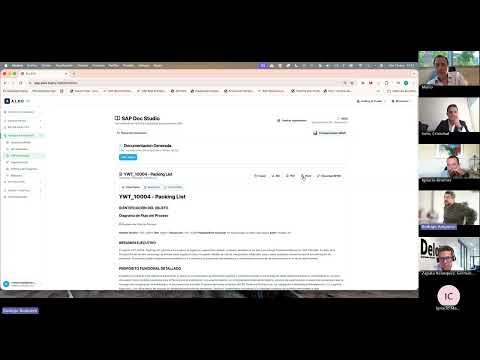
- The process begins with the consultant generating two key outputs: a "to be" document and an automatic visualization of the Fiori flow.
- Users can access documentation in various formats, including PDF, Word, and a ZIP file containing source files for development purposes.
Interaction with Generated Transitions
- The generated transaction is based on data extracted through processing combined with discovery logic.
- Users can interactively modify elements such as titles and colors within the documentation before sending it to production.
Approval Workflow
- An approval workflow allows consultants to involve key users in validating transactions, ensuring collaborative input during development.
- The system tracks changes made by users, maintaining an audit trail of who made modifications and when.
Automation and Efficiency
- The entire process is automated, auditable, and designed to be user-friendly while leveraging client-specific data for rapid deployment.
- A mockup (MACUP) is created for factory use; this serves as a prototype that retains all design elements necessary for developers.
Addressing Development Challenges
- There are concerns about how closely the final product aligns with initial requirements outlined in the MACUP due to potential adjustments needed during actual programming.
- Developers focus on integrating data sources rather than worrying about design consistency since it’s already established in the mockup.
Involvement of Stakeholders
- The approach encourages participation from various stakeholders within a company, especially beneficial for businesses unfamiliar with new technologies or those resistant to change.
- It addresses fears related to migration or adopting SAP systems by demonstrating how existing practices can be integrated into new solutions.
Reflection on Time Efficiency
- Questions are raised regarding the time taken for requirement gathering compared to traditional methods, emphasizing accelerated consulting timelines.
- A library of documents aids in optimizing processes by analyzing customer data across different areas like production.
SAP Reporting and Strategic Analysis
Overview of SAP Reports
- The speaker discusses generating nine types of reports that address the theoretical needs of clients, focusing on strategic rather than technical perspectives.
- A general overview report can be provided to analyze the entire system, addressing knowledge gaps and offering a consultative diagnostic report with verifiable data.
Handling Criticism in Meetings
- The speaker highlights challenges faced during meetings when presenting diagnoses, especially when confronted by knowledgeable individuals who may challenge the findings.
- Providing concrete examples and data helps counter arguments effectively, ensuring clarity in discussions about bottlenecks and performance metrics.
Detailed Analytical Capabilities
- The analysis includes various levels: general bottleneck analysis, process execution variants, performance recommendations, and compliance checks across three depth levels (brief, standard, deep).
- Data anonymization is possible for sensitive information to comply with European data protection standards.
Addressing Complex Production Processes
- Questions arise regarding analyzing multiple production processes within different companies under one holding structure; the tool can differentiate analyses by company or product line.
- The speaker confirms that it’s feasible to conduct analyses at both holding and individual company levels while considering distinct production functions.
Process Mining Insights
- Emphasizing automatic documentation generation for macro processes at a holding level while allowing for detailed area-specific analyses if needed.
- The discussion touches on how complex applications with numerous interlinked components are documented effectively through process mining techniques.
Understanding Development Complexity
- Queries about documenting complex developments involving recursive objects are addressed; the system can handle up to 184 includes efficiently.
- It is noted that while analyzing transactions is common practice, understanding program-level interactions provides deeper insights into operational efficiency.
Understanding Transaction Analysis
User Interpretation of Transactions
- The objective of transaction analysis is heavily influenced by user interpretation, focusing on how users perceive the program rather than just the transactions themselves.
- There is a suggestion to shift focus from transaction codes to program codes for better clarity in analysis.
Data Accessibility and Timeliness
- The data extraction process can be immediate; results can be available within an hour after connecting with a client, contrasting with traditional methods that may take days or weeks.
- This rapid access allows for real-time reporting and insights, even when working with clients previously unknown to the team.
System Connections and Product Capabilities
- The speaker highlights connections to various ERP systems, emphasizing that only a portion of product capabilities is being demonstrated.
- Access requires sufficient user permissions, which are critical for executing necessary functions within the system.
Implementation Process Insights
- Initial processing time for capturing data can take up to 48 minutes before any output is visible, allowing for quick demonstrations post-connection.
- Agile methodologies are questioned regarding consultant readiness during solution deployment phases, particularly in addressing potential issues early in implementation.
Business Processes and Client Interaction
- Immediate demonstration of functioning transactions helps alleviate client concerns about understanding processes before testing them.
- The product aims to facilitate business process generation through internal lookups across different systems like Business One and Dynamics.
Real-Time Query Execution
- Users can execute queries in real-time against the ERP system, showcasing immediate results based on selected parameters such as item names.
- Demonstrations include interactions with clients using products globally (e.g., a client in China), highlighting versatility across languages and regions.
Understanding Client Needs Through Process Mining
- Comprehensive understanding of client operations requires more than just process documentation; it involves analyzing modifications' impacts over time.
- Transaction changes often arise from various issues; thus, tracking user behavior alongside process mining becomes essential for effective analysis.
Understanding Transport Orders in System Governance
The Problem and Solution Offered by Transport Documentation
- The speaker discusses the importance of transport orders, questioning what problem they solve and what value they add to business processes.
- When auditing a client, the typical documentation provided includes only transaction codes and authorizations, lacking comprehensive details about the transport itself.
Governance Process and Historical Tracking
- A governance process ensures that changes are documented properly; after development, transports are signed off with explanations from key users.
- If issues arise with a transaction, one can trace back through associated transports to identify who approved changes and what modifications were made.
Dynamic Nature of Systems
- Systems are dynamic entities within companies; unexpected failures can occur even when systems previously functioned well.
- Users can analyze specific transports or all related transports executed by a client to gather functional and technical insights.
Comprehensive Management of Client Interactions
- The product allows for detailed tracking of up to 5,000 objects during modifications or program creation, ensuring thorough documentation is maintained.
- It supports project management throughout various phases: pre-sale, execution, and go-live stages.
Efficiency Gains Through Automation
- The tool accelerates processes from requirements gathering to final documentation without extensive human intervention.
- It minimizes rework on projects by controlling initial setups effectively.
Impact on Project Delivery and Client Satisfaction
- By streamlining processes, it reduces project chaos while enhancing testing protocols and security levels involved in transactions.
- The efficiency gained not only speeds up delivery but also allows for more competitive pricing or better resource allocation towards fine-tuning systems for clients.
Long-term Value Proposition
- Clients receive formal products with complete documentation from day one, maintaining software lifecycle integrity as long as needed.
Tenant-Based Functionality
- The product operates on a tenant basis allowing easy access without account maintenance burdens for users.
Questions About Cost Savings
- A question arises regarding cost savings in projects compared to other tools like Signabio; understanding this is crucial for evaluating overall effectiveness.
Discussion on SAP Tools and Consulting Strategies
Overview of SAP Tools and Their Value
- The speaker discusses the effectiveness of Signabio, a powerful tool acquired by SAP, comparing it to its competitor Celonis. Despite its high value, the cost may exceed client budgets.
Consulting Experience and Project Efficiency
- The consulting firm claims that their experience shows a 20-25% reduction in project time due to accelerated processes, particularly in initial phases.
Risk Minimization in Migration Projects
- Emphasizes that using these tools minimizes risks associated with errors during migration projects (e.g., from R3 to Rise), as they provide comprehensive insights into client needs.
Client Base Challenges
- The firm faces challenges due to having only a few clients annually (3-5), indicating that for tools to be effective, they need a broader client base (200-400).
Strategic Partnerships for Broader Reach
- They are exploring partnerships with global firms like Deloitte to leverage their capabilities and expand service offerings without focusing solely on individual client sales.
Potential Collaboration with Global Firms
Scaling Through Partnerships
- Discusses the potential for scaling services if larger firms like Deloitte incorporate their tools across many clients, which could lead to significant savings.
Pricing Strategy Considerations
- Highlights concerns about pricing strategies when competing against established players like Celonis; emphasizes the need for strategic collaboration rather than direct competition.
Testing New Approaches Globally
- Suggestion to conduct trials with existing clients across different regions (e.g., Brazil and Canada) to evaluate the effectiveness of new tools before wider implementation.
Strategic Conversations About Implementation
Importance of Tailored Solutions
- Proposes discussions around tailored solutions based on regional needs or specific business areas within global firms, emphasizing flexibility in approach.
Calculating Savings Effectively
- Stresses that any proposed pricing should reflect actual savings generated for companies like Deloitte rather than arbitrary figures; calculations will be based on real-world applications.
Leveraging Existing Relationships
Utilizing Current Client Systems
- Points out opportunities for documenting existing systems at current clients (like Invertec), showcasing how this can enhance service offerings without relying solely on new implementations.
Competitive Advantage through Documentation
- Argues that providing thorough documentation can give consulting firms a competitive edge over others who may not offer such detailed insights into system functionalities.
Overall, the discussion revolves around leveraging advanced SAP tools while navigating challenges related to client acquisition and strategic partnerships.
Consulting Tools and Competitive Advantage
Leveraging System Insights for Client Proposals
- The discussion emphasizes the importance of integrating system insights into client proposals, allowing consultants to identify areas where the system may not be performing optimally.
- There is a hypothetical scenario presented where consultants could freely use tools to offer $5,000 in consulting services per client, enhancing their competitive edge.
- The ability to conduct evaluations and potentially migrate clients from competitors' systems is highlighted as a significant advantage.
Enhancing Sales Through Knowledge
- The conversation points out that deeper knowledge about client needs can lead to more personalized service proposals, which are crucial for effective sales strategies.
- A suggestion is made to test the tool with select clients in Latin America and locally before scaling up operations based on economic assessments.
Testing and Evaluation Strategies
- The idea of collaborating with specific clients (e.g., Coca-Cola in Mexico) for testing purposes is proposed, indicating a strategic approach to validation.
- It’s suggested that project managers should assess how much time and cost savings the new tool can provide during project execution.
Value Assessment and Pricing Strategy
- Discussion revolves around determining value through practical application; project managers will evaluate if the tool generates sufficient value relative to its cost.
- There's an emphasis on aligning pricing with scalability potential; higher prices may apply if usage remains limited geographically.
Global Alignment and Communication Needs
- The need for alignment with global teams at Deloitte is stressed, particularly regarding communication about new tools being developed.
- A request for additional materials (like brochures or slides) is made to facilitate discussions with stakeholders about trying out the new tool effectively.
Future Steps and Follow-Up Actions
- Plans are laid out for follow-up meetings to discuss case studies related to the tool's implementation, emphasizing ongoing collaboration.
- There’s an expressed interest in trialing the tool independently while gathering more information on its effectiveness.