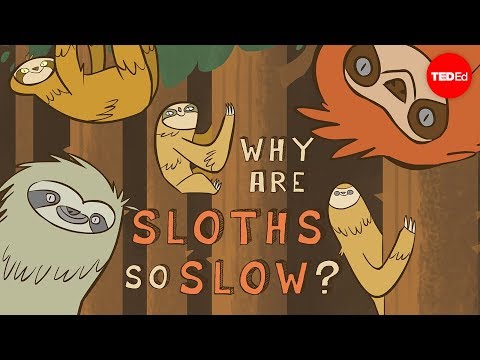
Why are sloths so slow? - Kenny Coogan
The Mystery of Jefferson's Box of Bones
Discovery and Misidentification
- In 1796, Thomas Jefferson received unidentified bones, including a long claw resembling that of a lion, leading him to speculate about a new North American predator.
- The bones were later identified as belonging to an extinct giant sloth rather than a lion.
Characteristics of Ground Sloths
- Prehistoric ground sloths appeared around 35 million years ago, coexisting with other ancient species like mastodons and giant armadillos.
- The Megalonyx sloth weighed about one ton, while the larger megatherium could reach up to six metric tons.
Diet and Ecological Impact
- Ground sloths used their strong arms and claws to uproot plants and climb trees for food, primarily grazing on leaves and grasses.
- They played a crucial role in spreading avocado trees by consuming their large seeds, which smaller animals could not digest.
Extinction Factors
- Around 10,000 years ago, ground sloths began to disappear alongside other large mammals due to potential ice age impacts or competition from humans.
- Some smaller species adapted by migrating into treetops; today, six species survive in Central and South America.
Adaptations for Survival
- Sloths have evolved strategies to cope with their low-energy leafy diet; they extract maximum energy from food using a multi-chambered stomach.
- Their slow lifestyle minimizes energy expenditure; they move infrequently and take up to weeks to process meals.
Unique Metabolic Traits
- Sloths possess about 30% less muscle mass than similar-sized animals due to their unhurried lifestyle.
- They have the slowest metabolism among mammals; body temperature can fluctuate significantly but remains lower than most mammals.